
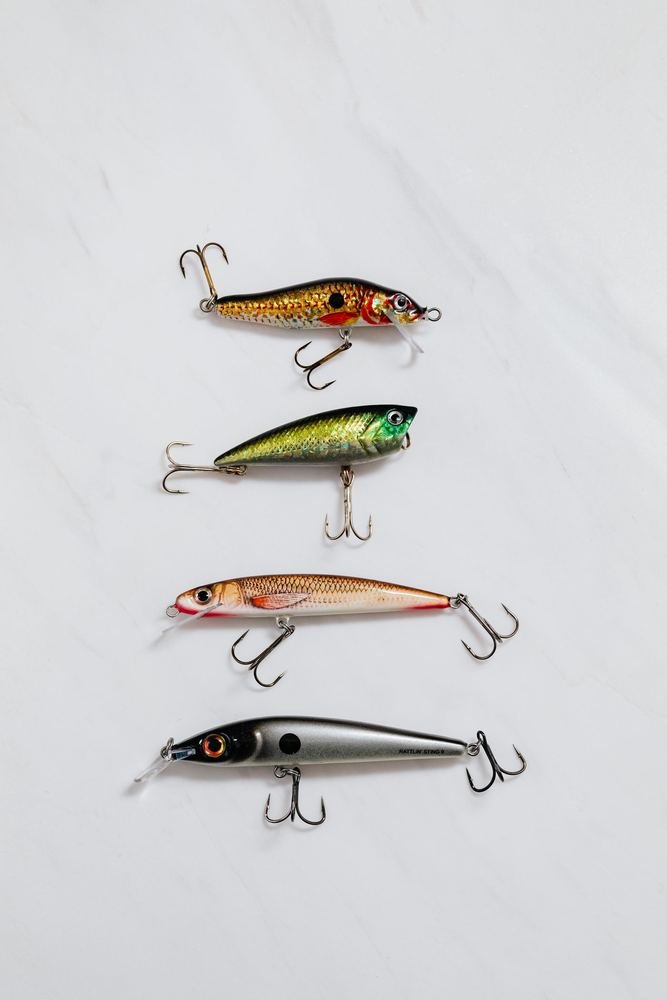
MAIN ARTICLE
The Most Common Types of Fishing Lures
1. Jigs
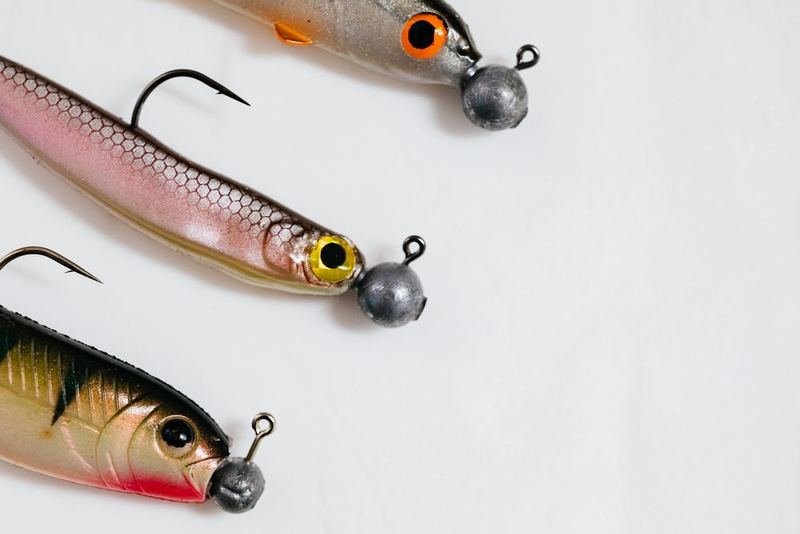
A jig is a weighted fishing lure built around a hook, with weight concentrated near the hook eye or head. A jig may carry a skirt, hair, feathers, or a soft-plastic trailer. Some are cast into shallow cover; others are lowered vertically into deeper water.
Jigs can be hopped, dragged, swum, or lifted and dropped. A bite may occur while the lure falls or changes direction, so a moment of slack can be informative. A football jig is commonly worked along firmer bottom, while a flipping jig is selected for more targeted cover. Swim jigs move horizontally, finesse jigs use smaller profiles, and a simple jig head can carry a grub or paddle tail. Metal jigs are another weighted form used for casting or vertical presentations.
Choose weight and hook style for the actual depth, current, cover, line, and target fish. Too little weight may fail to reach the zone; too much may make the presentation unnaturally fast. Bass, walleye, perch, crappie, trout, and saltwater predators can all be targeted with different jig designs. Take Me Fishing explains the main jig and lure families.
2. Soft Plastic Lures

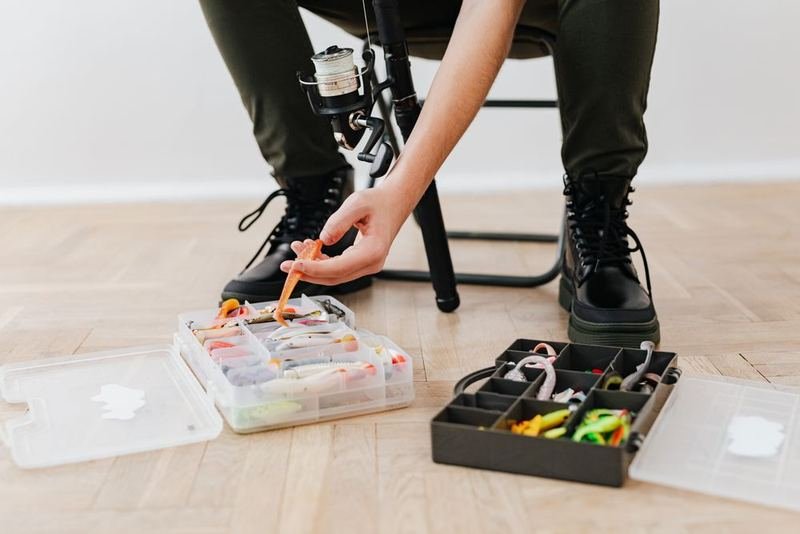
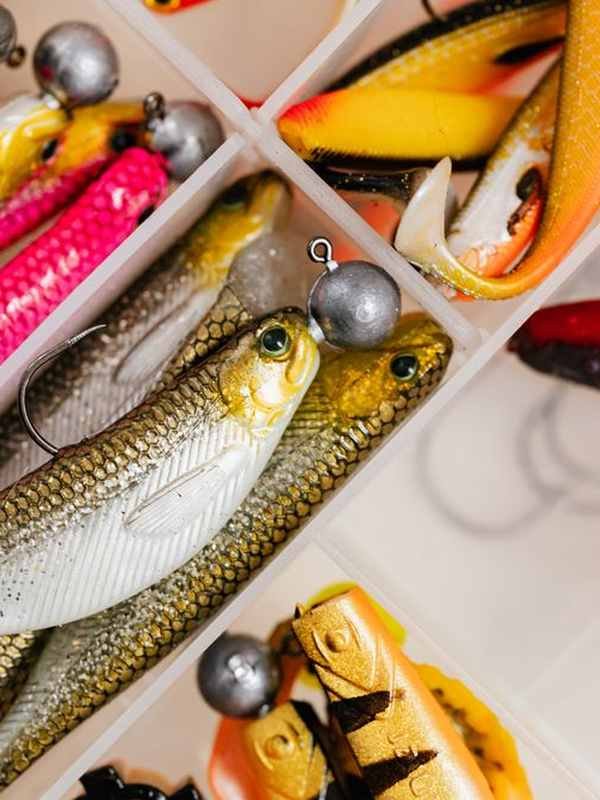
Soft plastic lures are flexible molded baits shaped like worms, baitfish, crawfish, insects, frogs, and other prey. Their defining feature is adaptability: the same body may fish high or low depending on the hook, weight, and rig. Worms, stick baits, creature baits, tubes, grubs, flukes, soft jerkbaits, and paddle tails all belong here.
A Texas rig places the hook point close to the body and can reduce snagging in vegetation. A Carolina rig separates the weight and bait. A drop shot suspends a small bait above the sinker. Jig heads make compact swimming or bottom presentations; weightless and wacky rigs give different falling actions. None of these rigs makes the bait universally effective. Hook size, weight, line, and retrieval pace still need to suit the fish and cover.
Soft plastics can be useful when a slower or more precise presentation is needed. They can also be swum steadily to represent baitfish. Anglers use different versions for bass, panfish, walleye, trout, and saltwater species.
| Rig | Typical role |
|---|---|
| Texas | Weedless fishing around cover |
| Drop shot | Finesse presentation above bottom |
| Jig head | Swimming or bottom contact |
| Weightless | Slow, natural fall |
| Wacky | Falling stick-bait presentation |
3. Crankbaits
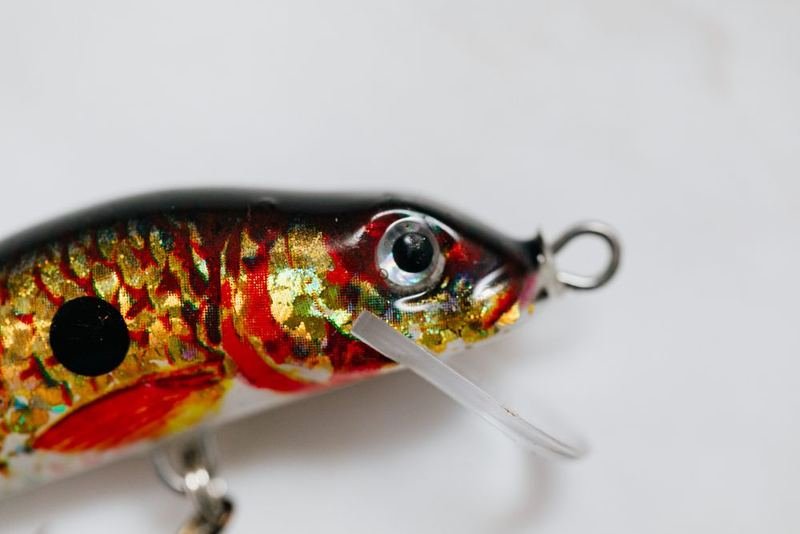
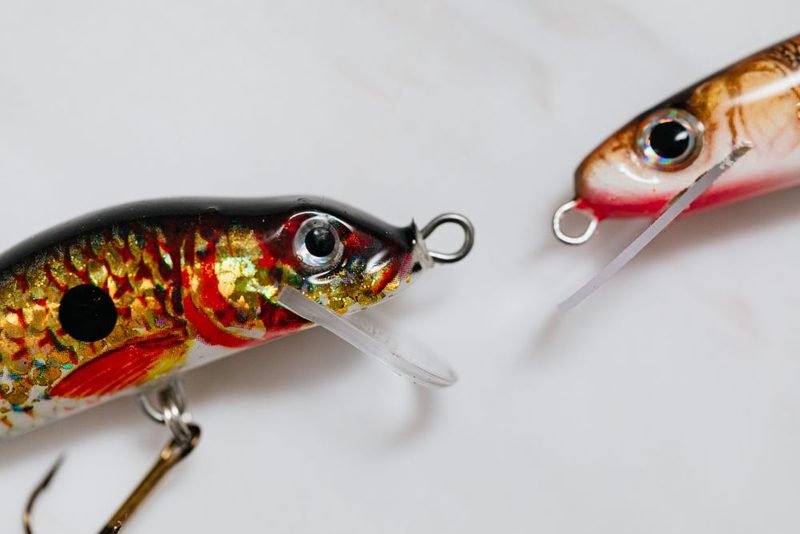
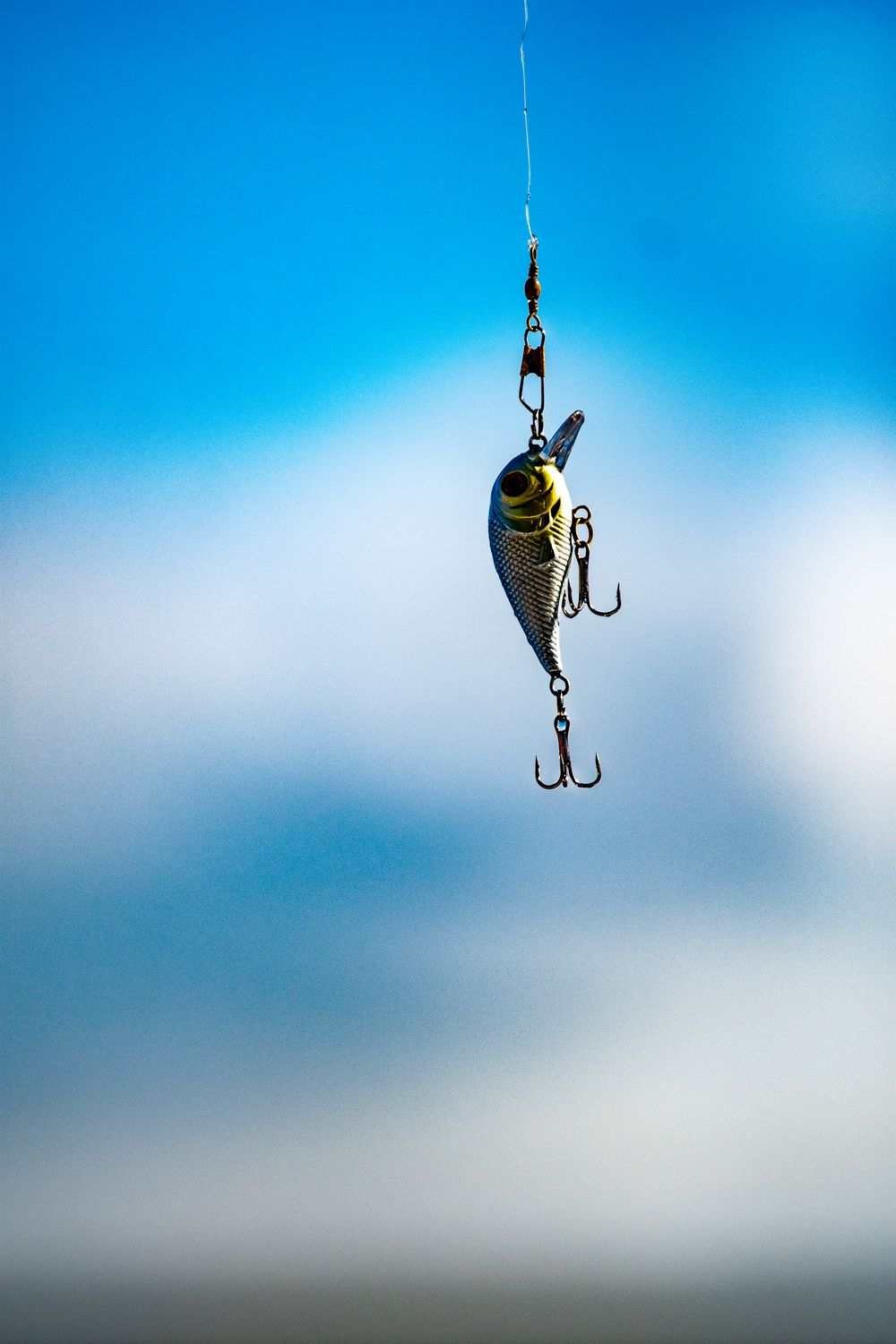
A crankbait is a hard-bodied lure designed to wobble or vibrate as it is retrieved. Many have a diving lip. Lip shape, angle, body width, buoyancy, and line attachment influence how a particular model runs. Squarebill designs are often chosen around shallow cover; medium and deep divers work different depth bands. A lipless crankbait relies on body and line-tie design instead of a diving bill and commonly sinks.
Crankbaits are search lures: repeated casts and a steady retrieve let an angler cover water and learn where fish are holding. Changing speed or contacting suitable rock or wood can change the lure’s path. The bill may help a lipped model deflect, but exposed treble hooks still increase snag risk in heavy vegetation. A model’s stated diving depth is a guide, because line diameter, casting distance, speed, and rod position also influence the actual path.
Match body size and depth to local baitfish and the target species. Bass, walleye, pike, trout, and other predators can respond to appropriate models. Sound and vibration vary: some crankbaits rattle, while others are quiet. When buying or selecting one, compare running depth, buoyancy, action, hook arrangement, and the amount of cover it must pass. Read our complete crankbait guide for the types, mechanics, and retrieves.
4. Jerkbaits and Minnow Lures
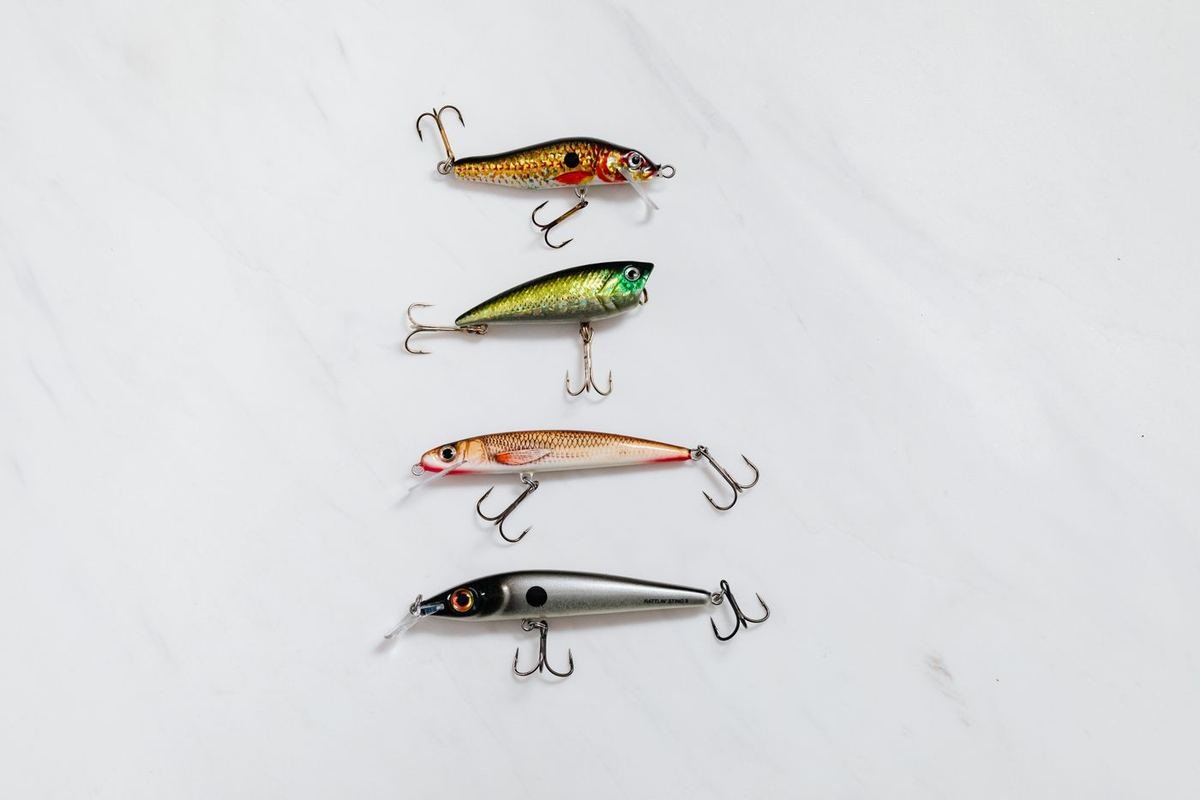
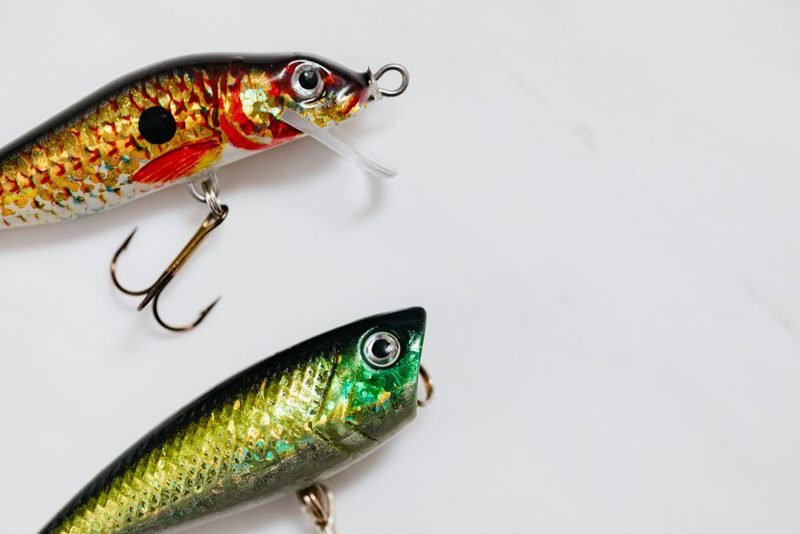
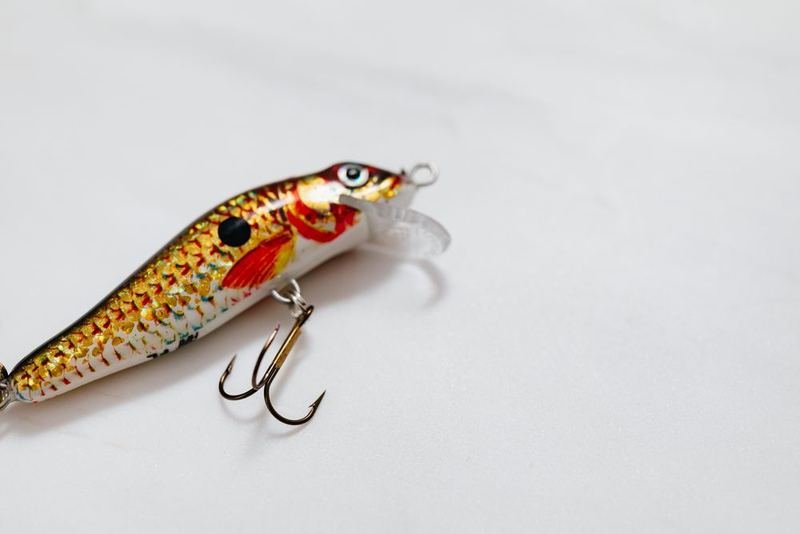
A jerkbait is usually a slender hard bait designed to dart, roll, or change direction when the angler twitches the rod. Many jerkbaits look like minnows, but “minnow lure” is a broader description of baitfish shape. Some minnow-shaped lures are retrieved steadily; others are designed for pronounced twitch-and-pause movement. The words overlap without meaning exactly the same thing.
Floating models rise on a pause, suspending models stay near a working depth, and sinking models descend. Those tendencies depend on the actual lure, hooks, line, temperature, and water conditions. A twitch-pause retrieve lets a lure move sharply and then remain visible or change depth. Shorter or longer pauses can matter when fish follow but do not commit. Casting, steady retrieve, and in some cases trolling are also possible, but the model must support the technique.
This family often suits predators feeding on small fish, including bass, trout, perch, pike, and walleye. Body size, lip design, buoyancy, diving range, and hardware deserve more attention than a color name alone. For buyers, our Minnow Lures page lists the specification fields to confirm before an order.
5. Inline Spinners
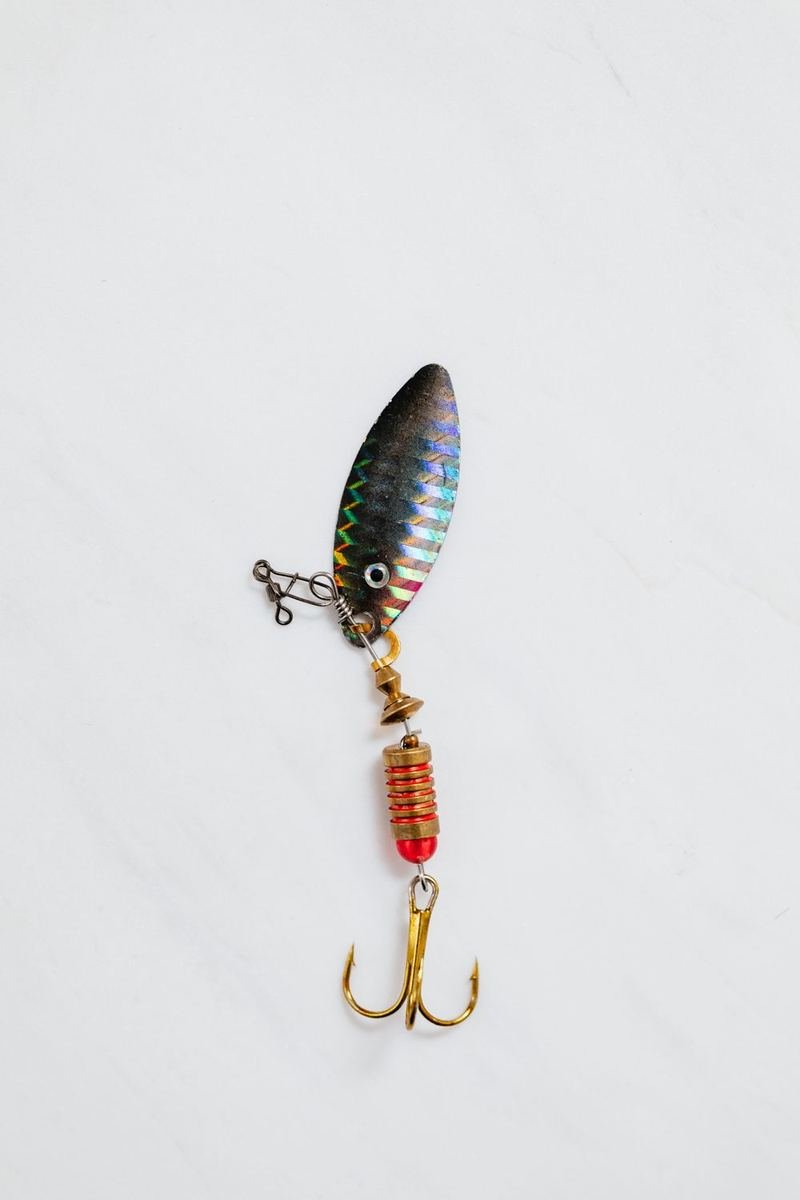
An inline spinner has a blade that revolves around a straight wire shaft as the lure moves through water. The spinning blade creates flash and vibration, while a weighted body helps it cast and run at a usable depth. Some models carry a dressed hook or soft trailer. Blade shape, body weight, and retrieval speed alter how readily the blade starts and how much pull the angler feels.
A steady retrieve is the simplest way to fish one. Cast across or slightly upstream in moving water and let the lure pass through a likely holding lane while maintaining blade rotation. In still water, change countdown and speed to explore shallow or mid-water. Trout, perch, bass, panfish, and other predators may respond to suitable sizes. Because the hook is exposed, work carefully around dense weeds and wood.
Choose an inline spinner when you want a compact search lure with a simple presentation, especially in streams and along lake edges.
6. Spinnerbaits
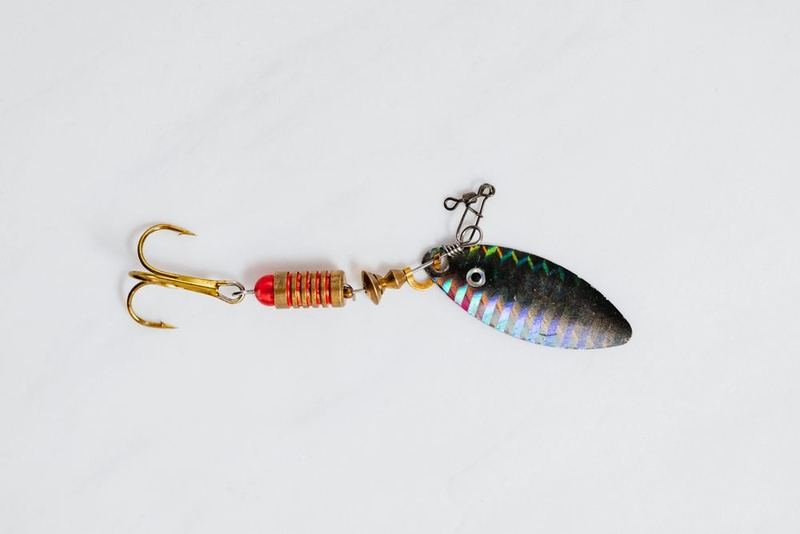
A spinnerbait usually combines a weighted hook and skirt or trailer with one or more blades on a bent wire arm. As it moves, the blades flash and pulse while the lower body presents a larger target. This separates it from an inline spinner, whose blade rotates around a straight shaft. Blade combinations, head weight, skirt material, and trailer choice change lift, vibration, and silhouette.
A steady retrieve is common, but an angler can slow-roll a spinnerbait near cover, change pace, or let it fall briefly beside an opening. The wire-arm layout can help the lure pass some vegetation and branches, though it is not snag-proof. Bass fishing often uses spinnerbaits around shallow cover and stained water; suitable models also appear in other freshwater and selected saltwater programs.
Use one when you need a moving bait that can cover water while staying relatively manageable around scattered cover. Compare the blade style and lure weight with depth and retrieve speed. The photograph illustrates blade-bearing tackle; confirm the precise spinnerbait style from the product description.
7. Spoons
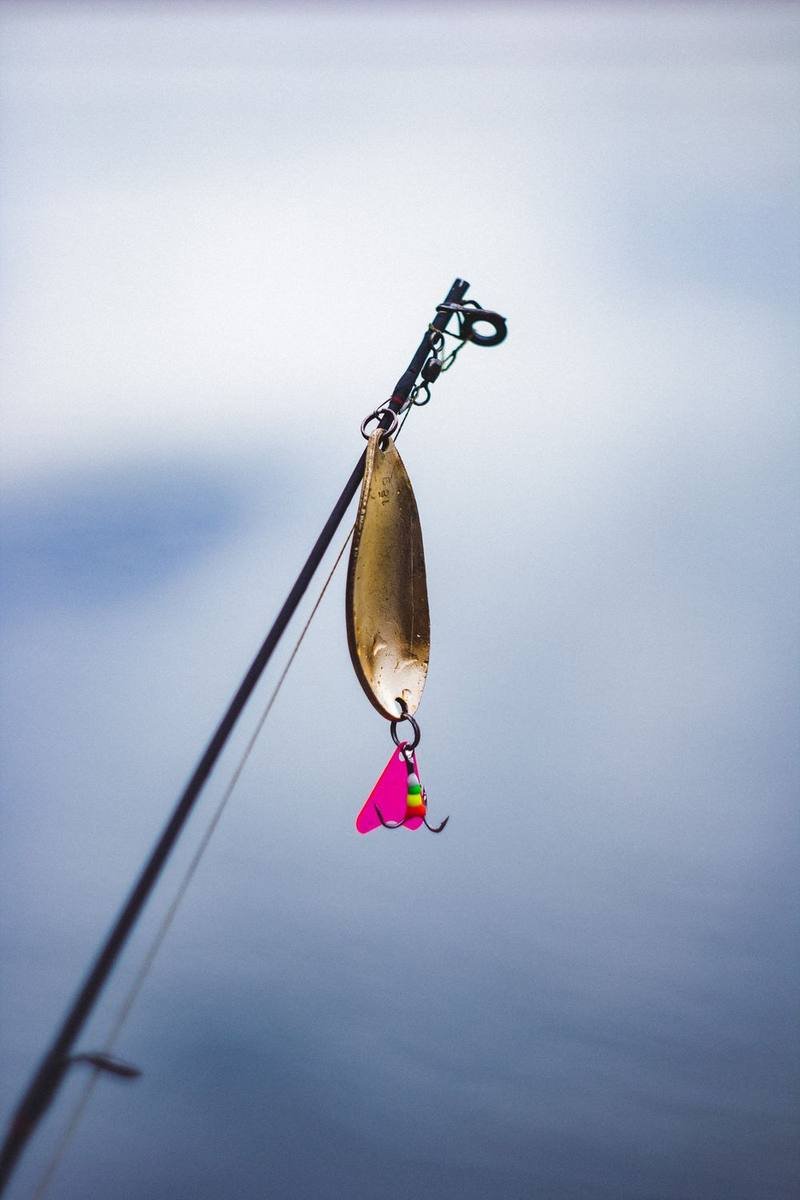
A spoon is a curved metal lure that flashes and wobbles as water moves past it. Its shape, thickness, weight, and finish influence both fall and retrieve. A casting spoon can reach distant fish and be reeled or allowed to sink. A jigging spoon is lifted and dropped more vertically. Other designs are intended for trolling, and some are built to pass through vegetation with reduced snagging.
Metal flash can suggest the movement of a baitfish, but presentation matters as much as shine. A slow fluttering fall may keep a spoon visible near fish; a faster retrieve can make it rise or spin, depending on design. Anglers use spoons for trout, pike, salmon, bass, walleye, and many saltwater predators with appropriately sized tackle.
Begin with weight and water zone. A spoon that is too light may never reach deep fish; one too heavy may fall past them quickly. Watch for line twist if the lure rotates excessively, and match hooks and hardware to the environment. Take Me Fishing describes casting and jigging spoon presentations.
8. Topwater Lures
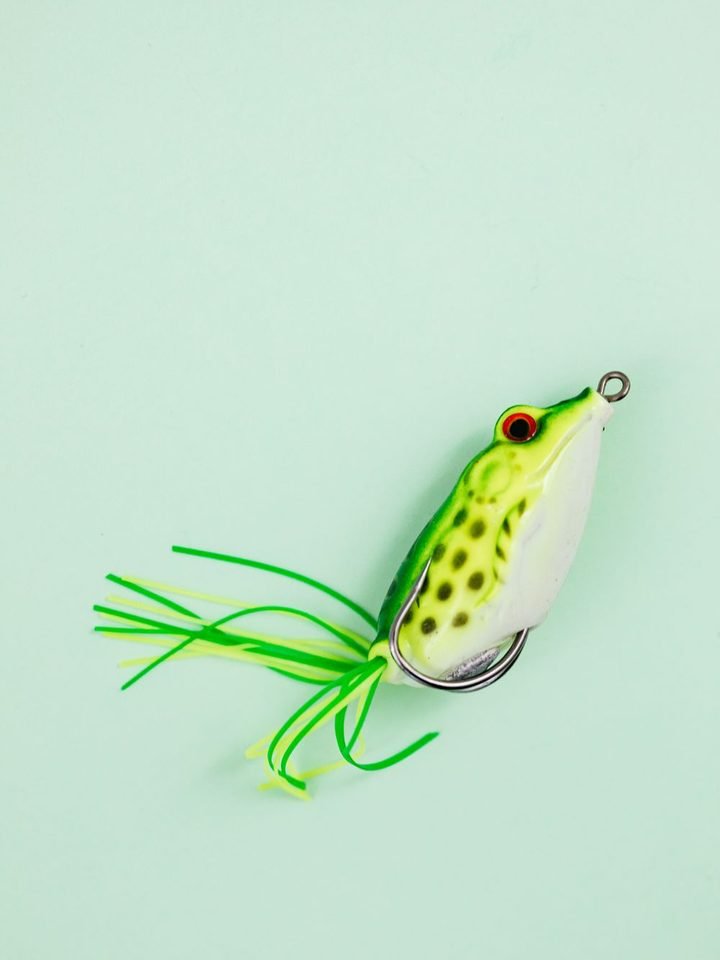
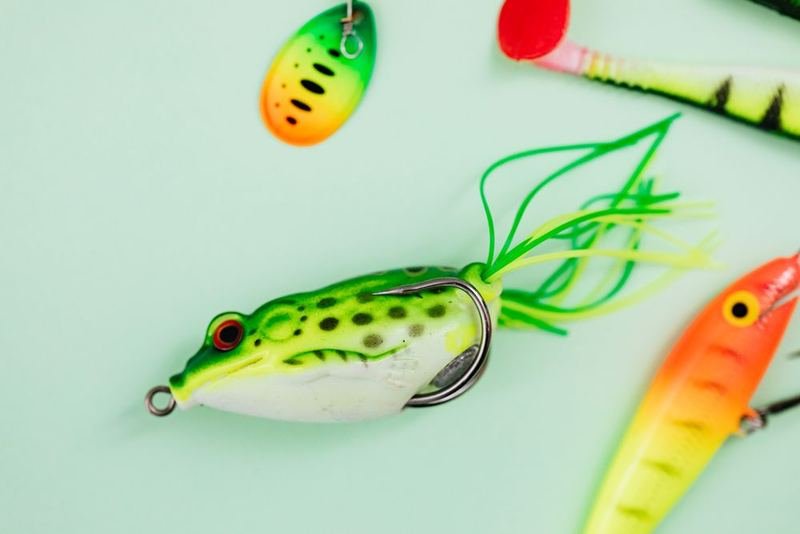
Topwater lures operate on or immediately below the surface. Poppers push water with a cupped face, walking baits move side to side, prop baits churn with rotating parts, wakebaits leave a visible disturbance, and hollow-body frogs can cross vegetation. These designs do not share one retrieve. Some need deliberate rod twitches and pauses; others work with a steady reel pace.
Surface lures help an angler see the path of the bait and sometimes the fish’s response. They are often chosen when predators are feeding upward, over shallow cover, or near surface vegetation. A frog can be especially useful over mats where exposed treble hooks would gather weeds. Open-water poppers and pencils serve a different path and hook layout. Casting accuracy still matters around edges, pockets, and shoreline structure.
Topwater is not limited to one species. Bass, pike, and various saltwater predators can take suitable profiles; local conditions determine the model. Wind, chop, light, water temperature, and forage affect how visible or believable the presentation is. Keep the lure near fish long enough to be seen, then vary cadence if they follow without striking.
9. Swimbaits
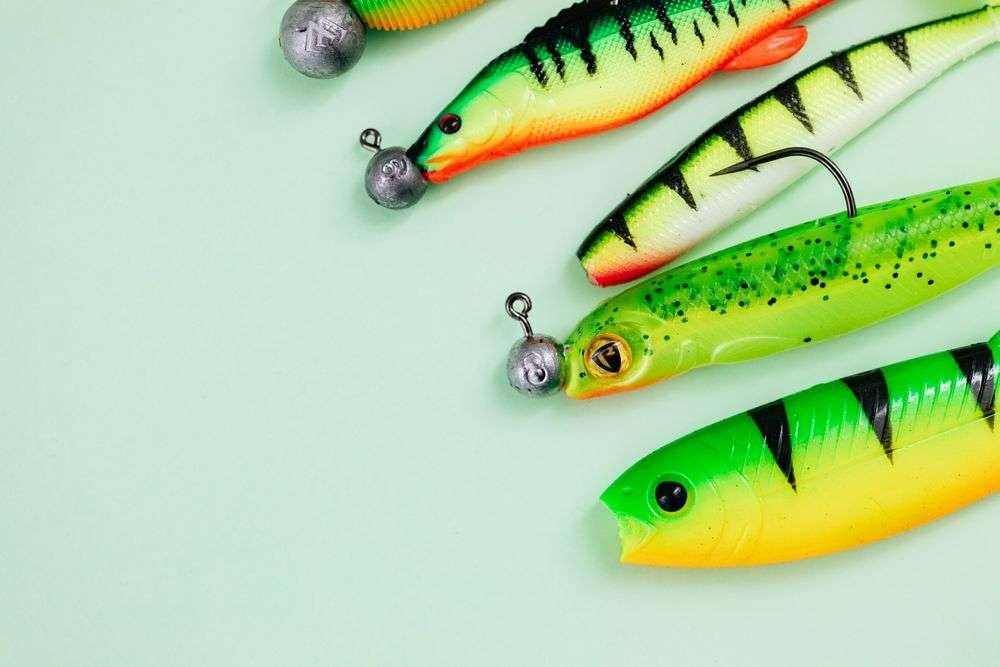
A swimbait is a lure built to show a swimming baitfish profile. It may have a soft body with a paddle tail, a firm jointed body, or another design that moves through the water on a retrieve. The term describes a swimming presentation rather than one material. Soft paddle tails often depend on hook or jig-head rigging; hard swimbaits have their own body and hardware system.
Most swimbaits are fished with a steady or slow-rolling retrieve, although some respond to pauses and rod movement. Body size and tail action should suit the local forage and target predator. Weight or lip design affects depth. A weedless soft swimbait can be worked around vegetation, while a large exposed-hook hard model may fit more open lanes. Bass, pike, and saltwater predators are examples of fish pursued with suitable versions.
Beginners should first check that the lure swims straight at the chosen speed. An off-center hook can spoil a soft bait’s action. Compare body length, rigging, running depth, action, and hook position before choosing between hard and soft models.
10. Blade Baits
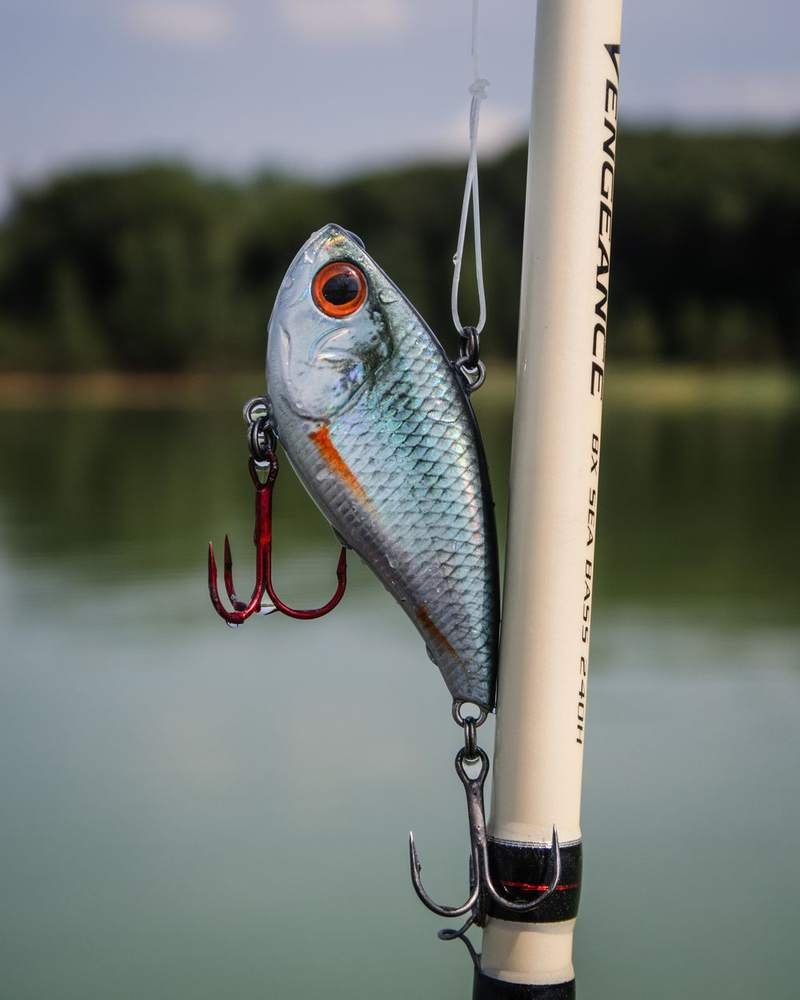
A blade bait is a compact weighted lure designed to vibrate when pulled through water. Many are metal and attach along the upper body, though exact designs vary. Anglers often let one reach a chosen depth, lift it enough to feel vibration, then allow it to fall on controlled line. A steady retrieve can also work where the model permits.
That lift-and-drop cycle makes blade baits useful when fish hold deeper or are less willing to chase far. Strong vibration is a feature, not a guarantee of a bite; sometimes a smaller movement or longer pause is more suitable.
Check weight, attachment point, hook layout, and snag risk around rocky or woody bottom. Distinguish a vibrating blade bait from a bladed jig: the latter has a jig body and a blade attached ahead of it. Product names may blur the categories, so the physical construction is the clearest guide. Berkley shows one example of lift, fall, and vibration in a blade-style lure.
11. Bladed Jigs
A bladed jig combines a weighted jig body with a blade mounted near the front. During a retrieve, that blade moves back and forth and drives vibration through the skirt and any soft trailer. It is distinct from an inline spinner’s rotating blade and from a blade bait’s compact metal body. Many anglers use a steady retrieve, but pauses and speed changes can alter its path.
Bladed jigs are often selected around vegetation edges, lanes, or other shallow to mid-water cover. The design can help an angler feel whether the blade is moving. It can also be allowed to fall along a break or worked at a moderate pace. Bass is a common target; other applications depend on size and tackle.
Compare blade connection, head weight, hook, skirt, and trailer compatibility. A bladed jig can still foul in cover or snag on exposed hardware; it is not automatically weedless. “ChatterBait” refers to a particular Z-Man product family, while bladed jig is the broader category.
12. Flies
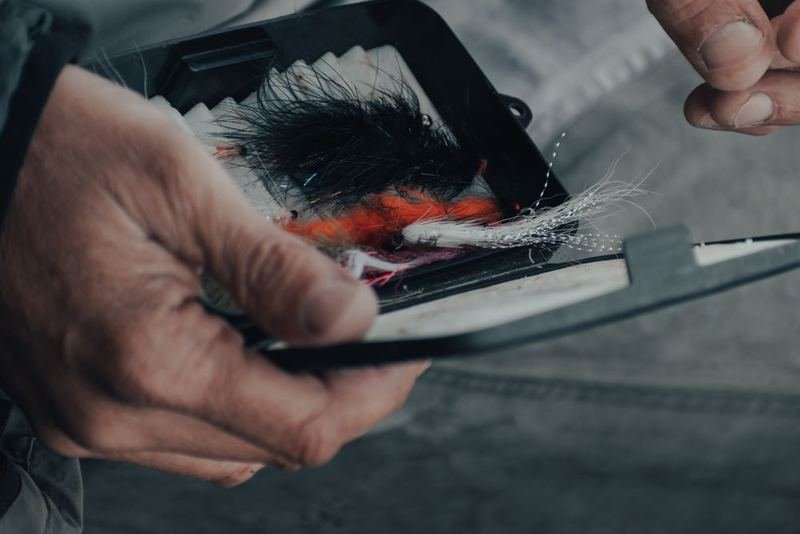
A fishing fly is a lightweight artificial pattern tied or assembled to imitate insects, baitfish, crustaceans, or other prey. It is usually presented with a fly rod and fly line, which carry the light pattern. Flies form a broad family rather than one action: dry flies float, nymphs imitate aquatic insects beneath the surface, wet flies move just below it, and streamers represent larger swimming prey.
Presentation changes with the pattern. A dry fly may drift at the surface; a nymph can be controlled through a subsurface lane; a streamer may be stripped or swung. Weight, line, current, and leader setup affect depth. Trout and salmon are familiar targets, but bass, panfish, pike, and many saltwater species can also be pursued with suitable fly patterns and tackle.
Unlike many spinning lures, a fly often gets much of its action from current or subtle line control. That makes matching the prey and water layer important. First decide whether fish are feeding at the surface, below it, or on larger moving prey. Orvis describes the four broad fly groups and how they are fished.
How to Choose the Right Type of Fishing Lure
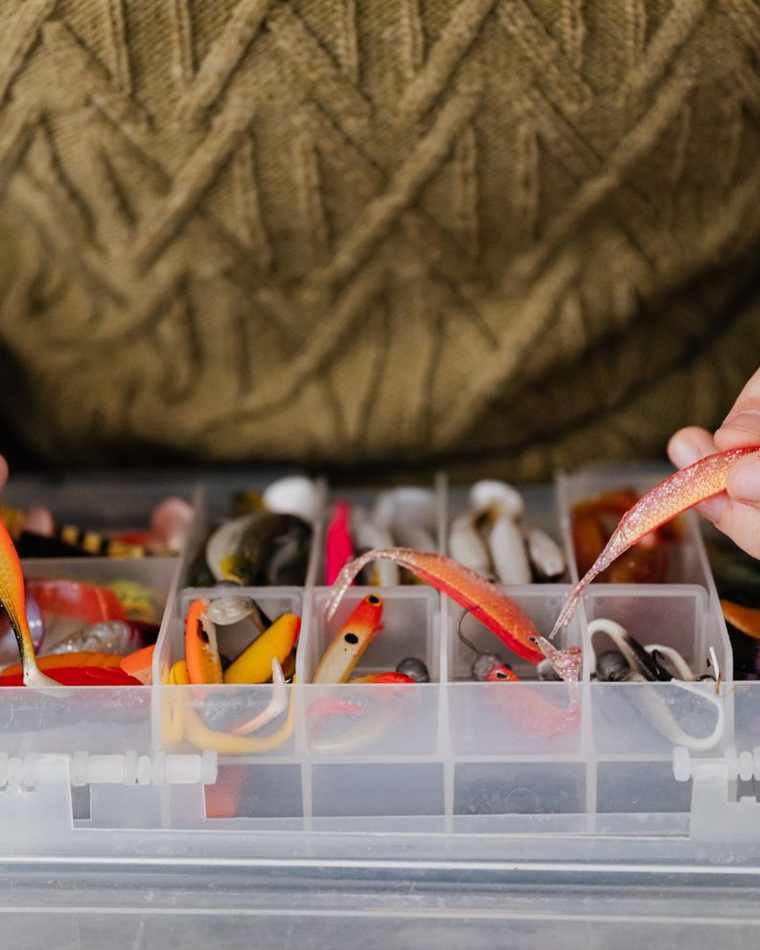
Begin with conditions, not a favorite color or brand. First identify the likely target fish and its feeding zone. A surface lure is a poor starting point when the fish are near bottom, while a weighted jig may pass beneath fish hunting at the surface. Use the lure’s usual water zone to narrow the field, then consider how it will move there.
- Identify the species and forage. Choose a body size and shape that reasonably resembles the prey available.
- Locate depth. Decide whether the useful zone is surface, shallow, mid-water, or bottom.
- Read the cover. Vegetation, rock, wood, and open water change snag risk and hook choice.
- Consider clarity. Clear water can favor more natural, controlled presentations; reduced visibility may make vibration or contrast useful.
- Choose retrieve pace. Search with a moving lure or work a concentrated area more slowly.
- Adjust from response. Follow, contact, or no response is information; change depth or pace before replacing everything.
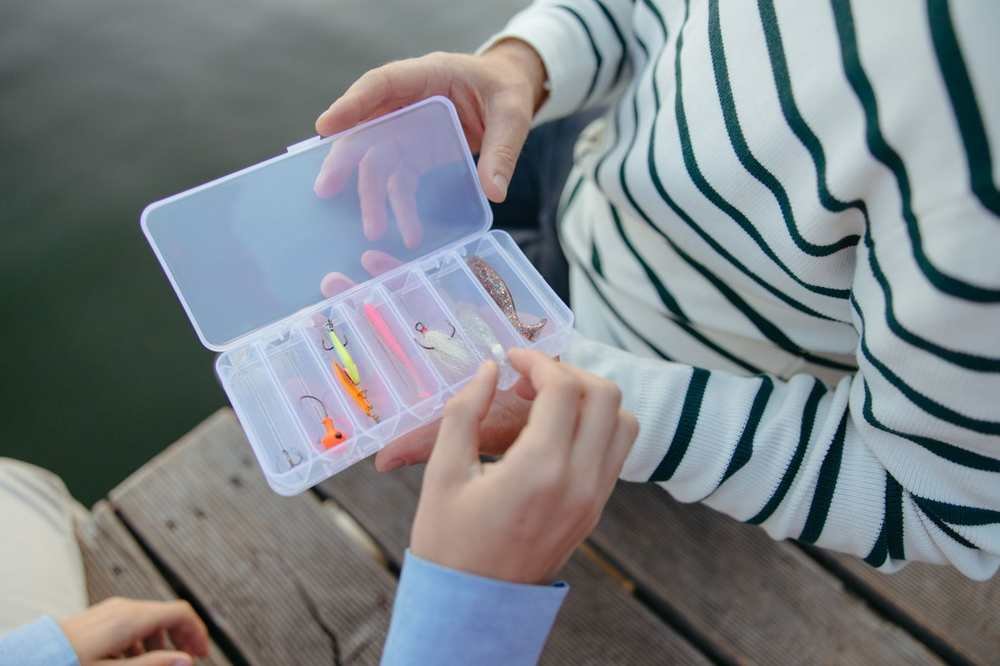
These are starting points, not promises. Season, temperature, weather, current, light, and angler skill can change the result. A compact box of lures that cover several water zones often teaches more than many similar colors that all run at the same depth.
| Situation | Useful starting categories | Reason |
|---|---|---|
| Surface feeding | Topwater; floating minnow | Runs near fish |
| Fish near bottom | Jig; soft plastic; blade bait | Reaches the lower zone |
| Heavy vegetation | Weedless soft bait; frog; suitable jig | Can reduce snagging |
| Covering water | Crankbait; spinnerbait; inline spinner | Continuous search |
| Clear water, baitfish | Jerkbait; swimbait; soft bait | Controlled prey profile |
| Deep water or current | Weighted jig; spoon; sinking bait | Maintains useful depth |