
MAIN ARTICLE
What Is a Chatterbait?

In everyday fishing language, “Chatterbait” often points to a bladed or vibrating jig. Strictly, ChatterBait® identifies Z-Man's branded models; other makers also produce bladed jigs. The general construction is a weighted jig head, single hook, skirt, and a metal blade mounted immediately in front. Many models accept a soft-plastic trailer.
As the lure is pulled forward, its front blade oscillates. The moving blade transfers energy into the head, skirt, and trailer, giving the lure a compact, pulsing swim. Some models also deviate or “hunt” from a straight path when speed or water flow changes. The exact behavior depends on blade connection, head shape, trailer, and retrieve.
Key Parts
- Front blade: creates side-to-side oscillation.
- Weighted head and single hook: provide casting weight and hold the fish.
- Skirt: adds a changing profile around the hook.
- Trailer keeper: holds an optional soft-plastic body in place.
What Is a Spinnerbait?
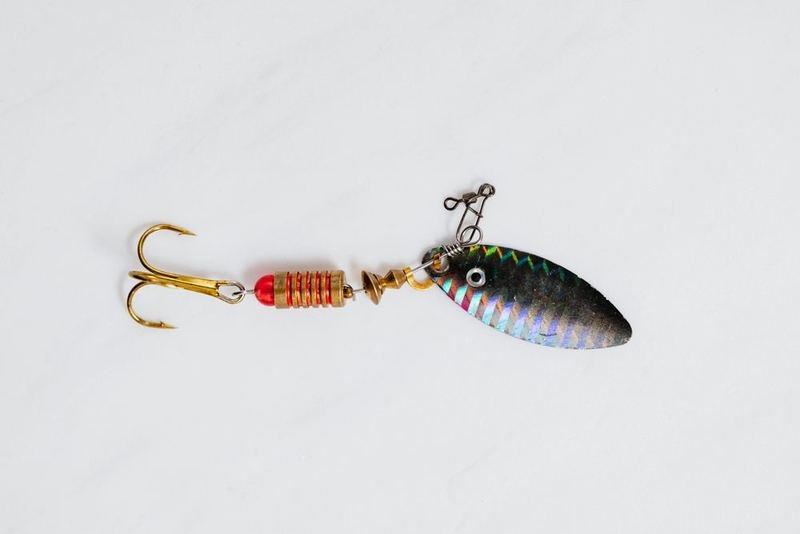
A spinnerbait places a weighted, skirted hook on one arm of a bent wire frame and one or more rotating blades on the other. The line connects near the bend. As the lure moves, water turns the blades, producing flash, a repeating pulse, and resistance that can help hold the lure higher at a chosen speed.
Blade size and shape matter. A narrow willowleaf tends to offer more flash with less resistance; a rounded Colorado blade often gives a stronger thump and more lift at slower speeds. An Indiana blade sits between those broad tendencies. Combinations can mix signals, and hardware quality affects how reliably blades begin turning.
Key Parts
- Wire frame: separates blades from the weighted hook.
- Swivel and blades: allow rotation and reflected flashes.
- Head, skirt, and single hook: give the lure weight and a baitfish-like body.
- Optional trailer: can add length, bulk, or a tail kick.
Chatterbait vs Spinnerbait Design: Why Construction Matters
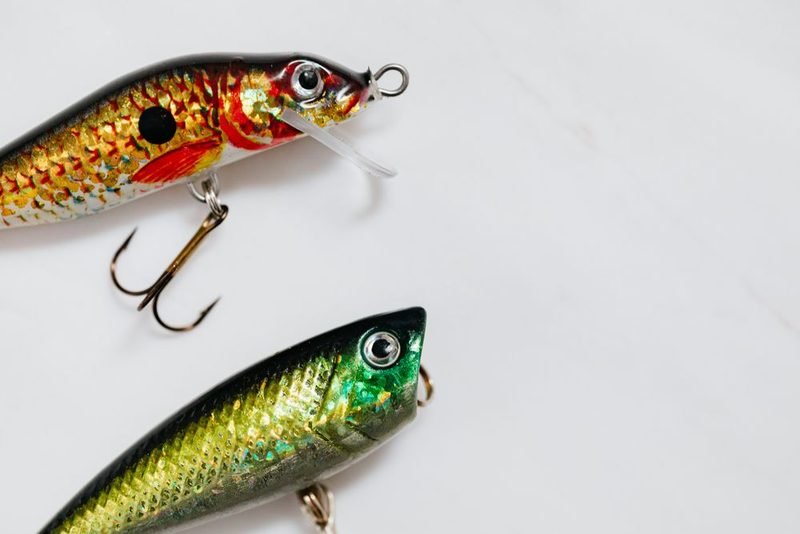
The bladed jig concentrates its working parts around one compact body. The blade is close to the head and the single hook sits behind it. A spinnerbait spreads the blade system above the hook on a wire arm. That distance changes how blade movement reaches the skirt, how the lure looks to a fish, and how it contacts cover.
On a bladed jig, side-to-side blade motion often makes the whole body pulse. On a spinnerbait, blades rotate while the weighted head tracks below. The wire can glance off a branch before the hook does; the compact bladed jig may be easier to cast accurately or skip. Either can foul in the wrong vegetation or snag in the wrong wood.
| Design Element | Bladed Jig | Spinnerbait |
|---|---|---|
| Frame | Compact jig-style body | Bent wire frame |
| Blade position | Immediately ahead of head | Above head on wire arm |
| Blade motion | Oscillation | Rotation |
| Main hook | Single exposed hook | Single hook partly shielded by wire path |
| Skirt | Common | Common |
| Trailer | Very common | Optional or common |
| Mechanical feel | Strong direct vibration | Blade resistance and pulse |
| Profile | Compact target | Wider combined profile |
This construction difference is the basis for the grass-versus-wood rule of thumb. Actual snag resistance also depends on hook exposure, cover density, casting angle, and the model's geometry.
Chatterbait vs Spinnerbait Action: Vibration, Flash, and Movement
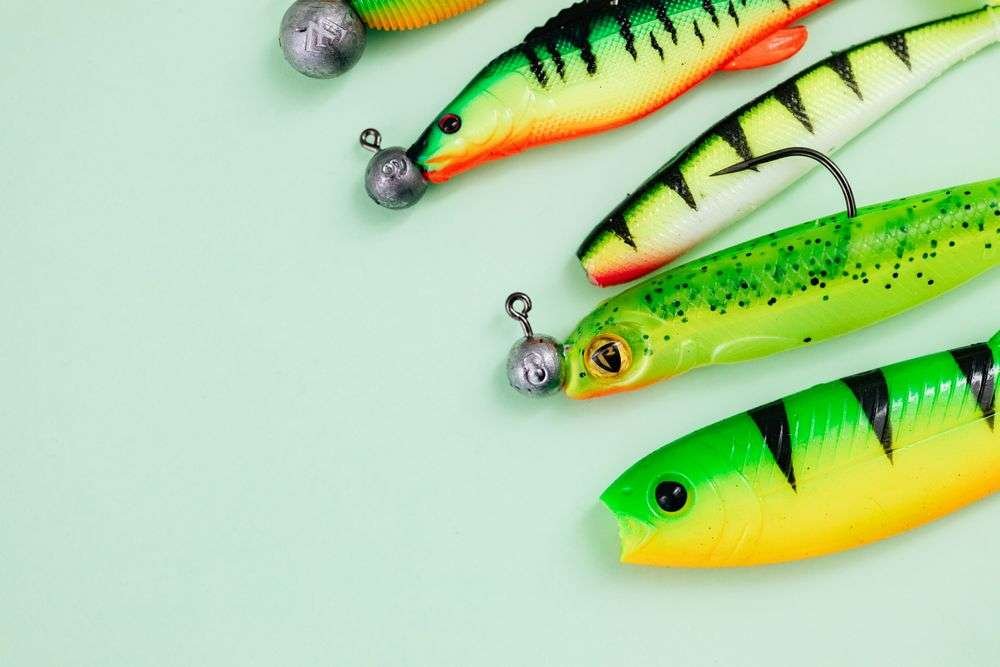
Both lures disturb water and can be felt through the rod. The difference is how they make that signal. A bladed jig's oscillating front blade commonly sends a pronounced pulse into the entire lure. A spinnerbait's rotating blades create cyclic pressure changes, reflected light, and some lift, while its skirt and optional trailer move below.
It is too simple to say one always vibrates more. A large Colorado-blade spinnerbait can thump strongly, while a small bladed jig may send a tighter signal. Likewise, an unpainted vibrating blade can flash, but rotating spinnerbait blades are often chosen when continuous reflected flashes are a priority. Blade finish, size, speed, water clarity, and depth change what fish receive.
| Signal | Bladed Jig | Spinnerbait |
|---|---|---|
| Vibration | Direct body pulse | Generated by rotating blades |
| Flash | Depends on blade finish | Often a major feature |
| Displacement | Blade and body movement | Depends heavily on blade shape |
| Skirt | Moves with body vibration | Moves with flow and retrieve |
| Direction | May hunt, depending on design | Usually tracks steadily |
| Rod feedback | Often easy to feel | Blade resistance and pulse |
Spinnerbait Blade Types: Willowleaf, Colorado, and Indiana
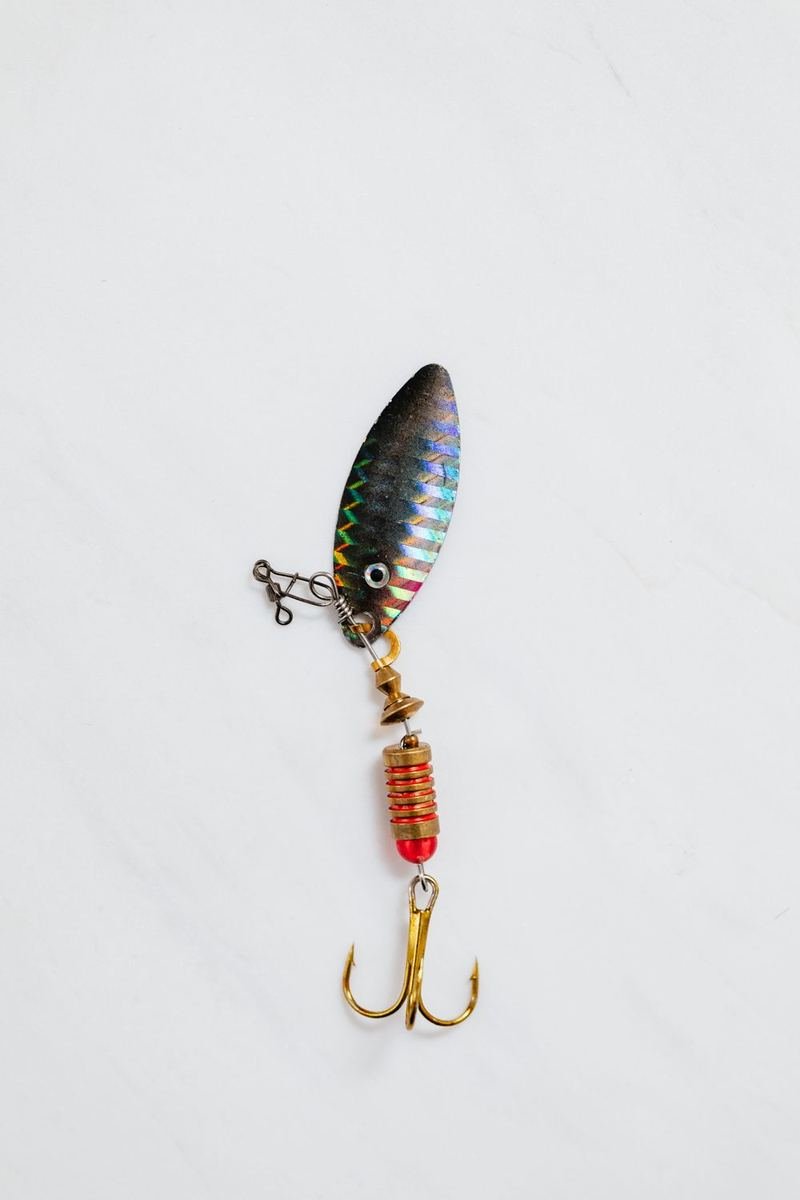
Spinnerbait blade choices change the balance of flash, resistance, pulse, and running depth. These three common shapes are useful starting categories, but blade size, thickness, finish, number, and swivel also matter.
Willowleaf
Long and narrow, a willowleaf blade generally rotates with less drag and shows repeated flashes. It can be useful when a faster retrieve or slim baitfish impression fits the water. A small willowleaf will not behave exactly like a large one.
Colorado
Rounder and broader, a Colorado blade commonly creates a stronger thump and more resistance. That can help at a slower retrieve or in reduced visibility. Extra lift also means it may run higher unless weight, line, or speed are adjusted.
Indiana
This intermediate shape offers a balance between the two broad tendencies. It can be a starting point when an angler wants both noticeable flash and pulse without emphasizing either extreme.
| Blade | General Character | Resistance | Common Reason |
|---|---|---|---|
| Willowleaf | Flash and slim profile | Lower | Faster retrieve or clearer water |
| Colorado | Stronger thump and lift | Higher | Slower pace or reduced visibility |
| Indiana | Balanced flash and pulse | Moderate | Middle-ground signal |
Do not let a single blade label override what the lure actually does on your line. A Colorado-and-willow combination, for example, sends a different mixture from a double-willow design.
Chatterbait vs Spinnerbait Around Grass, Wood, and Cover
Around Grass
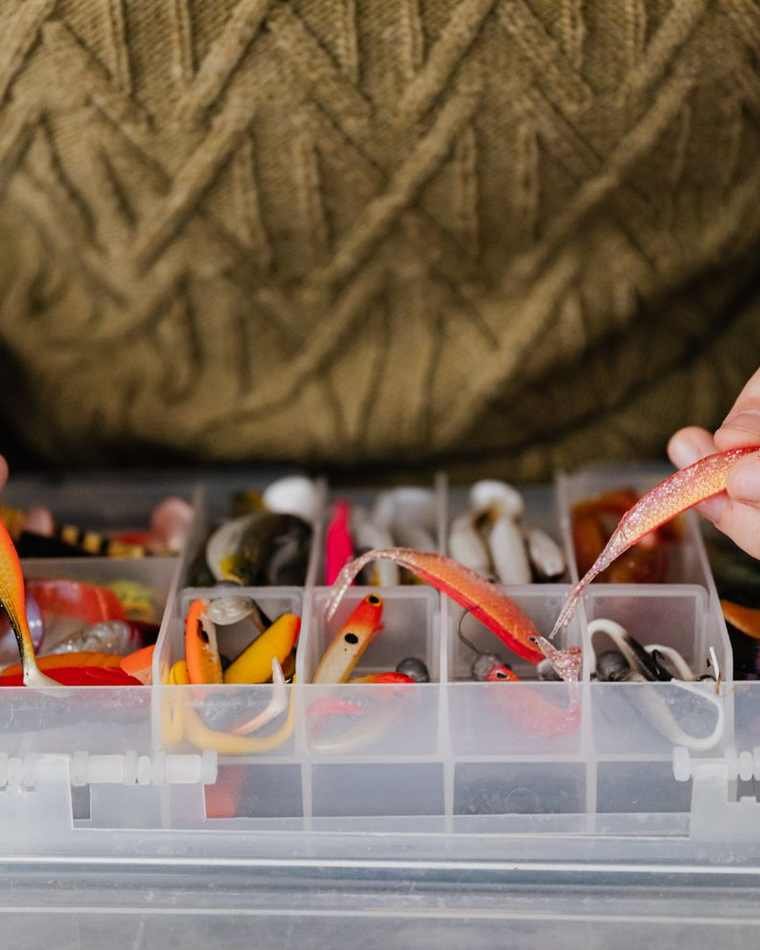
A bladed jig can track alongside a grass edge or skim over sparse submerged stems. When light vegetation catches the lure, a short, controlled snap may clear it and change direction sharply. Dense mats can foul its blade and exposed hook, so “good in grass” does not mean good through every grass bed.
Around Wood
A spinnerbait's upper wire arm often meets a branch before its hook and helps the lure roll around laydowns or stumps. Slow the lure enough to feel contact, then guide it past rather than pulling blindly. A bladed jig can catch fish around wood too, but its compact exposed hook may enter branch forks more readily.
Around Rock and Docks
Both lures can bump suitable rock or hard bottom. A spinnerbait may deflect visibly; a bladed jig may kick as its blade makes contact. For skipping under docks, the compact bladed jig is often easier to send low, but nearby posts and cables can still snag it.
| Cover | Starting Choice | Reason |
|---|---|---|
| Sparse grass | Bladed jig | Can be snapped free |
| Grass edge | Bladed jig | Tracks parallel to cover |
| Laydowns | Spinnerbait | Wire helps around branches |
| Stumps and timber | Spinnerbait | Often deflects more cleanly |
| Rock | Either | Match weight and contact |
| Dock skipping | Bladed jig | Compact shape |
| Open water | Either | Choose by profile and signal |
Which Works Better in Clear or Dirty Water?
Clarity changes how easily fish can see a lure, but it does not choose the lure by itself. Depth, sunlight, cover, forage, and the fish's willingness to chase are part of the same decision.
Clearer Water
A slender willowleaf spinnerbait can provide a baitfish-like flash. A bladed jig with a restrained skirt and subtle trailer is another option when its vibration is useful. Try a believable size and profile before treating a color rule as universal.
Stained Water
Both categories remain practical. A bladed jig gives a strong compact pulse; a spinnerbait with a broader blade adds thump and rotating flash. Choose the path that reaches the fish without fouling the cover.
Muddy or Low-Visibility Water
Vibration and water displacement may matter more when sight is limited. A Colorado-style spinnerbait or a strongly vibrating bladed jig can both be sensible trials. Neither is guaranteed, and a slower, more controlled retrieve may matter as much as blade style.
- Test visibility and lure action in the actual water.
- Match depth and cover before fine-tuning skirt color.
- If fish follow without striking, change speed or profile before changing everything.
Which Is Better for Shallow or Deep Fishing?
Both lures can be fished high, through mid-water, or lower in the column when weight and speed allow it. A bladed jig often gives compact vibration above a grass top or along a mid-depth edge. A spinnerbait can be burned near the surface, waked just beneath it, or slow-rolled beside deeper structure.
Slow rolling means reeling just fast enough to keep a lure working near the chosen depth. It is a classic spinnerbait method, particularly with a blade that still rotates at the slower pace. A bladed jig can also be slow-rolled if its blade starts and continues oscillating. Watch the lure near shore, then count it down and keep line tension consistent.
| Goal | Useful Starting Approach |
|---|---|
| Burn below surface | Either lure at a stable speed |
| Track over shallow grass | Bladed jig |
| Compact mid-depth vibration | Bladed jig |
| Slow roll near structure | Spinnerbait |
| Strong thump at slow speed | Broad-bladed spinnerbait |
| Contact hard bottom | Either with suitable weight |
Retrieve Styles for Each Lure

A steady retrieve is a useful baseline for both. Once the lure is moving correctly, vary one detail at a time so the next cast teaches you something.
Bladed Jig Retrieves
- Steady: maintain blade vibration while covering a flat or grass line.
- Stop-and-go: pause briefly so the lure changes depth, then feel for the blade to restart.
- Rip from grass: use a controlled snap when the lure catches light vegetation.
- Lift and fall: raise the lure and let it descend while keeping contact.
- Burn: move quickly when fish respond to a faster target.
Spinnerbait Retrieves
- Steady or burn: keep the blades rotating through a chosen lane.
- Slow roll: let weight and a working blade hold depth beside structure.
- Wake: run just under the surface so the blades disturb the top.
- Wood contact: guide the wire frame against and around suitable branches.
| Retrieve | Bladed Jig | Spinnerbait |
|---|---|---|
| Steady | Baseline | Baseline |
| Stop-and-go | Common | Possible |
| Rip from grass | Major technique | Possible |
| Slow roll | Model dependent | Classic technique |
| Burn | Effective when stable | Effective when blades turn |
| Wake | Possible | Common |
| Wood contact | Use care | Common strength |
The Role of Soft-Plastic Trailers
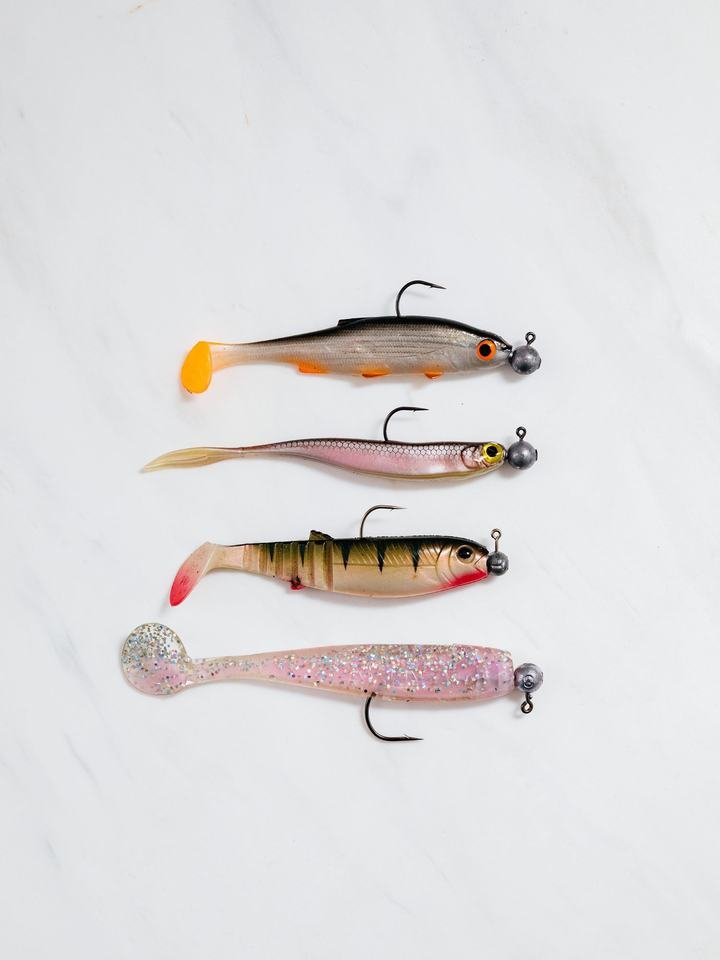
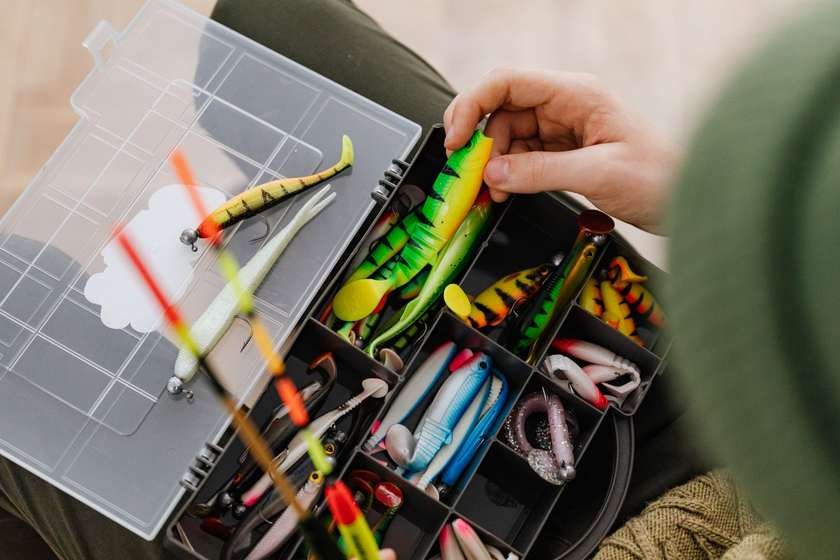
A trailer changes profile, fall rate, drag, and sometimes the lure's action. It is common on bladed jigs, where the skirt and soft body move with the blade's pulse. A spinnerbait may be fished with or without one; a trailer can add length or bulk but may also change balance.
A paddle tail adds a visible kick. A straight or forked tail may keep the profile quieter and let the blade system dominate. A craw or creature-style body makes a broader shape. Match the trailer to the fish and the desired retrieve, not a rule that every lure needs the largest tail.
| Goal | Possible Trailer |
|---|---|
| Baitfish profile | Minnow or swimbait shape |
| Extra kick | Paddle tail |
| Subtle movement | Straight or forked tail |
| Bulkier outline | Craw or creature profile |
| Minimal added action | Slim straight tail |
Test the finished lure in visible water. If the trailer makes it roll, rise, or lose blade action, shorten or change the body before assuming the lure itself is faulty.
When to Choose a Chatterbait
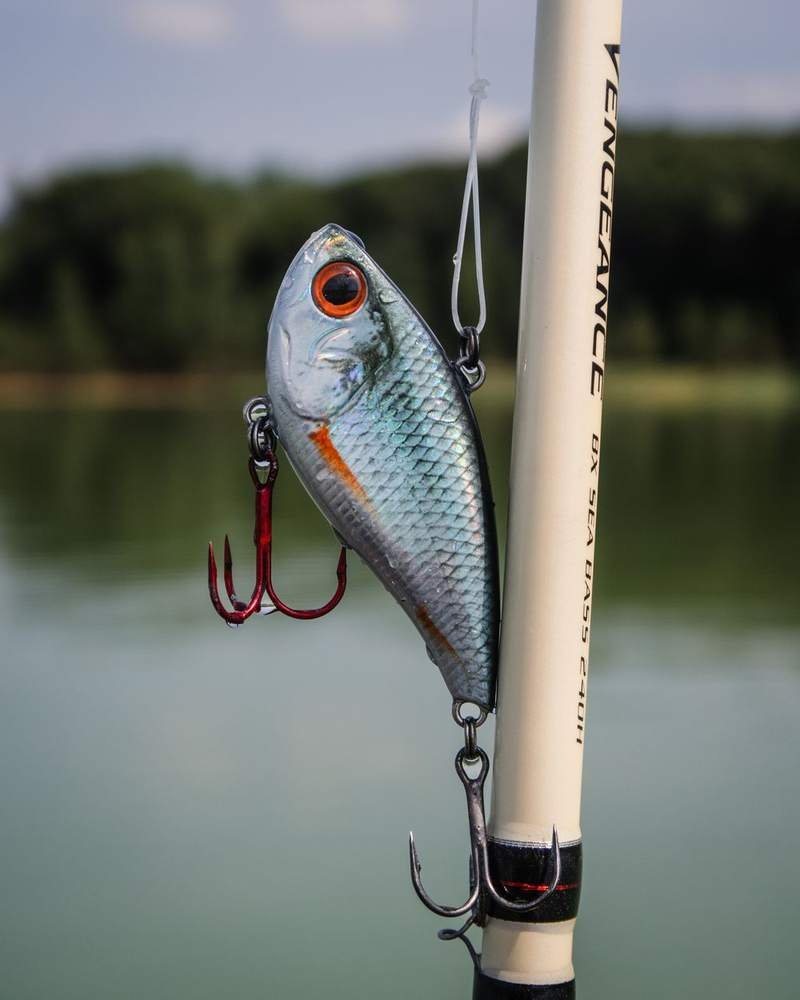
Start with a bladed jig when you want a compact moving lure with a strong, direct pulse. Sparse submerged grass, weed edges, shallow flats, and lanes through vegetation are familiar places to try it. The ability to restart after a brief grass catch can make an otherwise even retrieve suddenly erratic.
- Work parallel to a grass line instead of crossing the thickest stems.
- Use a steady retrieve first, then add a pause or short acceleration.
- Choose a trailer that complements rather than smothers blade motion.
- Keep the hook's exposure in mind around tangled wood or cables.
When to Choose a Spinnerbait

Start with a spinnerbait when a rotating flash and wider profile suit the water, or when a wire frame can help negotiate laydowns, stumps, or flooded timber. It is also a useful choice on a windy bank, over shallow cover, or beside a deeper edge that calls for slow rolling.
- Match blade shape to the speed and signal you need.
- Guide the wire arm into suitable wood rather than jerking into branch forks.
- Check that the blades rotate at the slowest pace you intend to use.
- Alter weight or line position when the lure rises above the target zone.
Spinnerbaits can work around grass, but blades and swivels may collect vegetation. Where the grass is sparse or the fish are near wood as well, this tradeoff can be worthwhile. The model's wire strength and blade combination affect its behavior.
Chatterbait vs Spinnerbait Decision Guide
Use this table as a first cast, then let the fish and the lure's actual path correct the plan. “Start with” does not mean “always use.”
| Situation | Start With | Main Reason |
|---|---|---|
| Sparse grass | Bladed jig | Can snap free |
| Grass edge | Bladed jig | Compact parallel retrieve |
| Laydowns and stumps | Spinnerbait | Wire-frame deflection |
| Dock skipping | Bladed jig | Compact shape |
| Windy bank | Spinnerbait | Flash and blade movement |
| Maximum flash | Spinnerbait | Rotating blades |
| Compact vibration | Bladed jig | Blade drives body |
| Deep slow roll | Spinnerbait | Common presentation |
| Stop-and-go in grass | Bladed jig | Strong restart |
| Open water forage | Either | Match profile and speed |
| Rock or hard bottom | Either | Choose useful contact |
When both reach the same zone, change the signal rather than cycling through almost identical colors. One pass with a direct body pulse and one with rotating flash can tell you whether fish react differently.
Common Chatterbait and Spinnerbait Mistakes

- Treating the two as one lure. Watch blade motion and body movement before assuming they cover the same job.
- Choosing color first. Match depth and cover, then adjust finish and contrast.
- Avoiding all contact. Suitable grass or wood contact can change the retrieve and sometimes trigger a strike.
- Forcing a bladed jig through heavy wood. Use a path that limits hook exposure or start with a spinnerbait.
- Reeling a spinnerbait too fast for depth. Slow down or change weight while keeping the blades turning.
- Ignoring the trailer. Check whether it changes profile, lift, or blade startup.
- Assuming maximum vibration always wins. A subtler blade or different speed can sometimes fit better.
- Declaring a universal dirty-water winner. Both can work; visibility, depth, and cover still decide the useful trial.