Where the Word EGI Comes From
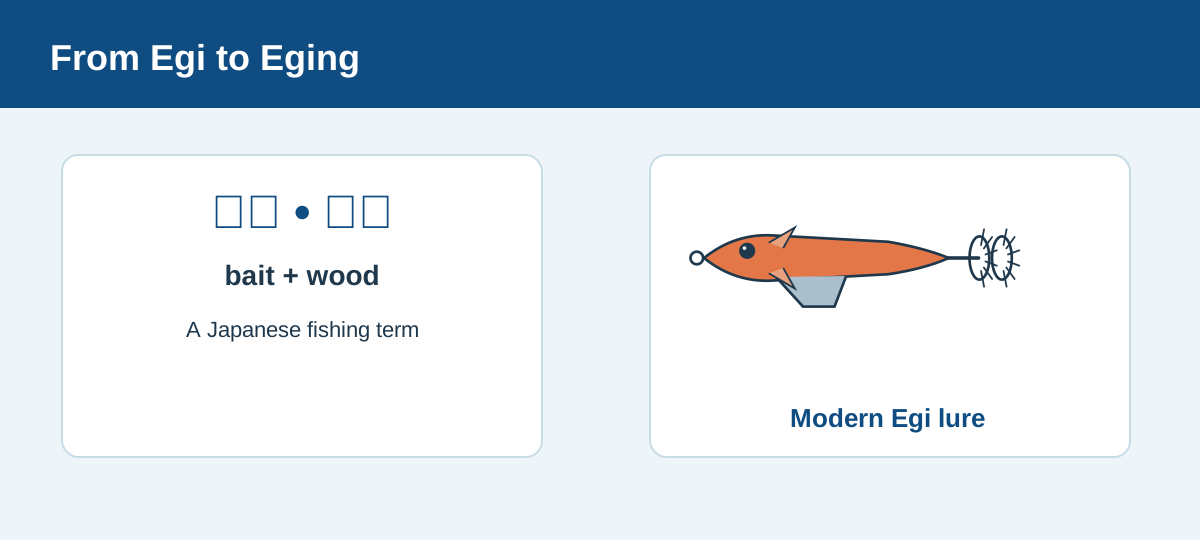
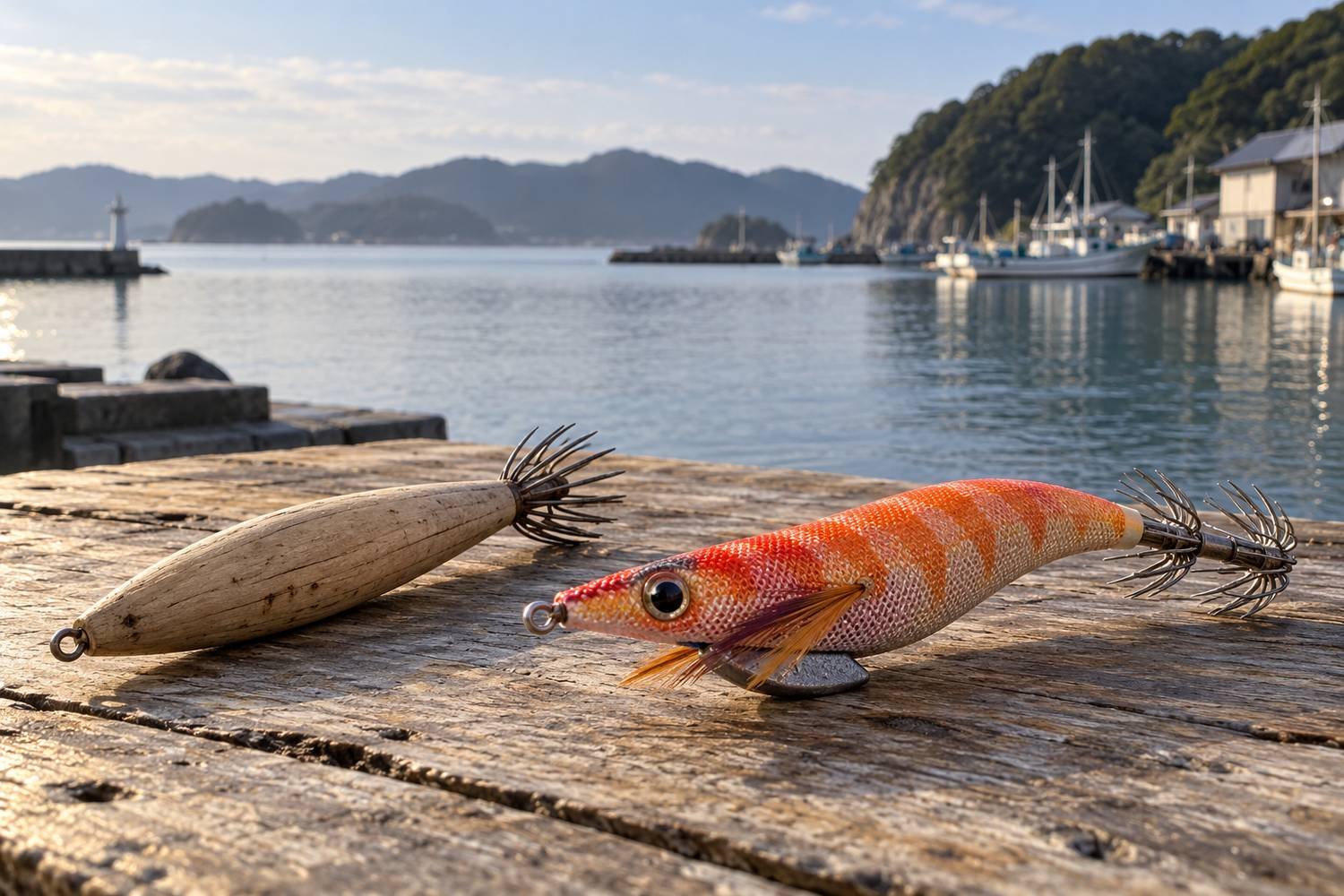
The written term 餌木 identifies a squid-catching artificial lure in Japanese. The Japanese dictionary meaning refers to a shaped wooden imitation, often fish- or shrimp-like. English speakers sometimes translate its characters as “bait wood” or “wooden lure.” That translation describes the name's components; it does not mean every object sold as Egi today contains wood.
Traditional forms preceded modern molded plastics. The exact invention story is harder to establish than the word itself. Various regional accounts describe how fishers noticed squid holding onto wood or fashioned lures from available timber, but those accounts should not be presented as a single verified origin event. What can be stated confidently is that Japanese squid-fishing equipment developed from wooden artificial lures into a broad modern product category.
As recreational Eging grew, manufacturers refined the body shape, sinker, cloth, crown, and fall rate. The original name persisted because it describes a recognizable fishing tool and technique. A modern Egi can be synthetic, brightly colored, and engineered for a particular sink profile while still being an Egi. The continuity is in its purpose and presentation, not a requirement to retain an old material.
Capital letters in “EGI” are common on packaging and in English articles. They are styling, not proof of an acronym. Do not expand EGI into invented English words. When teaching a new angler, the clean explanation is: Japanese 餌木, pronounced approximately “eh-gee,” means a squid lure historically associated with wood.
| Term | Meaning | Use |
|---|---|---|
| 餌木 / egi | Traditional Japanese squid lure | Name of the lure |
| Eging | Fishing with an Egi | Name of the method |
| Wooden bait | Literal character explanation | Historical context |
| Modern Egi | Manufactured squid lure | Contemporary equipment |
What a Modern EGI Looks Like

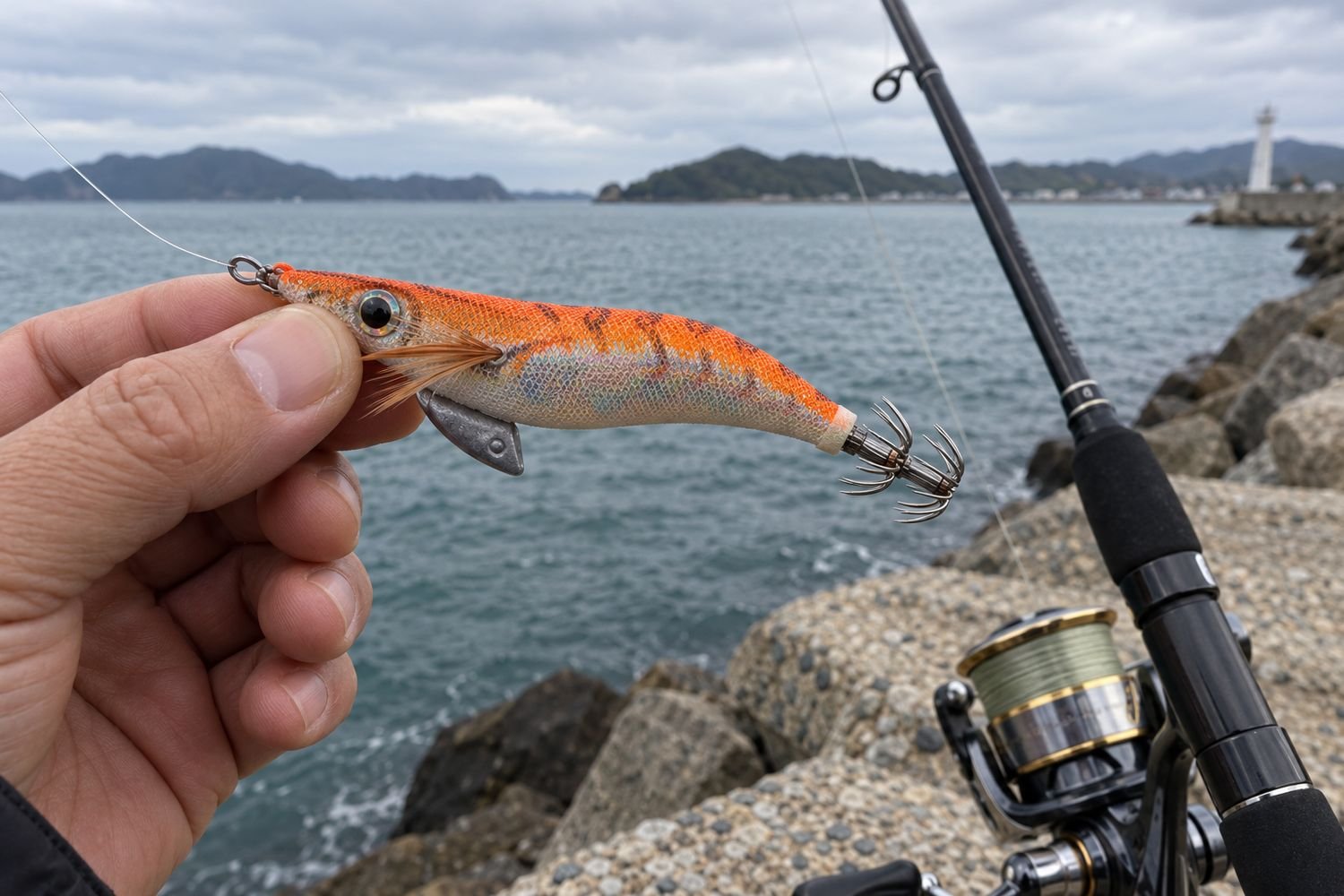
A common shore Egi suggests a shrimp or prawn. Its tapered body gives the angler a manageable casting shape and a recognizable prey profile. Molded plastic, wood, and other materials can form the core. Fabric or a textured coating may cover it, sometimes over reflective foil. Painted or three-dimensional eyes are common visual details, but no single eye pattern guarantees a squid response.
The line connects at the nose. A metal keel sinker sits below the front or belly, placing mass low on the lure. Body volume and weight distribution affect casting, darting, and the angle of descent. Small feather-like side fins appear on some models; others omit them. Optional reflectors or rattles change what a jig looks or sounds like but do not define the category.
At the tail is a shaft with one or two circular rows of fine crown prongs. These are usually barbless and are unlike conventional treble hooks. A squid can extend feeding tentacles or wrap arms around the lure; the crown may engage those limbs as tension comes onto the line. The lure does not require a squid to swallow a fish hook.
Inspect the actual jig before using or listing it. Crowns should be straight, the nose eyelet sound, and the keel secure. A body with a damaged weight or bent crown can behave differently from its specification. Not every Egi has cloth, feathers, two crown rows, or the same sinker material.
| Part | Role | Check |
|---|---|---|
| Prawn-like body | Shape and water resistance | No cracks |
| Nose tie | Pulling point | Smooth and aligned |
| Keel weight | Mass and balance | Secure attachment |
| Exterior | Visual surface | Intact covering |
| Crown prongs | Squid retention | Straight points |
| Optional fins or reflector | Model-specific detail | No fouling |
How Eging Works

An Egi begins its presentation when it enters the water and sinks. Its mass, body volume, keel geometry, current, and line tension determine the real path. A published sink rate is a guide for that model, not a fixed clock for every cast. Watch the line so you can learn how the jig behaves where you are fishing.
A rod lift pulls the Egi upward. Depending on its design and the way the angler moves the rod, it may dart sideways, rise sharply, or glide more gently. Recover slack without dragging it straight back. The next pause is important: it lets the lure sink again and gives a squid a chance to examine or seize it in a defined water layer.
Controlled fall does not mean holding a perfectly tight line. Too much tension changes the angle and can pull the Egi away; uncontrolled slack hides contact. Follow the descent with enough connection to see an early stop or sideways movement. Some takes occur during the fall, but a squid may also approach during a pause or on a slower retrieve. Do not describe one sequence as the only possible behavior.
Practice close enough to see the lure once. Make a small lift and note whether the body darts. Then let it fall while watching the line. This short trial reveals more about that specific jig than repeating a dramatic rod sweep at long range.
| Phase | Angler action | Observation |
|---|---|---|
| Initial sink | Count toward target depth | Line angle and speed |
| Rod lift | Move lure in short strokes | Dart or glide |
| Pause | Follow controlled descent | Line stop or shift |
| Take | Remove slack smoothly | Added weight |
| Retrieve | Keep steady pressure | No sudden slack |
EGI Size Numbers Explained
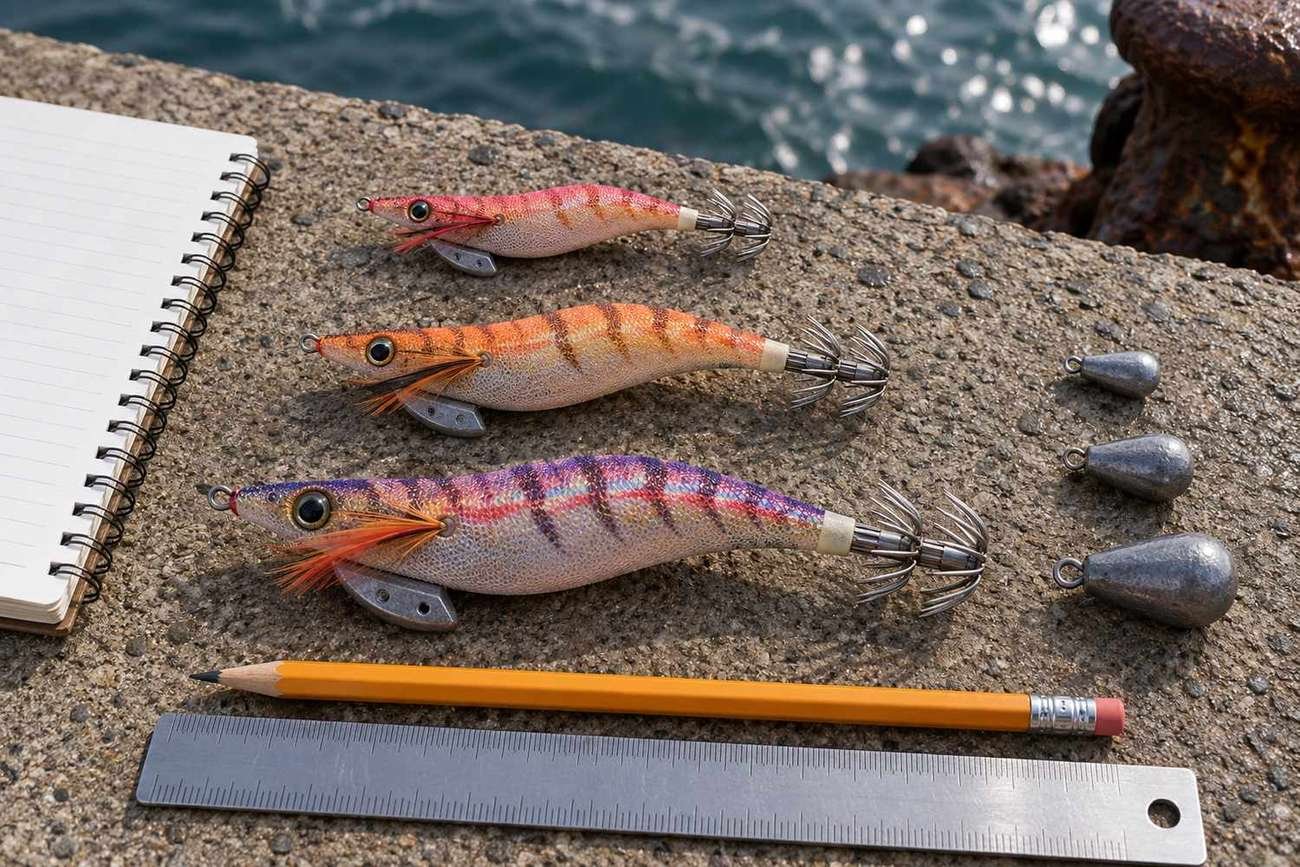
Numbers such as 2.5, 3.0, and 3.5 are nominal Egi size designations. They are not weights in grams. Two size 3.0 models can differ in mass, body shape, and fall time. Check the manufacturer's actual length and weight listing for the variant in your hand rather than inferring either from the size number alone.
A smaller Egi may suit compact prey or smaller squid and can be easier to work in shallow, calm water. A larger silhouette may be easier to notice or cast in other conditions. These are starting considerations, not a guarantee of what squid will take. Use local guidance about the species and size present, and make sure the rod can cast the model's actual mass.
A 3.0 Egi is a practical beginner comparison point in many places because it sits between common 2.5 and 3.5 choices. Yet the right first lure depends on shore depth, current, season, and local squid. A 3.5 shallow version may fall more slowly than a 3.0 standard one. Size does not determine sink rate on its own.
When shopping or building a range, record three separate fields: nominal size, weight in grams, and the manufacturer's sinking speed. That simple habit prevents the common mistake of treating “3.0” as “3 grams” or assuming every 3.5 sinks alike.
| Label | What it tells you | What it does not tell you |
|---|---|---|
| 2.5 / 3.0 / 3.5 | Nominal size class | Exact grams or fall rate |
| Weight in grams | Actual lure mass | Full in-water behavior |
| Body length | Physical size | Sink speed alone |
| Seconds per meter | Approximate sink profile | Exact timing in current |
Shallow, Standard, and Deep EGI
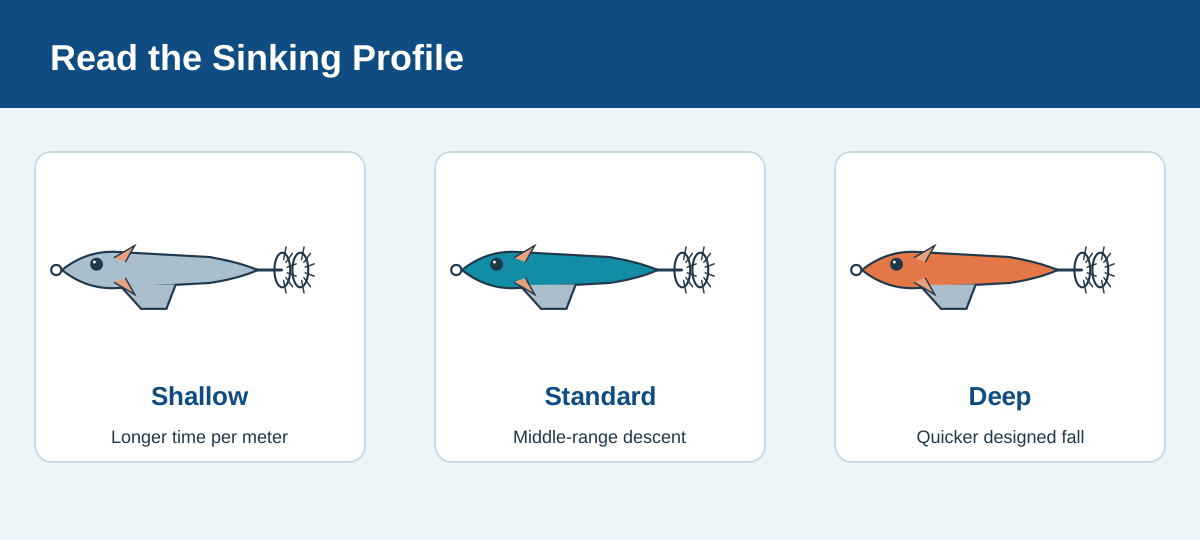
A sinking-rate label tells you what the lure is designed to do after a cast or lift. Manufacturers often express this as seconds per meter: the approximate number of seconds a particular jig needs to descend one meter under test conditions. A higher number means a slower fall. Six seconds per meter is slower than three. Real water adds current, wave movement, depth, and line drag, so count and observe your actual presentation.
Shallow and super-shallow Egi fall more slowly in a product range. That can extend a pause above seagrass, rock, or fish holding in a thin upper layer. It may also make the lure harder to control in strong current. Standard Egi provide a middle starting point for many shore situations. Deep Egi or added-sinker systems aim to reach lower water faster or keep a usable line angle in current.
These names refer to model design rather than fixed size. YAMASHITA, for example, publishes different seconds-per-meter values for standard and shallow versions even at the same nominal Egi size. The exact figures belong to those specific items and should not be copied to every brand.
Begin by choosing a jig that reaches the target layer without repeatedly hitting hazardous bottom. If it takes too long to reach the fish, test a faster profile or shorten the cast. If crowns continually snag, reduce sink time, choose a slower profile, or move to a cleaner lane. Watch the line each time rather than fishing by the package number alone.
| Profile | General purpose | Watch for |
|---|---|---|
| Super shallow | Very slow presentation | Current drift |
| Shallow | Longer fall above cover | Limited deep reach |
| Standard | General starting point | Bottom contact |
| Deep / fast | Quicker access to depth | Snags on shallow rock |
EGI Colors and Light Features
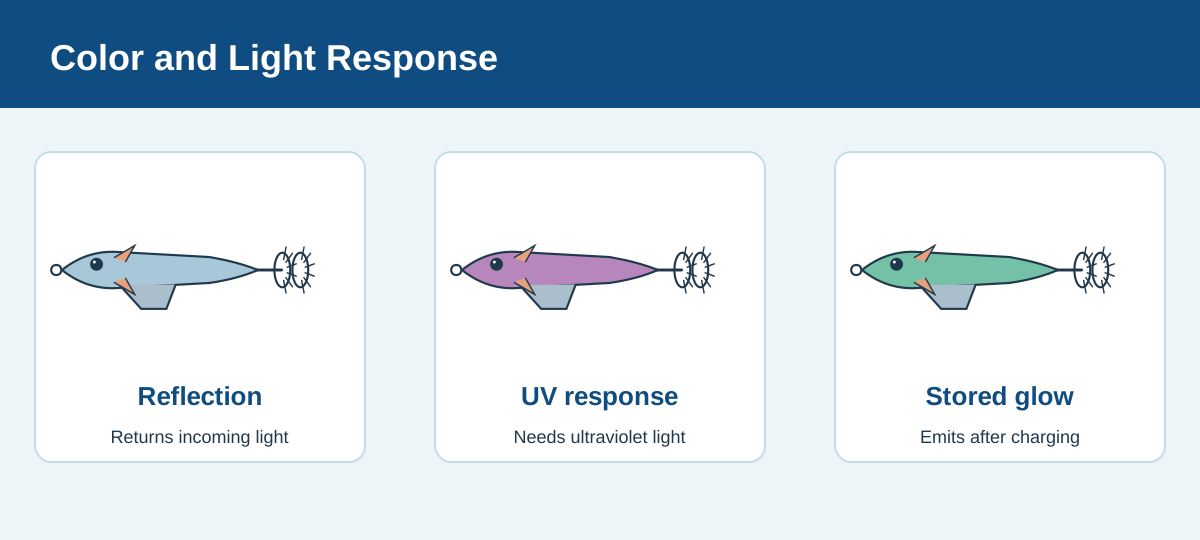
Color is one part of the Egi's visible profile. Natural shrimp or baitfish patterns, bright orange or pink, and dark silhouettes can all be useful comparisons. Their appearance changes with water clarity, depth, and light. Rather than assuming one “best” color, keep the same sink profile and movement while testing another finish. That makes the result more informative.
Reflective foil sends available light back toward the viewer. An internal moving reflector changes its highlights as it swings or shifts. Neither stores light. UV-reactive material, sometimes called Keimura in Egi product lines, responds while suitable ultraviolet light reaches it. Phosphorescent glow absorbs light energy and emits visible light afterward, then fades. Charging a glow section does not make ordinary foil glow, and UV fluorescence is not the same stored-light effect.
Fabrics and textured coverings can affect the way a color appears or diffuses light. Some models include colored underlayers beneath the cloth, so the visible body is a combination of materials. Individual product descriptions matter; “glow,” “UV,” and “reflective” are not interchangeable promises.
In daylight or clear water, a natural or reflective option may be easy to evaluate visually. After dark, a charged glow jig can be another test where appropriate, while pier lights may illuminate reflective finishes. The productive choice also depends on squid presence, depth, and the exact water conditions. A bright lure cannot compensate for fishing the wrong layer.
| Feature | Physical effect | Practical note |
|---|---|---|
| Natural color | Prey-like or muted pattern | Compare against local water |
| High contrast | Stronger visual outline | May help track jig |
| Reflective foil | Returns incoming light | Requires illumination |
| UV-reactive | Fluoresces under suitable UV | Depends on UV reaching lure |
| Glow | Emits after charging | Fades over time |
Beginner Eging Equipment

A practical beginner outfit should cast the actual Egi weight and reveal changes in line tension. A responsive spinning rod is common. Choose its casting range from the jigs you intend to use, not from the nominal size number alone. A rod that is too stiff for a small Egi may make the fall difficult to control, while one overpowered by the lure may not cast or work it cleanly.
A spinning reel with smooth line lay and reliable drag supports repeated casts and steady retrieval. Thin braided main line can improve feel at distance, but it requires careful knotting and controlled pressure. A suitable fluorocarbon leader can help around abrasion and connects the main line to the lure. Select lengths and strengths for local cover, target species, and the actual equipment rather than treating one printed setup as universal.
A small Egi clip can make changing sizes and colors convenient. It must not be so bulky that it catches the nose or alters the jig's posture. A direct knot is another option if it preserves the lure's intended movement. Start with one Egi before adding extra sinkers or multi-jig rigs. Learn how it sinks and darts on your tackle.
Carry a protective jig case for exposed crown prongs and a landing net suited to the pier or rocks. Good footwear, a light for low-light sessions, and a plan for returning or retaining a catch matter as much as the lure itself. Check local gear and access rules before fishing.
| Item | Why it matters | Check |
|---|---|---|
| Rod | Casts and animates Egi | Matches actual lure mass |
| Spinning reel | Retrieves with steady drag | Smooth operation |
| Main line | Contact at distance | No damage |
| Leader | Near-lure abrasion resistance | Sound knot |
| Clip or direct knot | Nose connection | No interference |
| Case and landing net | Safe handling | Covers prongs and reaches water |
How to Fish an EGI From Shore

1. Choose safe water. Begin at a permitted pier, jetty, or protected shore where you can cast and land a squid without leaning into waves. Identify a clear lane, likely depth change, and any seagrass or rock that could catch the crown.
2. Select the Egi. A medium nominal size with a standard sink profile can be a reasonable comparison point in many places. Change the size or fall rate to fit local squid, current, and depth. Inspect the crown and keel before each new sequence of casts.
3. Cast toward the zone. Let the lure travel through an open lane. Close the bail and watch the line immediately. Avoid casting across other anglers or dragging the crown over a crowded rail.
4. Let it sink. Count toward a chosen layer. The maker's seconds-per-meter figure is a starting estimate; current and line angle change the real descent. In snaggy water, stop above the bottom rather than waiting for a hard strike against rock.
5. Lift or dart. Make one or two controlled rod movements and recover loose line. The exact response depends on the jig. A clean short dart is enough to test a new lure; violent sweeping is rarely a good starting method.
6. Pause and watch. Lower the rod enough to let the Egi descend naturally, but keep visual or light tactile contact. A line that stops too early or shifts may signal a take. Repeat the same count and cadence before changing one variable.
7. Retrieve and land. Lift smoothly when weight appears. Maintain steady pressure rather than yanking as if setting a barbed fish hook. Lead the squid to a suitable net, allow for ink, and keep hands clear of the crown.
| Step | Main decision | Good sign |
|---|---|---|
| Choose | Safe access and clear lane | Room to cast and land |
| Select | Size and sink profile | Controlled reach |
| Cast | Target layer | No crossover |
| Sink | Count and watch line | Repeatable depth |
| Lift | Measured rod action | Clean dart |
| Pause | Controlled descent | Visible line feedback |
| Land | Smooth pressure | Secure netting |
Where and When to Go Eging

Eging is often possible from jetties, piers, beaches, rocky coastlines, and sheltered bays. Look for reachable water with suitable depth and safe access, then search edges where baitfish or small crustaceans may move. Seagrass margins can hold interest for some squid, but exposed crowns snag in thick vegetation. Work along a clear edge instead of pulling through a dense bed.
Daylight and darkness can both provide opportunities. Location and depth may shift with local species, prey, visibility, and fishing pressure. Pier lighting can help an angler see the line and may create a light-dark boundary worth testing, but bright light is not equally effective everywhere. During the day, shade, deeper layers, or clearer sight fishing may be useful tests.
Tide and current alter both squid movement and the lure's path. A cross-current can bow the line so the Egi falls sideways or appears to sink slower. Shorten the cast, change the jig profile, or adjust the casting angle when you can no longer control depth. A good-looking lure is useless if it never reaches the layer you intend to fish.
Seasons vary by region and squid species. Avoid transferring a Japanese seasonal pattern uncritically to another coast. Consult local fisheries information for access, permits, size limits, bag limits, and closed areas. On an exposed breakwater, wave and footing safety come before a promising tide window.
| Situation | Starting approach | Main limitation |
|---|---|---|
| Pier or jetty | Search lit and dark edges | Crowds and landing height |
| Seagrass margin | Work clean lanes | Crown fouling |
| Rocky shore | Keep jig above bottom | Snags and footing |
| Moving tide | Track line angle | Current drift |
| Daylight | Search depth and shade | Visibility varies by water |
How to Detect and Land a Squid

Squid are cephalopods with arms and specialized feeding tentacles. They can approach an Egi, inspect it, and seize it without biting a fish hook. The tail crown's fine prongs can engage a limb during the contact. This is why watching the lure's fall and keeping appropriate line contact matter so much.
A take can appear as a line that stops before the expected depth, moves sideways, or becomes unexpectedly heavy. On a windy pier, those signs are easy to confuse with current, bottom, or loose line. Establish a consistent fall count for the same jig and cast. If the next descent behaves differently, lift smoothly to check rather than delivering a hard strike at every tiny twitch.
When weight is confirmed, maintain a gentle loaded rod and reel steadily. A sudden slack loop can let barbless crown prongs lose their hold. Excessive force can also tear or dislodge the connection. If the squid jets away, let the drag and rod absorb the movement while retaining control.
Plan the landing before casting. A high pier may require a long-handled net; lifting a heavy squid by the line can cause loss or damage. Keep the animal away from people while it may release ink. Handle the crown carefully during removal, and follow local rules and responsible handling practices for retained or released squid.
| Observation | Possible meaning | Response |
|---|---|---|
| Fall stops early | Squid, bottom, or slack | Lift smoothly to check |
| Line shifts sideways | Current or squid movement | Recover slack and feel |
| Unexpected weight | Possible contact | Maintain loaded rod |
| Sudden lightness | Squid released or rig issue | Inspect jig and crown |
Different Eging Techniques

Standard shore Eging uses a castable Egi and repeated lift-and-fall movements from a coast, jetty, or pier. The angler explores distance and depth while controlling the line. It is the method most beginners encounter first and the one most closely associated with the word “Eging” in general introductions.
Light Eging uses smaller, lighter tackle and jigs to suit particular small squid, shallow areas, or delicate presentations. It is not simply a weak version of standard Eging: lighter gear requires careful matching of lure weight, line, and water movement. A small jig can become hard to control in wind or strong tide.
Tip-run Eging is a specialized drifting-boat method. The Egi, rod tip, and line angle work together as the boat moves, often near a chosen depth. A tip-run design may use different weight distribution from a shore-casting model. Boat casting is another possible application, but the exact rig and presentation should match the platform and local rules.
The broader squid-jig category also includes vertical cylindrical lures and droppers. Those may be lowered from a boat or pier and worked up and down rather than darted on a long shore cast. They can catch squid, but they are not automatically Egi merely because they carry crown prongs.
| Method | Main platform | Core control |
|---|---|---|
| Shore Eging | Pier, jetty, or coast | Cast, dart, fall |
| Light Eging | Suitable sheltered water | Small rig and gentle action |
| Tip-run | Drifting boat | Rod-tip load and line angle |
| Vertical squid jigging | Boat or pier | Depth and up-down movement |
Common Eging Mistakes and Safety
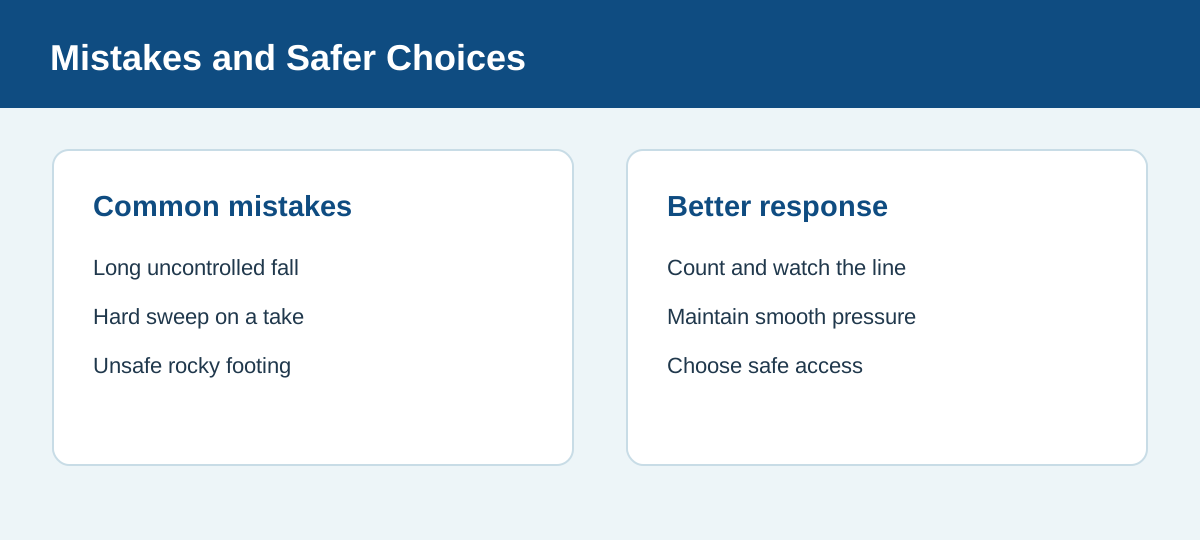
Confusing size and weight. “3.0” is a nominal size, not three grams. Read the actual mass and sink speed for the model. Ignoring the fall. A dramatic dart without a controlled pause can move the jig out of the zone and hide a take. Count the descent and watch the line.
Fishing too deep over cover. Fine crown prongs catch seagrass, rock, and rope. Reduce sink time, choose a slower profile, or move to a clean lane. Striking too hard. A violent fish-style hookset can lose the hold. Lift smoothly and keep consistent pressure during retrieval.
Unsafe access. Wet jetties and rock platforms can be slippery, especially at night or in rising surf. Wear suitable footwear, carry a light, allow space for other anglers, and plan a safe landing. Keep sharp crowns covered during transport; dispose of damaged jigs and line responsibly. Check local fishing and access rules before going.
| Mistake | Why it matters | Better habit |
|---|---|---|
| Size equals grams | Wrong tackle choice | Read model specifications |
| No watched fall | Missed depth or take | Count and track line |
| Repeated bottom snags | Crown damage | Fish above cover |
| Hard strike | Lost contact | Smooth lift and retrieval |
| Risky footing | Injury risk | Choose safe access |