MAIN ARTICLE
Jerkbait Anatomy: Understanding the Main Components
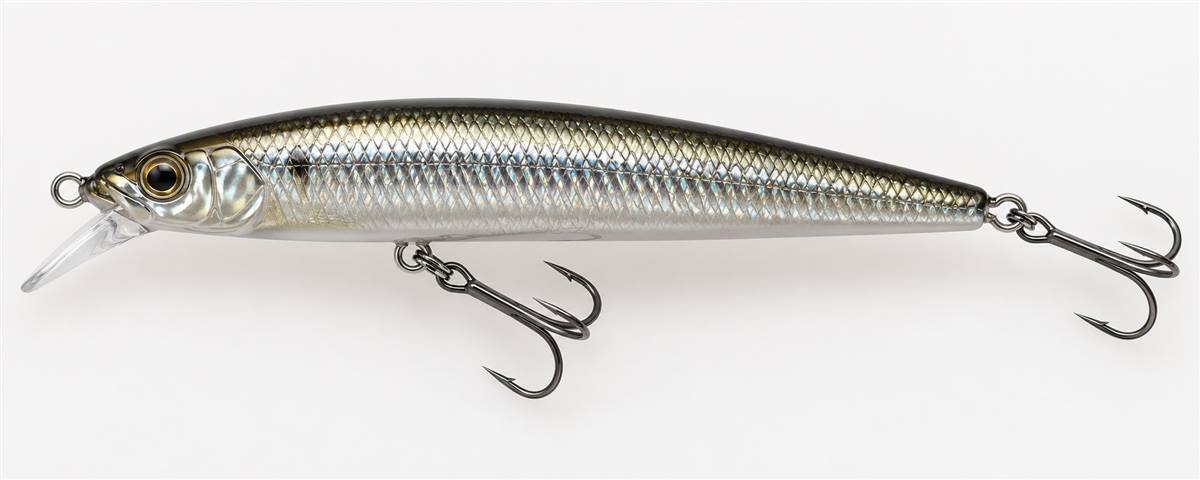
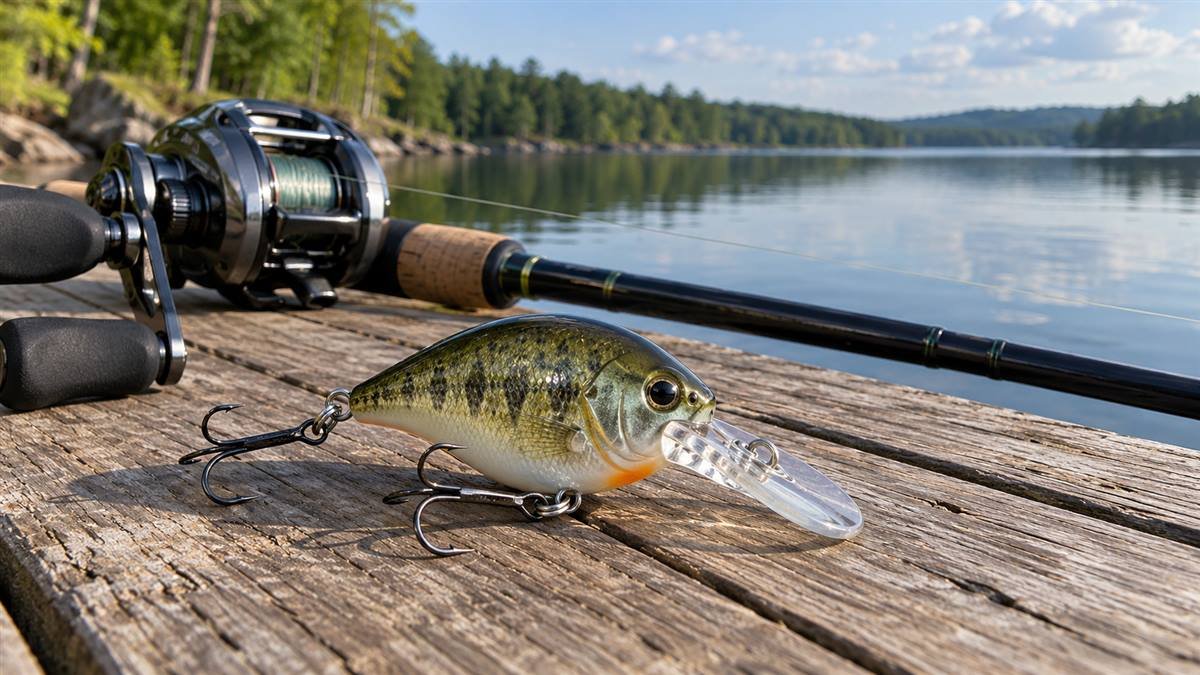
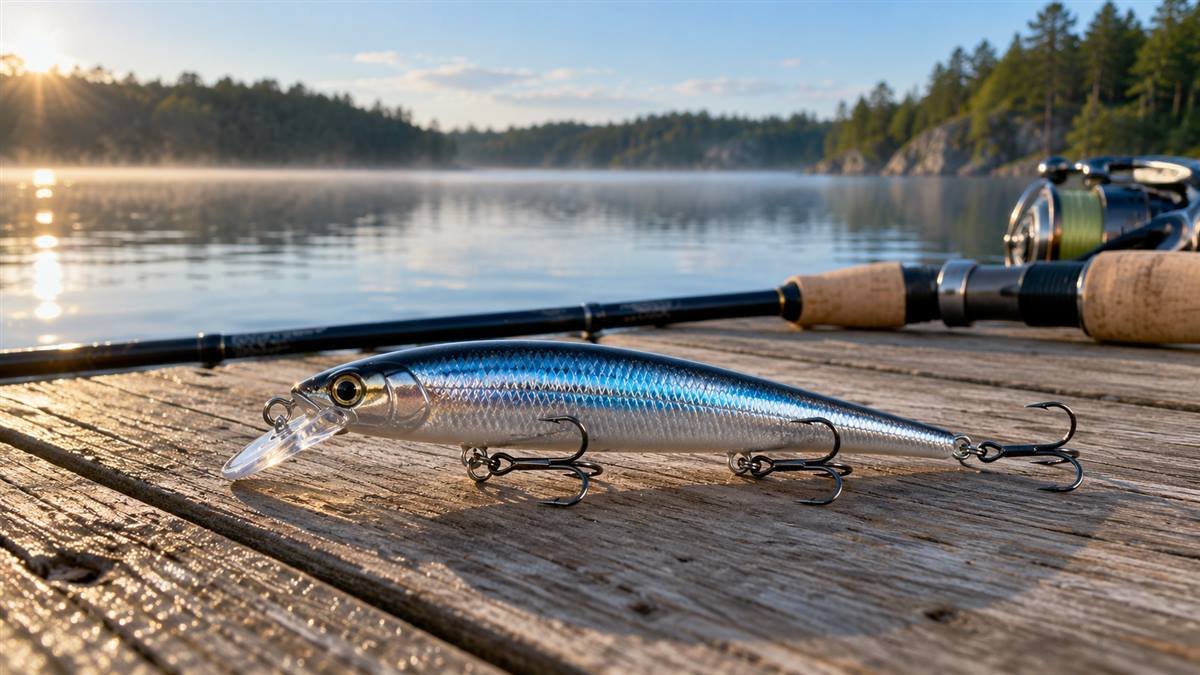
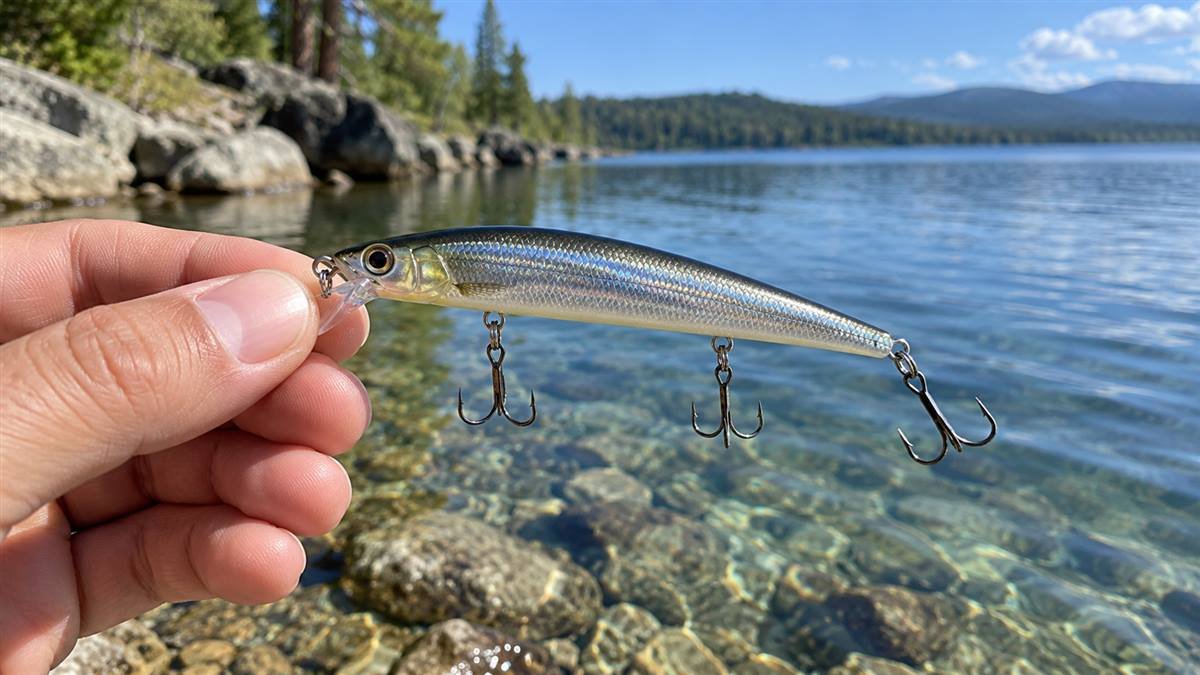
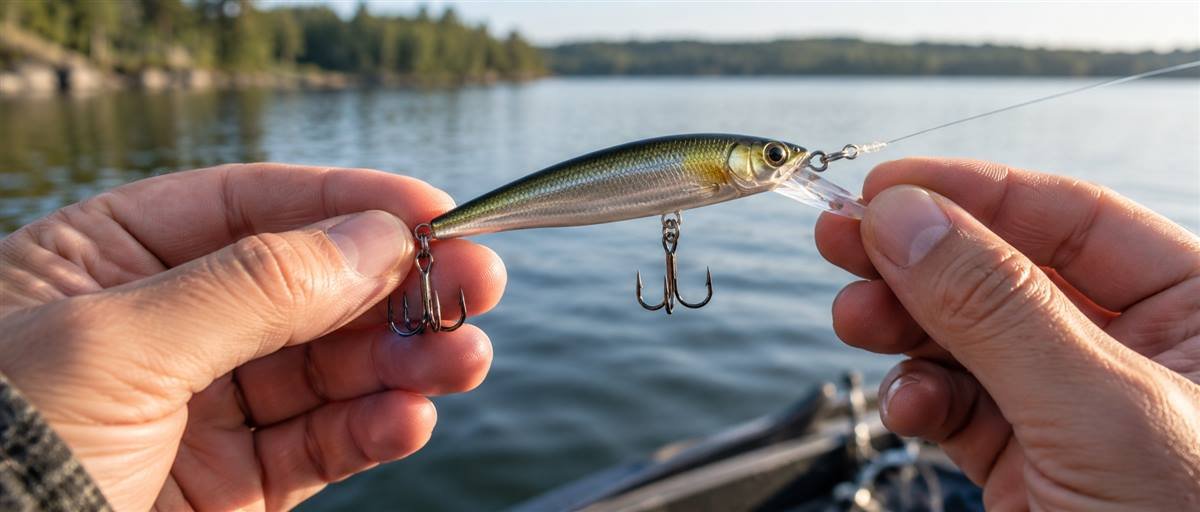
The familiar hard jerkbait starts with a slim, rigid body shaped like a small forage fish. Its bill, when fitted, meets the water and helps the lure dive. The line tie sets the pull point; the body and internal weights influence balance, casting, and direction changes. Hooks and split rings complete the working assembly.
Body length and profile affect both the visible target and the distance a lure may travel on each twitch. A longer bill can help a particular model reach deeper water, but a bill alone does not tell you its exact depth. Line diameter, casting distance, retrieve speed, and the manufacturer's design all matter. Some jerkbaits have no bill at all, especially soft styles.
| Part | Main Job |
|---|---|
| Streamlined body | Baitfish profile and directional movement |
| Diving bill | Helps a billed model reach its running depth |
| Line tie | Transfers each rod stroke to the lure |
| Internal weights | Influence casting, balance, and buoyancy |
| Treble hooks | Hold a fish after the strike |
| Split rings | Connect hooks and sometimes the line tie |
Inspect the bill for cracks and each hook point for damage before casting. A bent ring or heavier replacement hook can change the lure's resting posture. That matters most when you expect a bait to hang at one depth during a pause.
What Are the Main Types of Jerkbaits?
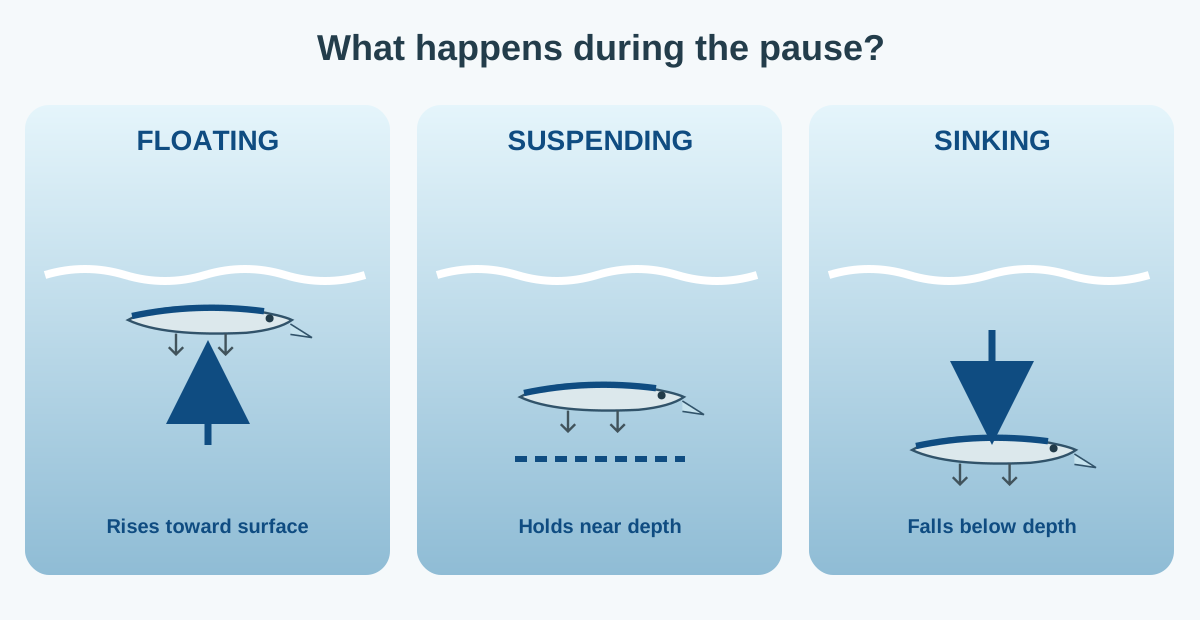
Floating, suspending, and sinking describe what a lure does when the angler stops moving it. They are more useful categories than color alone because they determine whether a bait rises out of a target zone, hangs near it, or falls through it. Test a new model in the water you fish: temperature, line, hooks, and small hardware changes can alter the resting behavior.
Floating Jerkbaits
A floating jerkbait rises during the pause. It can be useful over shallow grass or cover, where lifting away from vegetation reduces snagging. Some are worked close to the surface, while billed models dive on the pull and then return upward. Rising too quickly can also take a lure away from fish holding deeper, so check the actual path.
Suspending Jerkbaits
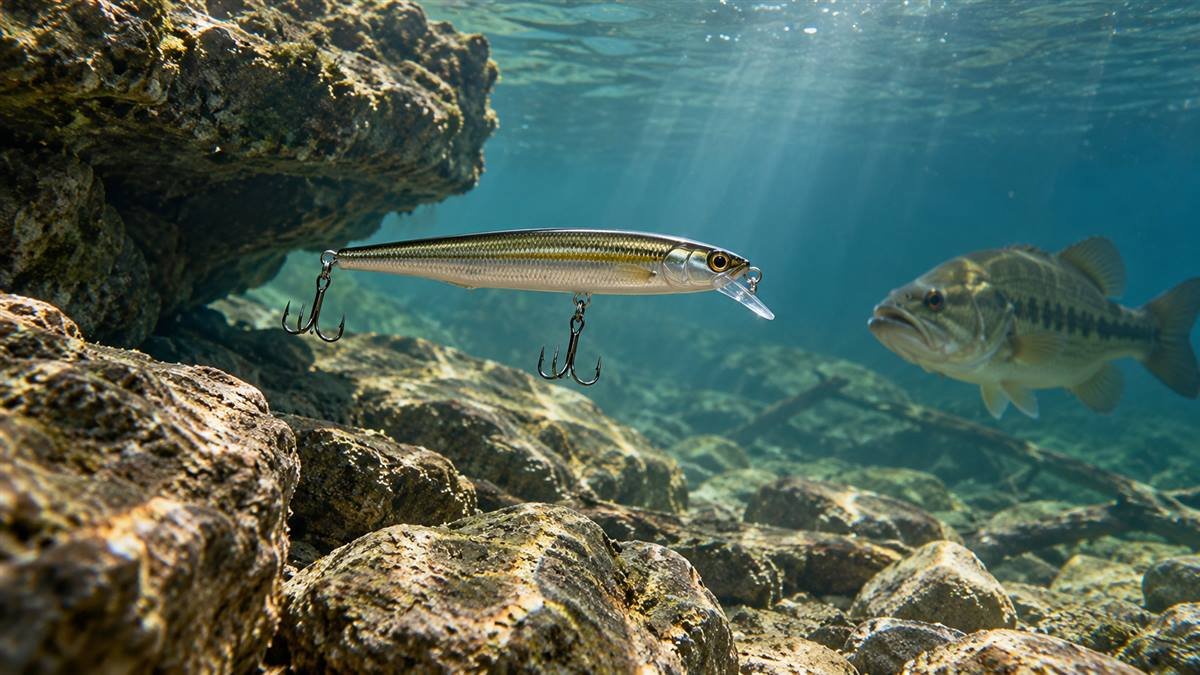
A suspending model is designed to remain near its running depth when stopped. It may settle nose down, level, or nose up, and a real lure can slowly rise or sink rather than hover perfectly. Its value is the ability to keep a baitfish-shaped target near fish between twitches. Major League Fishing's jerkbait guide describes how posture and buoyancy affect that presentation.
Sinking Jerkbaits
A sinking jerkbait descends when the retrieve pauses. This can reach a deeper lane, let you count the lure down before working it, or suggest a fading baitfish. Control slack and watch depth so it does not fall into snags. The Rapala Shadow Rap is a manufacturer-documented slow-sinking hard jerkbait, showing why “jerkbait” does not always mean “suspending.”
| Type | On the Pause | Starting Use |
|---|---|---|
| Floating | Rises | Shallow grass and cover |
| Suspending | Stays near running depth | Fish holding in a defined lane |
| Sinking | Falls | Deeper fish or a falling presentation |
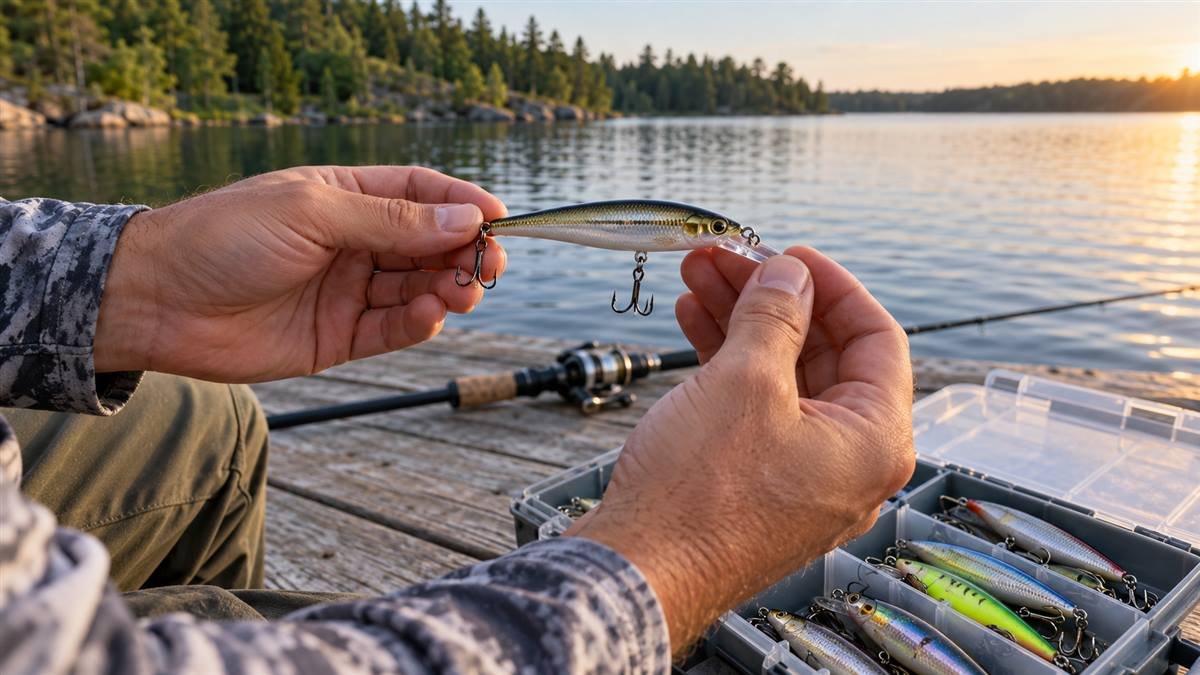
These are starting points, not fixed boundaries. Compare two lures in view before relying on their packaging alone.
Hard Jerkbaits vs. Soft Jerkbaits: What's the Difference?
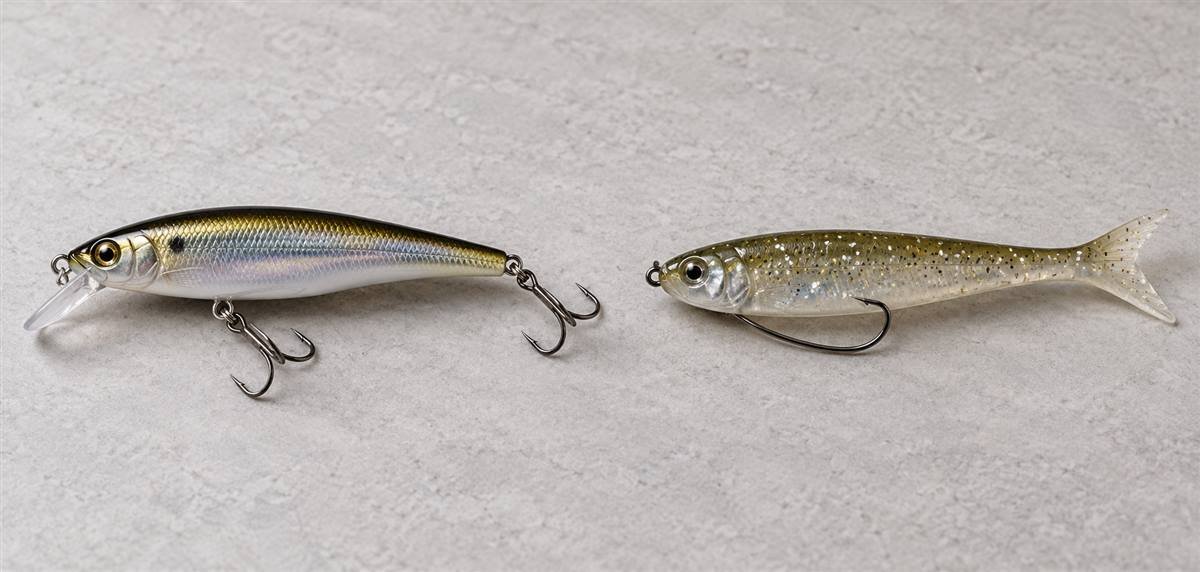
Both lure families imitate baitfish and respond to rod movement, but their construction changes how you rig and fish them. A hard jerkbait is a finished rigid lure, usually with built-in hooks and a known running-depth range. A soft jerkbait is a flexible body that the angler rigs on a separate hook. Its depth and fall can change dramatically with hook weight or added weight.
Hard Jerkbaits
Traditional hard models commonly carry a diving bill, treble hooks, and internal ballast. A twitch can make the body turn sharply and expose a flash of its side. The bill and balance help determine running depth and how it sits on the pause. They are convenient when you need to work a consistent open-water lane or keep a suspending bait near fish. Their exposed trebles can catch vegetation and wood.
Soft Jerkbaits
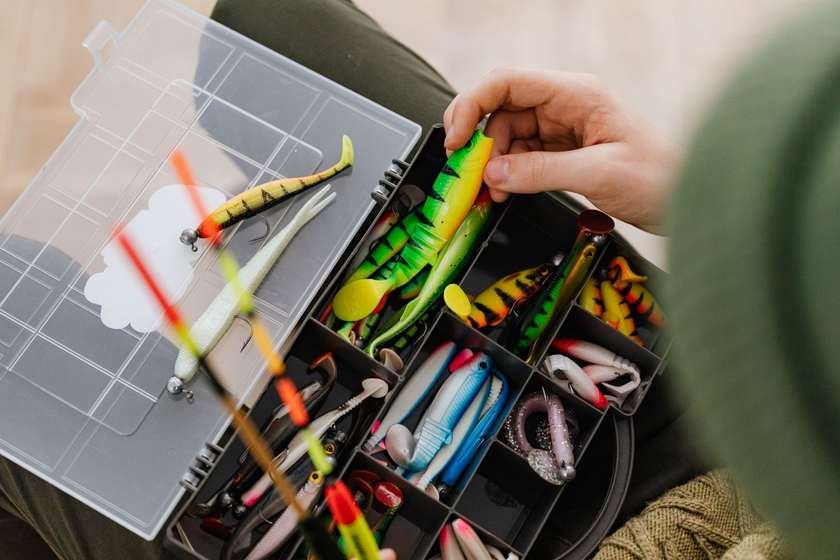
A soft-plastic version has no rigid bill in its common form and usually uses one separately rigged hook. A straight, centered rig can glide or dart; an off-center hook may make it roll unnaturally. Weightless rigging favors a slower fall and shallow presentation, while a weighted hook or inserted weight can reach deeper. The Zoom Super Fluke is a familiar example of this category, not a required choice.
| Feature | Hard Jerkbait | Soft Jerkbait |
|---|---|---|
| Material | Rigid body | Flexible plastic |
| Hooks | Often preinstalled trebles | Usually separately rigged |
| Depth control | Model design and retrieve | Rigging weight and retrieve |
| Movement | Sharp darts, flash, pause | Darts, glides, and falls |
| Common use | Open water and suspended fish | Vegetation edges and shallow cover |
Match the lure to the cover before choosing a finish. A weedless single-hook soft bait may pass through sparse vegetation more easily than a treble-hook hard bait.
Jerkbait vs. Crankbait: How Are They Different?
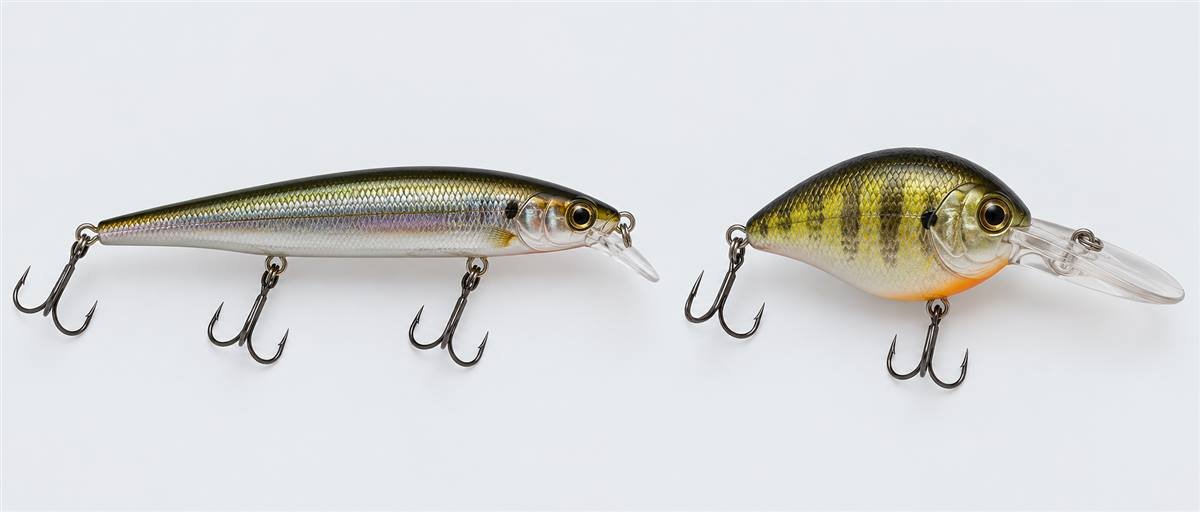
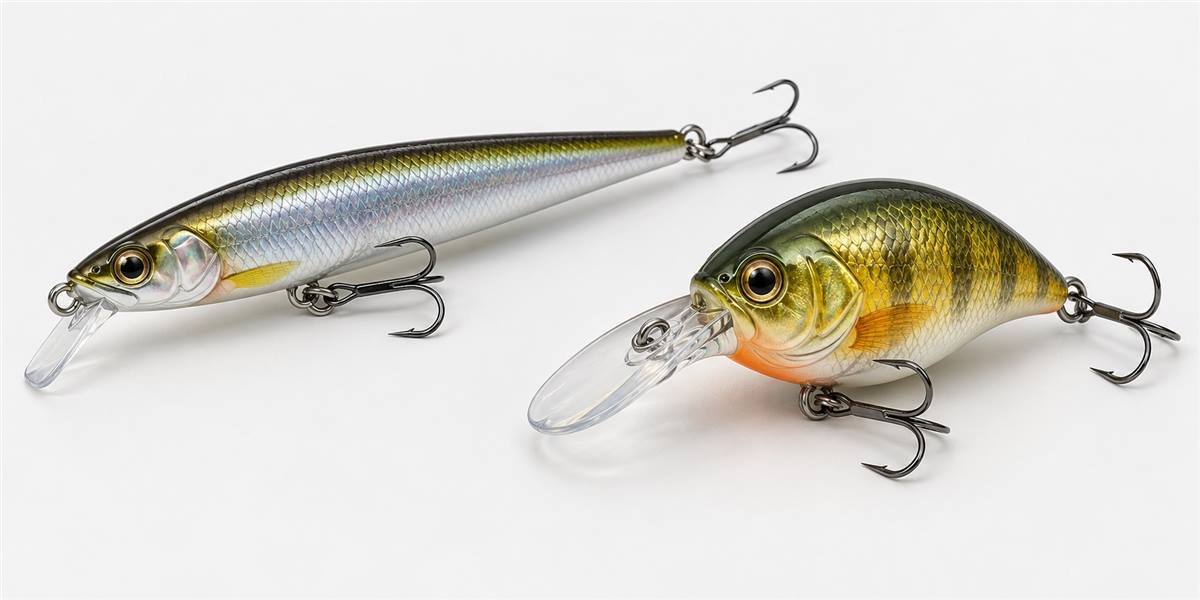
A jerkbait usually relies on deliberate rod twitches and pauses for its characteristic erratic movement. A crankbait usually produces a repeated swimming wobble during a steady retrieve because of its bill and body. The difference is a useful starting point, not a rule that every lure must follow. Some jerkbaits swim steadily, and a crankbait can be stopped, deflected, or twitched.
Body shape also offers a clue. A common hard jerkbait is long and slim, like a minnow. A common crankbait is shorter and deeper-bodied. Yet both categories contain exceptions, so observe the lure's action rather than identifying it by shape alone. A crankbait can search a bank efficiently; a suspending jerkbait can stay near a single visible or suspected fish.
| Factor | Jerkbait | Crankbait |
|---|---|---|
| Common profile | Long and slender | Often shorter and deeper |
| Primary technique | Rod twitches and pauses | Steady retrieve |
| Typical action | Irregular darting and flash | Repeated wobble |
| Pause | Often central | Varies by technique |
| Common purpose | Work a target lane precisely | Cover water and search |
For example, if a bass follows a moving lure along a clear rocky point but will not commit, a suspending jerkbait can pause in front of it. If you need to locate fish across a long shoreline, a crankbait's continuous retrieve may be more efficient.
How Does a Jerkbait Create Its Unique Action?
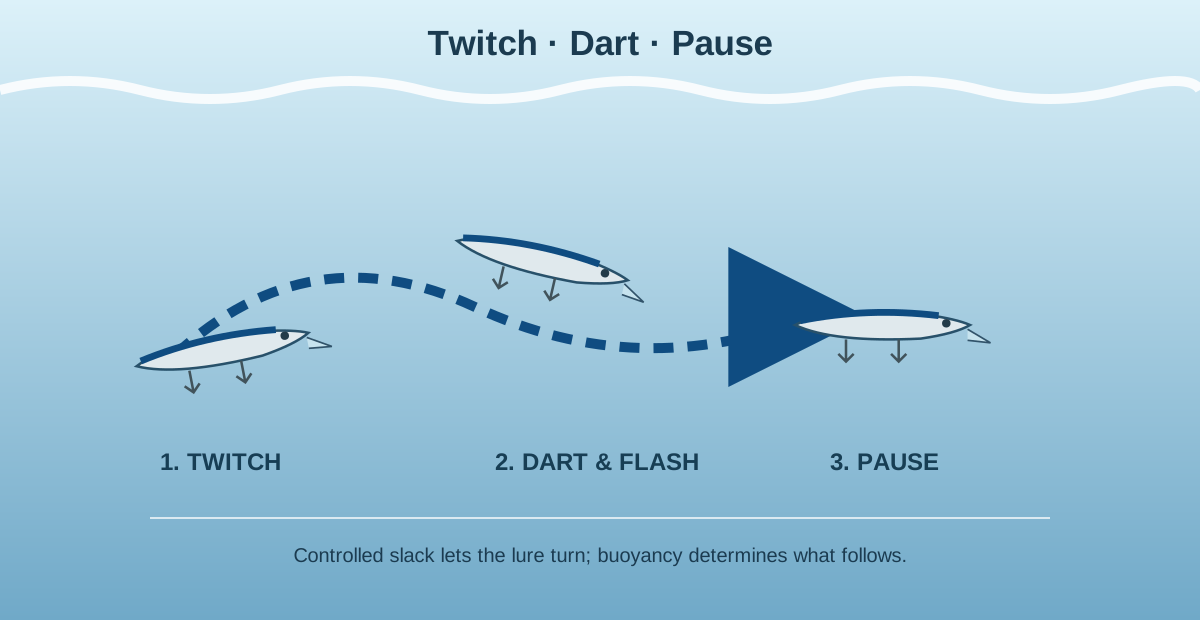
With a billed hard jerkbait, water pushes against the bill as the lure moves forward. The body shape, pull angle, and internal balance determine how it dives, rolls, or turns. A sudden rod-tip acceleration makes it lunge; letting a little line slack follow the stroke can free the body to change direction. Holding the line tight throughout every twitch may pull it mostly straight ahead.
On the pause, buoyancy takes over. A floater rises, a suspender stays near its working depth, and a sinker falls. Some models continue to sway or settle briefly before resting. A flashing side, sudden direction change, or stationary profile may all matter to a watching fish, but no single action guarantees a strike. Observe each lure beside the bank before casting to distant cover.
The Jerkbait Action Cycle
- Cast: send the lure beyond the target area.
- Dive: reel or twitch a billed lure into its working zone.
- Twitch: snap or pull the rod tip to make it dart.
- Release: allow controlled slack for a direction change.
- Pause: let the lure rise, hang, or fall by design.
- Repeat: alter rhythm in response to fish and conditions.
A fish may strike during the pause, on a sharp movement, or immediately as the lure restarts. Watch the line and feel for unexpected weight through the whole sequence.
How to Fish a Jerkbait for Bass
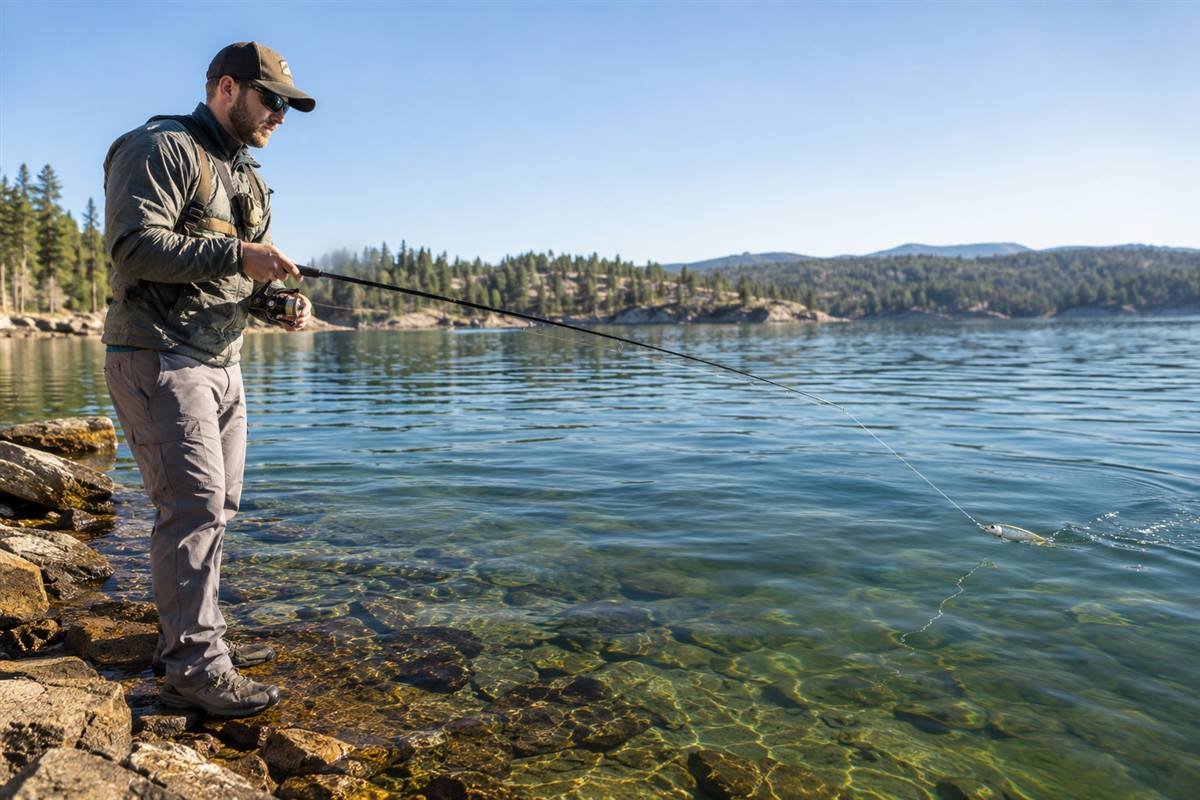
Start with a billed hard jerkbait you can cast accurately and see near the boat or shore. Learn how far it moves on one stroke. A simple twitch–twitch–pause retrieve gives you a repeatable baseline; it is a starting point, not a fixed rule for every fish.
Step 1 — Choose the Right Fishing Area
Look for baitfish and places predators can intercept them: rocky points, clear shorelines, weed edges, drop-offs, and ledges. Bass may also hold above deeper water rather than tight to the bottom. A visible school helps, but a depth break or current seam can be enough reason to make a test cast. Choose a lane you can work without dragging the trebles through heavy cover.
Step 2 — Cast Beyond the Target
Cast far enough beyond the likely fish position to bring the lure to depth before it reaches the most important part of the retrieve. A lure that begins diving only after crossing the target may never pass in front of the fish. Keep the cast within a distance where you can still control slack and feel a bite.
Step 3 — Get the Jerkbait to Its Running Depth
Engage the reel and make several controlled turns or twitches to help a billed bait dive. The actual depth depends on model, line, cast length, and speed. Compare the manufacturer's stated range with what you observe; do not assume the same model will run identically with every line or rod angle.
Step 4 — Use the Twitch–Twitch–Pause Retrieve
Point the rod low enough to give the tip room to move. Make one short twitch, a second twitch, and then stop. Recover excess line without dragging the lure forward during the pause. A little slack can help the bait turn, but too much hides a bite. Repeat the sequence through the target lane, watching the lure's flashes and the line's movement.
Step 5 — Adjust the Pause Duration
Start with shorter rests when fish are chasing bait and longer rests when fish follow without striking or seem less active. There is no universally correct number of seconds. Change one variable at a time so you can tell whether the response came from the pause, the twitch strength, or a different depth.
| Fish Activity | Starting Cadence | Adjustment |
|---|---|---|
| Active | Quick twitches, short pauses | Increase speed if fish respond |
| Moderate | Two twitches, medium pause | Experiment with rhythm |
| Inactive or cold-water | Gentle twitches, longer pauses | Lengthen rests if useful |
Step 6 — Detect the Bite and Set the Hook
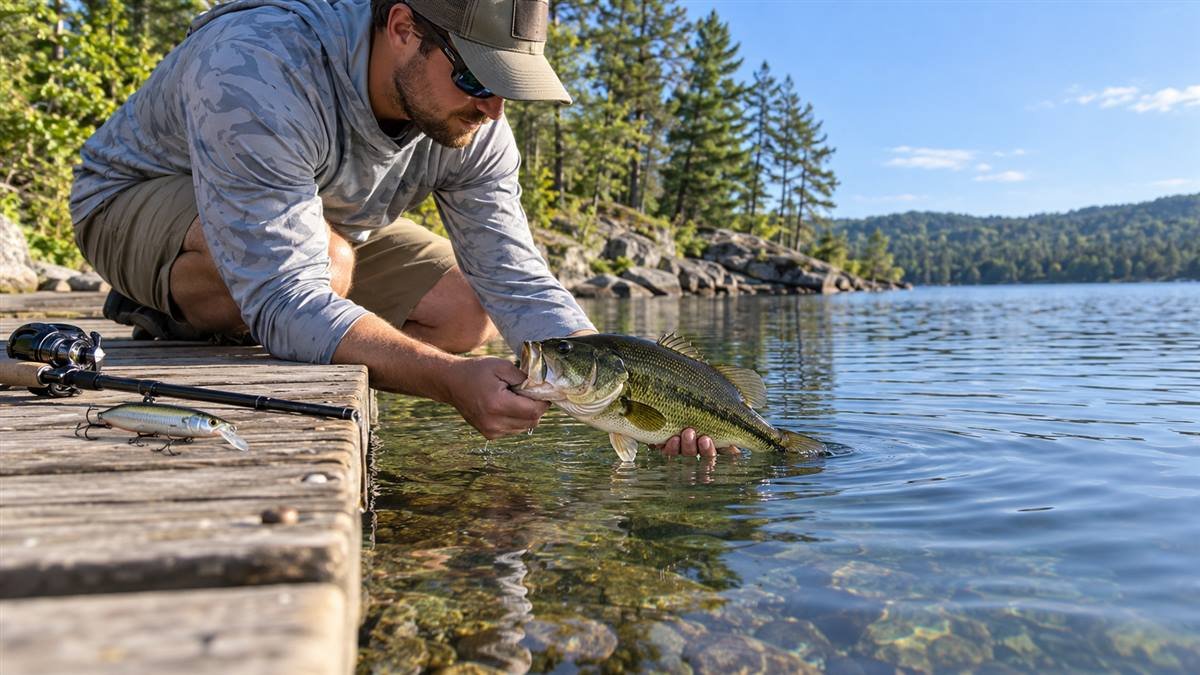
A strike may feel like a tap, a sudden weight, or a line that moves differently during the pause. Reel into contact and sweep the rod firmly rather than making an oversized snap against small treble hooks. Maintain steady pressure while bringing the fish clear of cover. Inspect hooks and line after a fish or a hard snag.
Beginner Retrieve Checklist
- Cast beyond a clear target lane.
- Bring the lure to its working depth.
- Twitch twice, then pause without pulling it forward.
- Watch the line throughout the pause.
- Change cadence only after observing the result.
Best Conditions for Jerkbait Fishing

Jerkbaits are useful when predators can notice a baitfish-shaped lure and when its running depth intersects their position. They are especially familiar in clear water and slower feeding periods because a suspending model can stop near a fish. Water temperature matters through its effect on fish activity, but calendar season alone does not dictate the correct retrieve.
Cold-Water Fishing
Late fall, winter, and prespawn fish may follow forage without chasing it far. Gentle twitches and longer pauses can keep the lure in view. Begin with a model that hangs in the zone, then shorten or lengthen the pause based on actual follows and strikes. Avoid assuming that a cold-water fish always wants the slowest possible retrieve.
Warm-Water Fishing
Jerkbaits can work in summer when fish attack small baitfish near points, shade, or open-water schools. Faster snaps and shorter pauses can cover water while still presenting irregular motion. If a fish follows, stop or soften the next stroke rather than running the lure away from it.
Clear Water vs. Stained Water
Clear water makes the lure's silhouette, flash, and change of direction easier to see. In stained water, try a stronger contrast, a closer presentation, or a model with more noticeable action. Do not assume color alone will overcome poor placement. A lure that runs above or below the fish may be missed in any clarity.
| Season | Typical Situation | Starting Approach |
|---|---|---|
| Spring | Prespawn fish and warming water | Suspender with varied pauses |
| Summer | Active fish chasing baitfish | Faster, more aggressive retrieve |
| Fall | Baitfish concentrations | Search with quick twitches |
| Winter | Reduced activity | Subtle action and longer rests |
Use these seasonal patterns as questions to test, not rules to obey. The fish's position and response should refine the plan.
Choosing Jerkbait Size, Color, Depth, and Fishing Gear
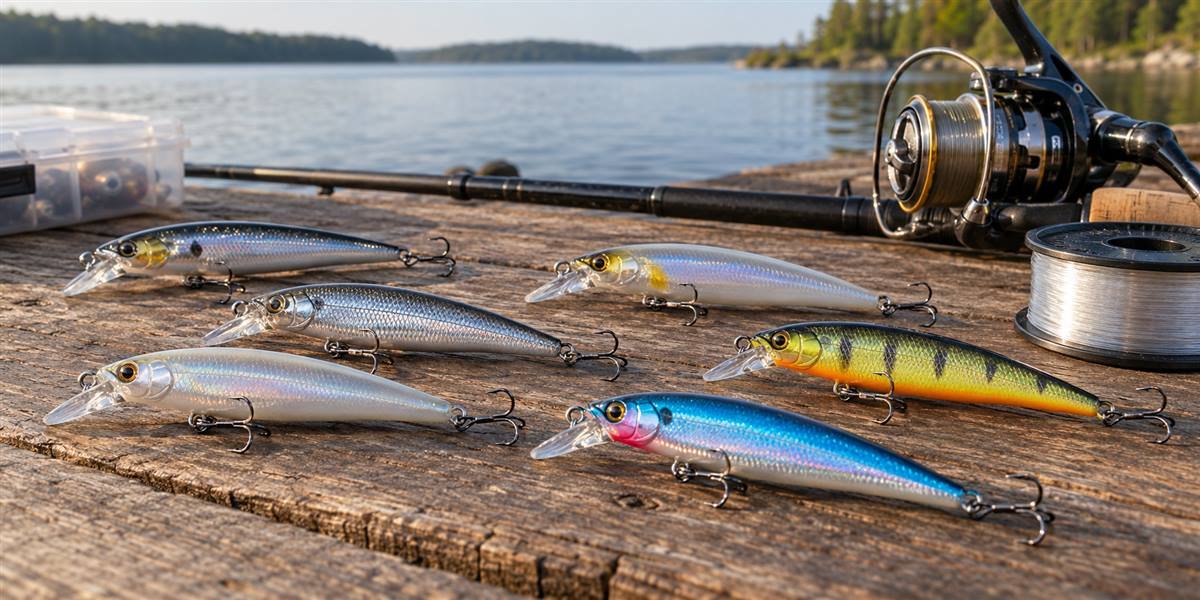
Start with the fish's likely depth and the size of nearby forage. A beautiful finish cannot help if the lure never reaches the target lane. Compare one model's actual action and pause behavior before buying many near-identical colors.
Choosing the Right Size
Small forage can favor a compact minnow profile, while predators feeding on larger baitfish may accept a longer body. Also consider casting distance, hook size, and the target species. There is no universal best length: a manageable lure that reaches fish is more useful than a theoretically perfect size you cannot work consistently.
Selecting Jerkbait Colors
Natural shad or minnow patterns are sensible in clear water. Translucent finishes may look subtle under bright light, while white or pearl gives a visible baitfish profile. High-contrast or brighter colors can be worth testing when visibility drops. Observe forage and light before changing color; one paint scheme does not outperform all others.
Choosing the Running Depth
Shallow-running and deep-diving billed versions reach different zones, and sinking models can be counted down. Read the specific model's stated range, then verify the path with your line and cast. If fish hold below the lure, a deeper model may be more useful than a louder twitch. If weeds lie just under the bait, a shallower or floating design may avoid them.
Selecting Rod, Reel, and Line
Medium-light to medium-power rods are common starting points, scaled to lure size and hook style. Choose an action that lets you make controlled twitches while keeping pressure on small trebles. Spinning or baitcasting equipment can both work when balanced to the bait. Fluorocarbon, monofilament, and braid with a leader each change feel or buoyancy; line diameter and hardware can also change a suspending lure's posture.
Jerkbait Selection Checklist
- Match the lure's depth to the fish, not just the bottom.
- Compare lure size with visible or likely forage.
- Test its rise, suspension, or fall in local water.
- Check how your line and replacement hooks affect balance.
- Carry a second cadence before adding more colors.
Common Jerkbait Mistakes and How to Avoid Them
The most common errors separate the lure from the fish's depth or remove the irregular movement that makes a jerkbait useful. A short check beside shore can reveal whether the bait is rising too fast, sinking too far, or failing to turn after a twitch.
- Reeling continuously when a pause would hold the lure near fish.
- Snapping too hard for a cautious fish.
- Using one cadence on every cast.
- Working above or below the target depth.
- Ignoring actual buoyancy in local water.
- Using line or a rod that prevents controlled action.
- Fishing with dull, bent, or damaged hooks.
- Overlooking the size and color of available baitfish.
| Problem | Possible Cause | Practical Adjustment |
|---|---|---|
| Fish follow | Cadence may be unconvincing | Change pause or twitch intensity |
| Lure rises quickly | Floating action or altered balance | Try a suspender; check hardware |
| Lure sinks quickly | Excess weight or different design | Check specification, hooks, and line |
| Weak dart | Too much line tension | Change rod stroke and controlled slack |
| Missed strikes | Hook condition or timing | Inspect points and watch the line |
These adjustments are experiments, not guarantees. If fish do not respond, check their position before changing another piece of tackle.