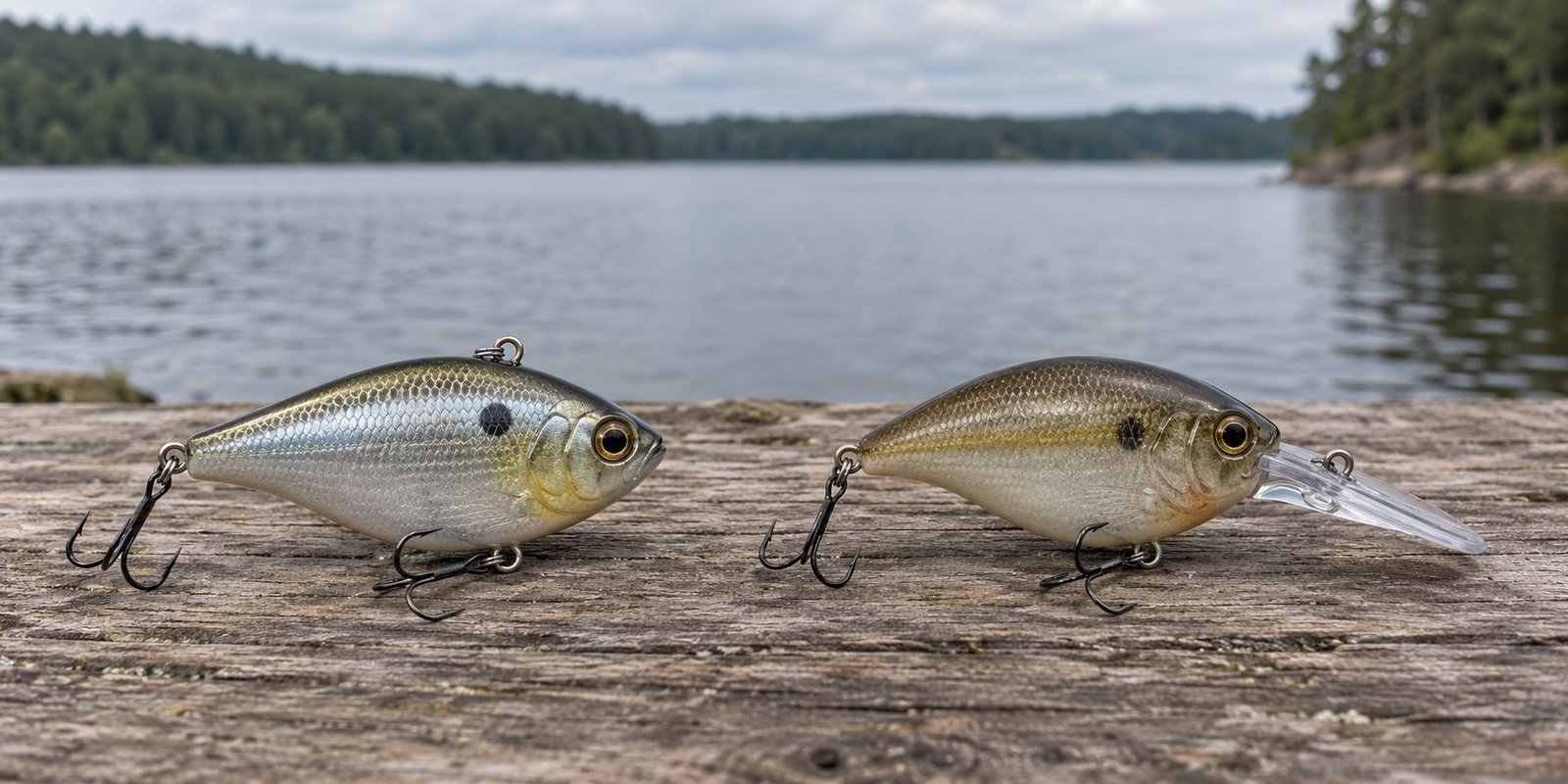


Spoon Lure Anatomy
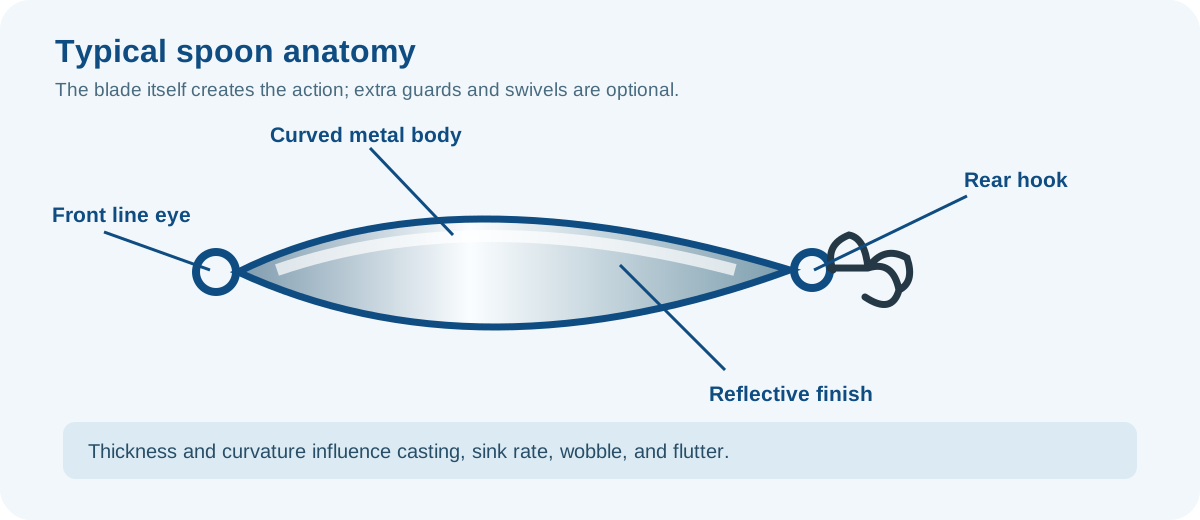
Curved body. The concave blade redirects water as the lure is pulled. Width, bend, and edge shape influence whether it swings broadly, wobbles tightly, or falls with a flutter. Most familiar models are stamped or formed metal; specialty materials exist, so construction varies.
Line eye and hardware. A hole or line eye at the front connects the line through a split ring, clip, or leader. The connection changes how freely the body moves. At the rear, a split ring commonly holds a treble or single hook. Check that rings close completely and hook points remain sharp.
Weight and finish. Thickness and mass affect casting, sink rate, and stability. A compact heavy spoon is useful for depth or distance; a thin broad spoon may flutter more on the fall. Silver, gold, hammered, and painted finishes change how light is reflected. Finish alone does not determine action.
Optional additions. A wire weed guard may shield a single hook in vegetation, although it cannot make the lure snag-proof. A correctly placed swivel can help manage line twist when a spoon rotates, but first correct the retrieve or rigging that causes excessive spin.
| Part | Main function | Fishing effect |
|---|---|---|
| Curved body | Redirects water | Wobble and flutter |
| Concave surface | Changes flow | Swinging movement |
| Body thickness | Adds mass | Casting and sink rate |
| Front line eye | Connects line | Tracking and movement |
| Split ring | Connects hardware | Articulation |
| Finish | Reflects light | Changing flash |
| Hook | Hooks fish | Landing and snagging |
| Weed guard | Shields point | Reduced snag risk |
| Swivel, if used | Rotating connection | May reduce line twist |
How a Spoon Works Underwater

First, the line pulls the spoon through water. Flow meets the curved body, producing uneven pressure across its surfaces. That pressure can tip the blade to one side. As the flow changes, the blade tips back, creating a repeated wobble or roll. The rate and width depend on the lure's shape, weight, connection, and speed.
The metal surface turns with every movement. Reflections therefore change direction instead of shining steadily. The moving body also displaces water and sends small pressure changes through its surroundings. These are distinct cues: flash is visual, while water motion can be sensed through other systems. A fish may notice both, but neither guarantees a strike.
When a sinking spoon is paused, gravity takes over. Some shapes slide or flutter broadly; a denser, narrower spoon may fall more directly. Hook and split-ring weight can influence balance. Watch the line during that descent because a fish may take the spoon before it reaches the bottom.
Test a new spoon where you can see it. Start at a moderate retrieve and increase speed gradually. If the blade stops wobbling and begins spinning around the line, reduce speed. A swivel can help with remaining twist, but it does not turn a poor retrieve into the intended action.
| Factor | Underwater response | Result |
|---|---|---|
| Curved body | Redirects water | Side-to-side motion |
| Changing orientation | Alters flow | Wobble or roll |
| Reflective face | Changes light angle | Flash |
| Weight distribution | Affects balance | Fall behavior |
| Thickness | Changes mass and drag | Depth and cadence |
| Retrieve speed | Changes water force | Wobble or unwanted spin |
| Falling movement | Water resists descent | Flutter or glide |
| Hook hardware | Changes balance | May modify action |
Why Fish May Strike Spoons
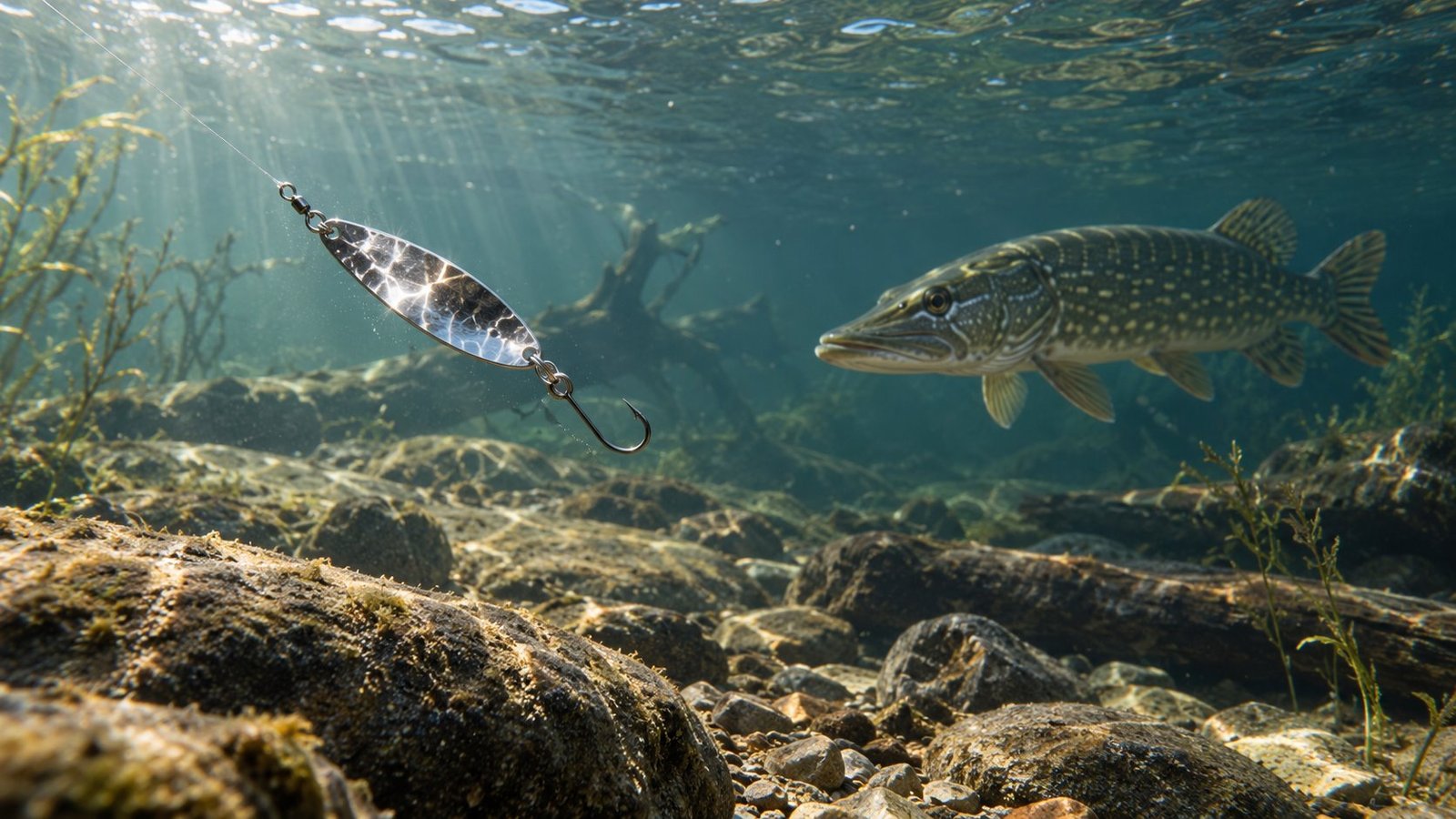
A spoon offers several signals at once. A bright metallic face can flash as the lure changes direction, much as light catches the side of a moving fish. A curved blade can swing or wobble in a way that suggests unsteady prey. Water displaced by the body adds another cue even when light is poor.
A pause changes the picture. A fluttering descent can resemble a fish losing balance, while a sudden lift or change of pace may give a predator a brief opportunity to intercept the lure. Anglers often call a quick strike after such a change a reaction bite. That term describes an observation, not the fish's known motivation.
Predators use vision and mechanosensory information, including their lateral line, when locating objects in water. They may also respond to sound or vibration in some settings. However, an individual fish's reason for striking cannot normally be proved from a single catch. It may be feeding, investigating, or reacting to movement. Describe those as possible explanations, not certainties.
For practical fishing, focus on where fish and forage are located. Put a spoon through a depth and path a fish can reach, watch which retrieve draws attention, and repeat only when observations justify it. Flash alone is not a substitute for accurate presentation.
| Cue | Spoon feature | Practical implication |
|---|---|---|
| Moving flash | Reflective finish | Match light and clarity |
| Prey-like motion | Wobbling body | Maintain suitable speed |
| Water movement | Body displacement | Fish productive lanes |
| Falling prey cue | Fluttering descent | Watch for fall bites |
| Direction change | Pause or lift | Test short changes |
| Forage silhouette | Blade profile | Match local bait size |
Types of Spoon Lures

Casting spoons are built to be thrown from shore or boat and retrieved through open water or along edges. Many have enough mass for long casts. Trolling spoons are pulled behind a moving boat, often with a depth-control system. Their thin, elongated forms can work at a particular boat-speed range; they should be checked beside the boat before setting a spread.
Jigging spoons are usually compact and weighted for vertical lift-and-fall fishing. Flutter spoons emphasize a broad or irregular descent that can be useful around suspended fish. Those labels overlap: some designs both jig and flutter, while others can be cast and jigged.
Weedless spoons generally use a single hook with a guard that deflects some vegetation. They can work across grass openings or lily-pad lanes, though exposed points or hardware still snag. Ice fishing spoons are often smaller vertical lures worked through a hole with short lifts and controlled pauses.
The best classification is practical rather than rigid. Ask what action the actual lure produces at your intended speed, whether it can reach the fish's depth, and whether its hook arrangement suits the cover.
| Type | Typical design | Main use |
|---|---|---|
| Casting | Weighted, often compact | Long casts and retrieves |
| Trolling | Thin, often elongated | Boat-speed wobble |
| Jigging | Compact and heavy | Vertical lift and fall |
| Flutter | Broad or balanced for descent | Gliding fall |
| Weedless | Single protected hook | Vegetation lanes |
| Ice | Small vertical lure | Through-ice jigging |
Fish You Can Target With Spoons
Spoons are not limited to one species. Largemouth and smallmouth bass may respond to casting or flutter spoons around baitfish, points, or deeper schools. Trout often take smaller spoons retrieved through lakes or streams, provided the lure's weight and pace suit the current. Northern pike anglers commonly use larger spoons; a bite-resistant leader and appropriate hooks matter where toothy fish are likely.
Walleye anglers may jig a compact spoon near bottom or troll a thin model at the fish's depth. Salmon and lake trout are also common trolling or casting targets, though speed, current, and forage differ by fishery. In saltwater, a metal casting spoon can reach striped bass, bluefish, redfish, and other predators when the shape and corrosion resistance fit the conditions.
Species lists are possibilities, not promises. A spoon that is too large for available forage, too shallow for the fish, or too fast for the water may fail even where that species is present. Start with fish location, then choose size, depth, action, and hardware. Observe local rules and handle any catch appropriately.
| Target | Common spoon use | Key consideration |
|---|---|---|
| Largemouth bass | Casting or flutter | Cover and depth |
| Smallmouth bass | Casting or jigging | Structure and forage |
| Trout | Smaller casting spoon | Size and retrieve |
| Northern pike | Larger casting spoon | Leader and hooks |
| Walleye | Jigging or trolling | Depth control |
| Salmon or lake trout | Casting or trolling | Speed and forage |
| Striped bass | Casting or jigging | School location |
| Redfish | Casting or weedless | Shallow cover |
When and Where to Use a Spoon

In open water, a casting spoon can search broad areas for schooling predators. Its compact metal body helps with distance, while a countdown lets it reach a chosen depth before the retrieve begins. Near a boat, a heavier jigging spoon can be lowered precisely to fish shown at depth. A wide flutter spoon can be lifted above suspended fish and allowed to fall through their level.
Cover calls for a different choice. A spoon with an exposed treble is easy to foul in grass. A true weedless model can travel through some vegetation openings, but the guard only reduces snagging risk. In current, use enough weight to maintain control without sweeping the lure past fish too quickly. Around rock or timber, plan the fall so the hook does not settle into the obstruction.
Freshwater is only part of the picture. Trolling spoons can cover lake trout, salmon, or walleye water at selected depths. A casting spoon can reach breaking saltwater fish from shore or a pier. In every setting, match the shape and hook arrangement to the water, depth, and likely snags before choosing color.
| Situation | Starting spoon | Why |
|---|---|---|
| Open-water baitfish | Casting | Distance and coverage |
| Deep fish under boat | Jigging | Vertical control |
| Suspended predators | Flutter | Falling action |
| Shallow vegetation | Weedless | Protected hook |
| River current | Weighted casting | Controlled path |
| Lake trolling | Trolling | Continuous action |
| Ice hole | Compact jigging | Vertical presentation |
| Coastal surf | Casting | Distance and flash |
Seasons and Water Conditions

Spring: Shallow feeding areas and river runs can make a medium casting spoon useful. Let the water's speed and fish position determine weight. A spoon that tumbles uncontrollably in current gives less repeatable feedback than one that tracks and wobbles.
Summer: Fish may use deeper structure or vegetation edges. Jigging and depth-controlled casting can reach them without assuming all fish stay shallow. On a bright day, a highly reflective spoon may be visible; test a more muted finish if fish follow without taking.
Fall: Look for baitfish schools and predators moving with them. A casting spoon covers water, while a flutter spoon can stay in a deeper school during the fall. Match the general forage size and adjust speed as fish activity changes.
Winter: Vertical jigging, including ice fishing where permitted and safe, can hold a compact spoon near deeper fish. Use shorter lifts and longer pauses when fish are hesitant. A large, fast-moving spoon is rarely the only sensible test in cold water.
Cloud cover, sun angle, clarity, current, and wind affect visibility and line control. Silver and gold are common starting finishes, but neither is universally superior. Watch the lure's action and the fish's response before treating weather as a fixed color rule.
| Season | Opportunity | Starting method |
|---|---|---|
| Spring | Shallow feeding and river movement | Moderate casting retrieve |
| Summer | Deep structure or edges | Jig or counted-down cast |
| Fall | Baitfish schools | Cast or flutter |
| Winter | Deep or through-ice fish | Controlled vertical jig |
Four Casting Spoon Retrieves
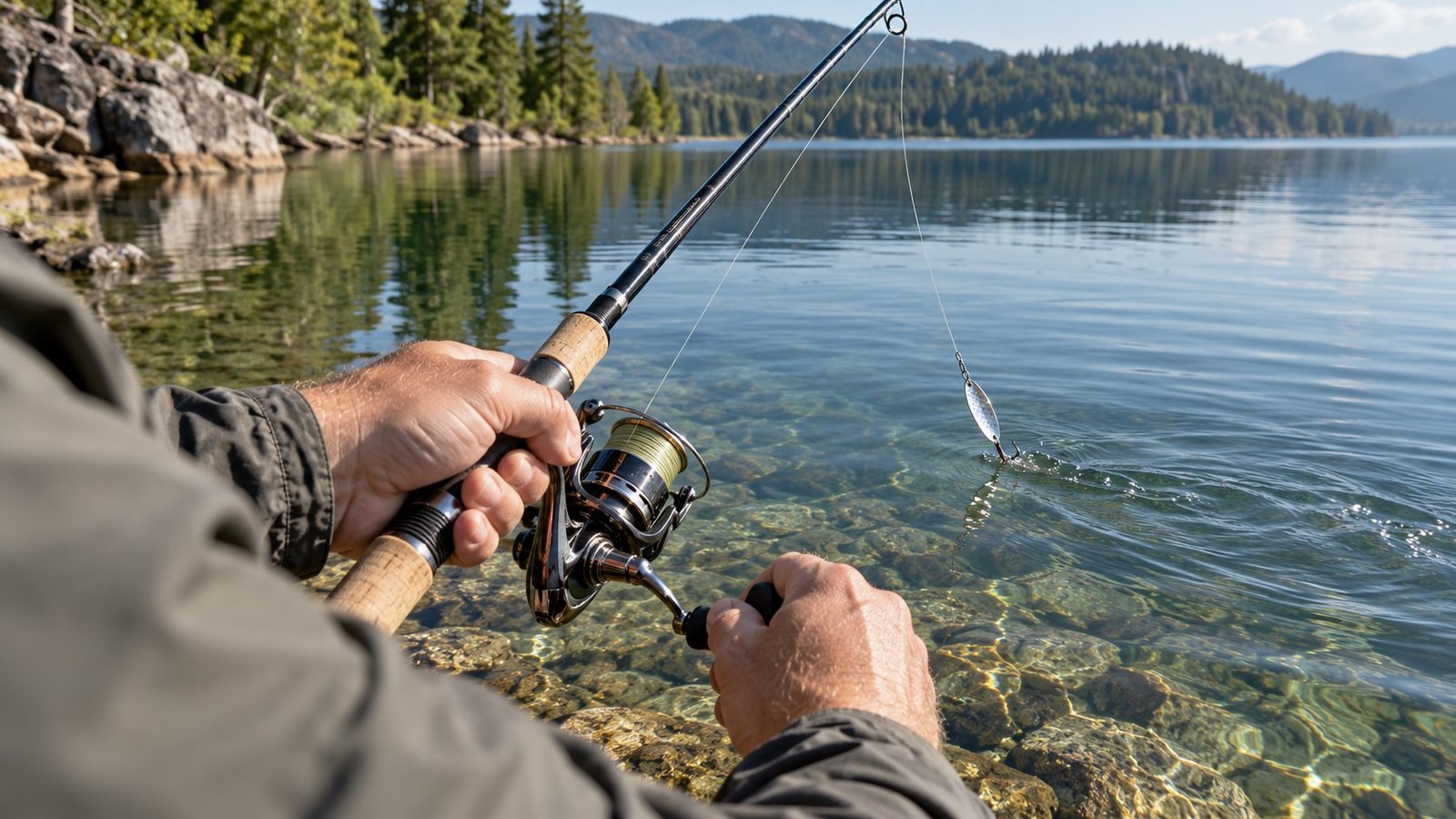
1. Steady retrieve. Cast past a likely target and reel at a moderate pace. Watch the spoon near shore to find a speed that produces a regular side-to-side wobble. If the body spins continuously, slow down. A stable action is a better baseline than the fastest retrieve you can make.
2. Stop and go. After several handle turns, pause briefly. A sinking spoon may flutter downward, then resume swimming when the reel turns again. Follow the line on the pause; a sudden slackening or jump can signal contact. Keep enough control to set the hook without dragging the lure unnaturally.
3. Countdown. Let the spoon sink for a repeatable number of seconds after the cast, then begin the retrieve. This is a rough depth reference, not a precise measurement, because line drag and current change the sink rate. If you snag bottom, shorten the count.
4. Lift and drop. Raise the rod to bring the lure up, then lower it while keeping slight contact as it falls. This can keep a casting spoon near bottom or a specific edge. Avoid large uncontrolled drops into timber or sharp rock.
Beginner checklist: Choose open water, inspect hook and knot, test the wobble close to shore, cast beyond the target, and change only one variable after each few casts.
| Retrieve | Use | Main cue |
|---|---|---|
| Steady | General search | Regular wobble |
| Stop and go | Fish reacting to falls | Watch line on pause |
| Countdown | Repeat a depth zone | Use consistent sink time |
| Lift and drop | Bottom or structure | Control the descent |
Jigging and Fluttering in Deep Water
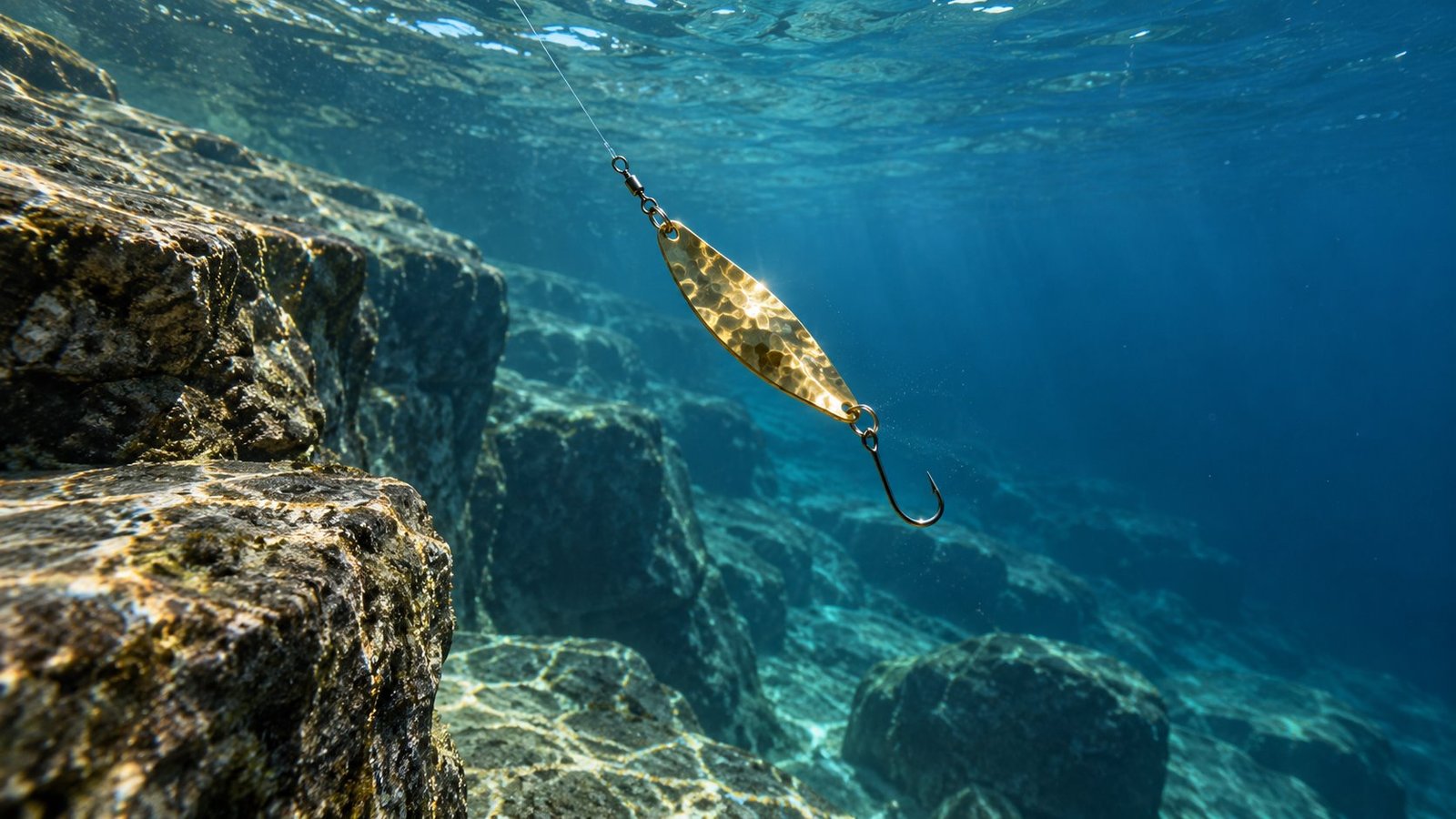
Vertical jigging starts with depth control. Lower a compact spoon to the fish or just above the bottom, then make a short lift and let it fall on controlled slack. A tight line may pull the lure unnaturally sideways; complete slack can hide bites. Watch the line and feel for changes as the spoon drops.
A more aggressive lift can call attention to a spoon when fish are active, but a short movement may work better near bottom or in cold water. A flutter spoon is usually designed to swing or glide more widely during descent. Give it room to fall through the strike zone without letting the line loop around the hook or allowing the lure to bury in cover.
Some fish strike on the fall, leaving the line suddenly slack before the expected bottom contact. Reel into contact and then make a controlled hookset. If the spoon has reached bottom, lift it before the next drop rather than dragging it through snags.
Through ice, use the same lift-and-fall principle at smaller scale. Fish response, depth, and local conditions set the pace. A marked fish that rises but does not strike may warrant a slower lift or a pause, not necessarily a larger spoon.
| Method | Action | Starting use |
|---|---|---|
| Short lift | Small rise and fall | Fish near bottom |
| Aggressive lift | Larger vertical jump | Active fish |
| Fluttering fall | Swinging descent | Suspended fish |
| Pause near bottom | Reduced movement | Hesitant fish |
| Ice jigging | Controlled short lifts | Winter vertical fishing |
How to Troll a Spoon

Trolling moves a spoon through water behind a boat. The first check is action at the intended boat speed: a trolling spoon should show the model's expected wobble, not spin wildly. Test it close to the boat before letting out line. The right speed varies with body shape, line, current, and target species.
Depth matters as much as speed. Line length, added weights, diving devices, or downriggers can place the lure near trout, salmon, or walleye. Avoid guessing from surface appearance alone; use a repeatable setup and adjust when fish show at a different level. Keep hooks clear of other lines during turns.
Choose a profile and finish that fit the forage and light conditions, then test one change at a time. If the spoon twists line, recheck speed and connection before adding more hardware. Check that leaders and hooks are suitable for the species and water, including corrosion resistance in saltwater.
| Variable | Why it matters | Adjustment |
|---|---|---|
| Boat speed | Changes action | Find stable wobble |
| Spoon profile | Sets swimming style | Choose intended model |
| Running depth | Must meet fish | Adjust control system |
| Line and leader | Affect tracking | Match conditions |
| Fish location | Changes over time | Move target depth |
Choose Size, Weight, Color, and Tackle
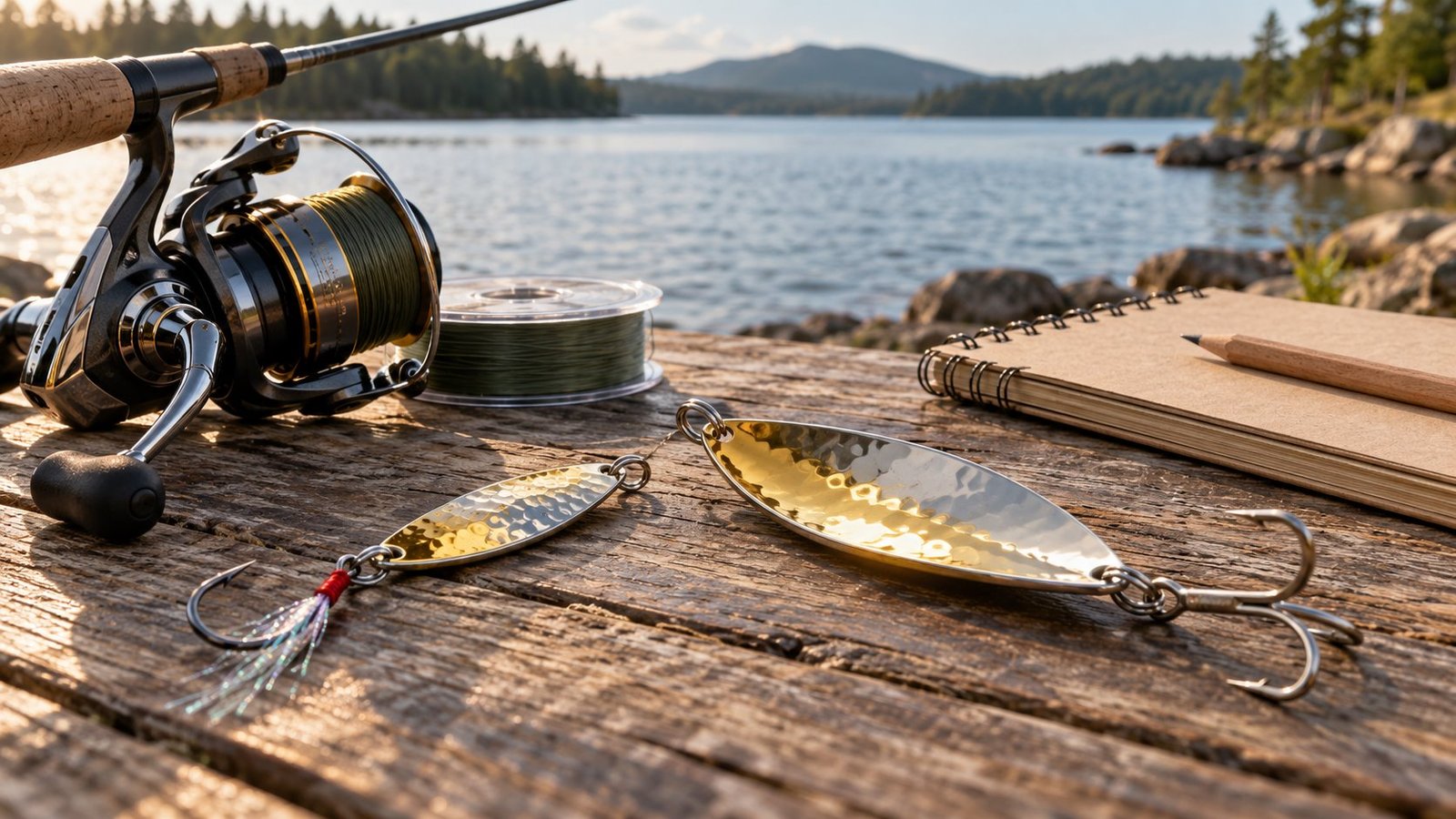
Start with the fish and the depth. A smaller casting spoon is a practical trout starting point; a heavier compact spoon reaches deep water faster. A wide flutter spoon needs space to fall. A weedless design suits some vegetated lanes. For pike or other toothy fish, choose appropriate bite protection and hardware.
Finish is a test, not a formula. Silver can suggest bright baitfish in clear water; gold or copper can offer a different reflection. Painted contrast may help visibility in reduced light or stained water. The lure's width, wobble, and depth often matter more than a small shade change.
Match rod power to spoon weight and target fish. A reel with smooth drag helps keep pressure on fish, especially when a small treble is used. Select line and leader for the cover and species, and use a sound knot. A swivel can reduce twist when correctly rigged, but a spinning spoon usually needs a speed or setup correction first.
| Need | Practical start |
|---|---|
| Small trout | Compact casting spoon |
| Open-lake search | Medium casting spoon |
| Northern pike | Larger spoon and suitable leader |
| Deep vertical fish | Compact jigging spoon |
| Suspended fish | Flutter spoon |
| Vegetation | Weedless spoon |
| Clear baitfish water | Natural metallic finish |
| Low visibility | Contrasting finish |
Common Spoon Fishing Mistakes
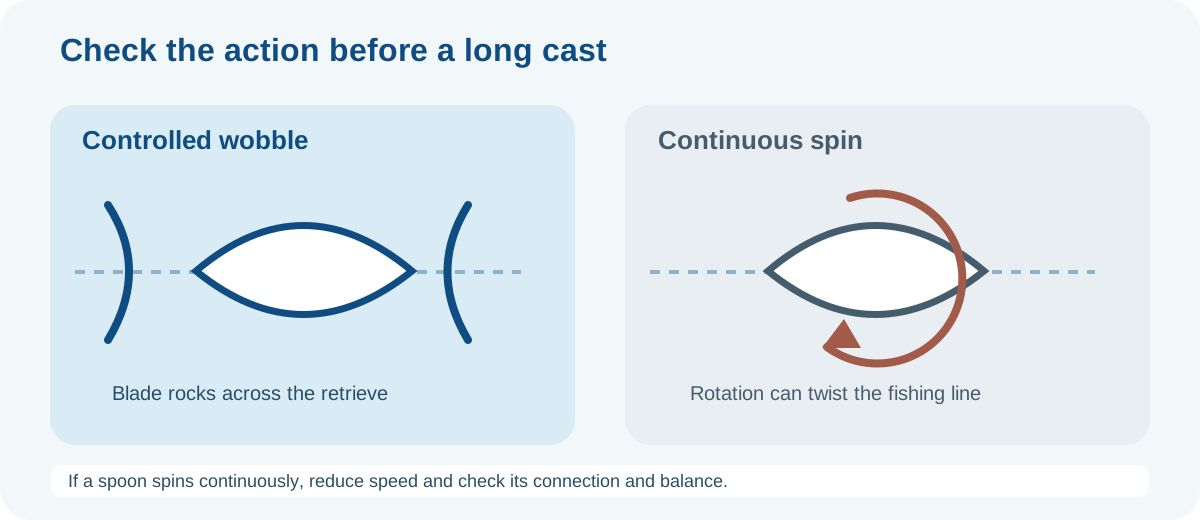
The easiest error to see is continuous spinning. Many spoons should wobble or flutter instead; excessive speed or poor rigging can make them rotate and twist line. Slow down and inspect the connection. If line still twists, try a suitable swivel at the correct location.
Do not fish every spoon at one depth. Count down a casting lure, change weight, or use a vertical presentation when fish are lower. In weeds, use a protected-hook design or move to a clearer lane. On a fall, watch the line closely: a strike can look like an early stop rather than a hard pull.
| Problem | Possible cause | Try |
|---|---|---|
| Spins constantly | Too fast or poor setup | Slow and inspect |
| Line twist | Repeated rotation | Correct action; consider swivel |
| Runs too shallow | Insufficient sink or weight | Count down or change spoon |
| Snags grass | Exposed hook | Use weedless or open lane |
| Missed fall bites | Poor line watch | Control descent |
| Weak action | Wrong speed or model | Test another cadence |