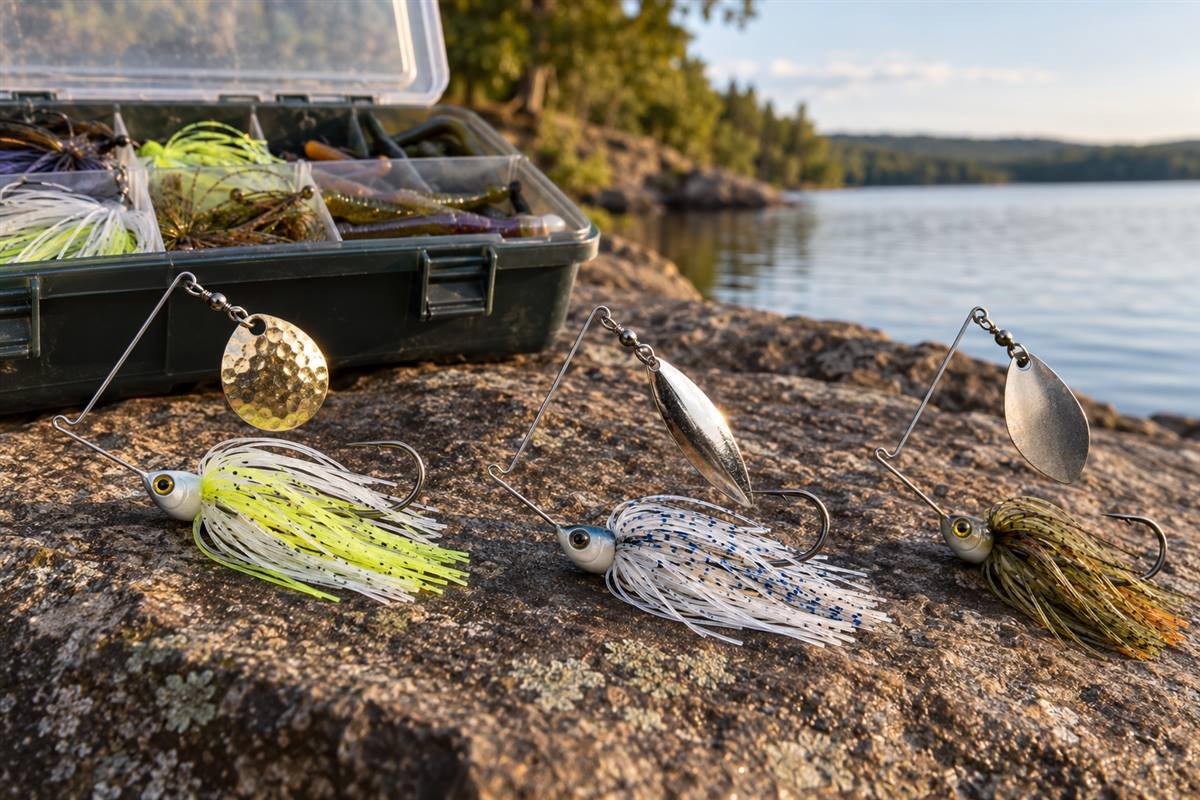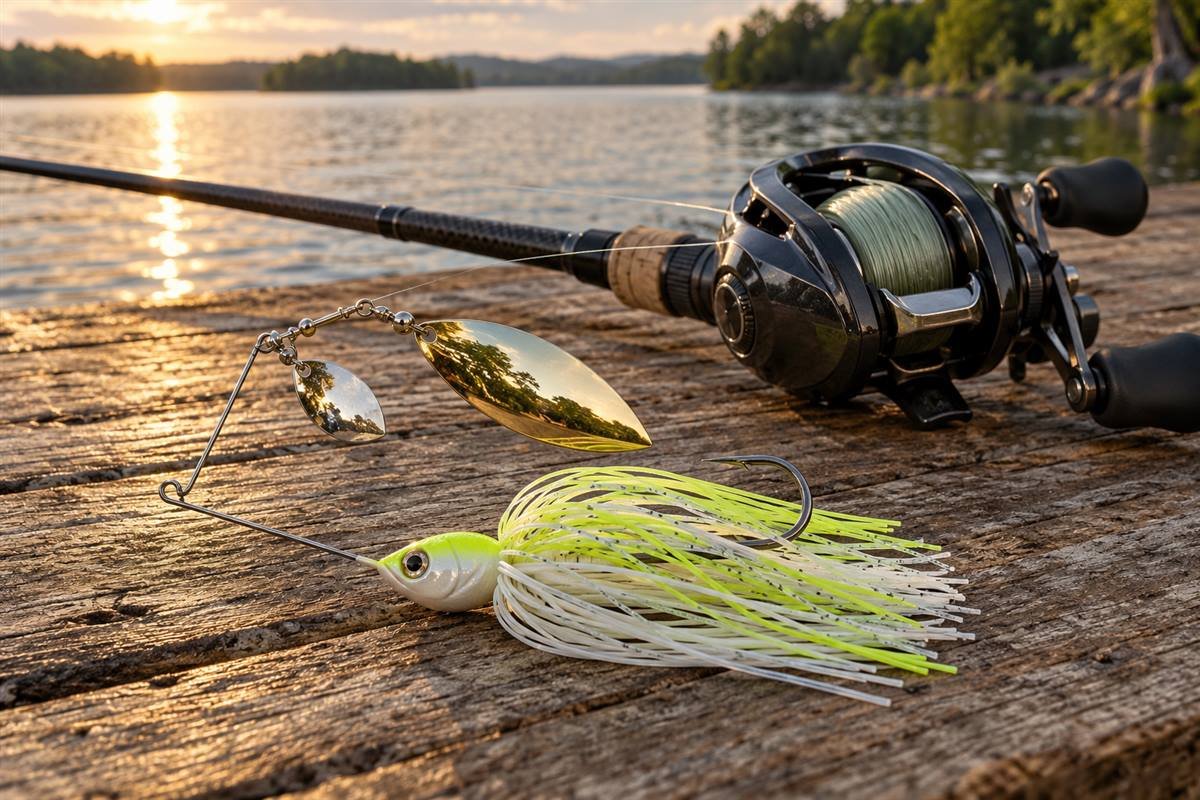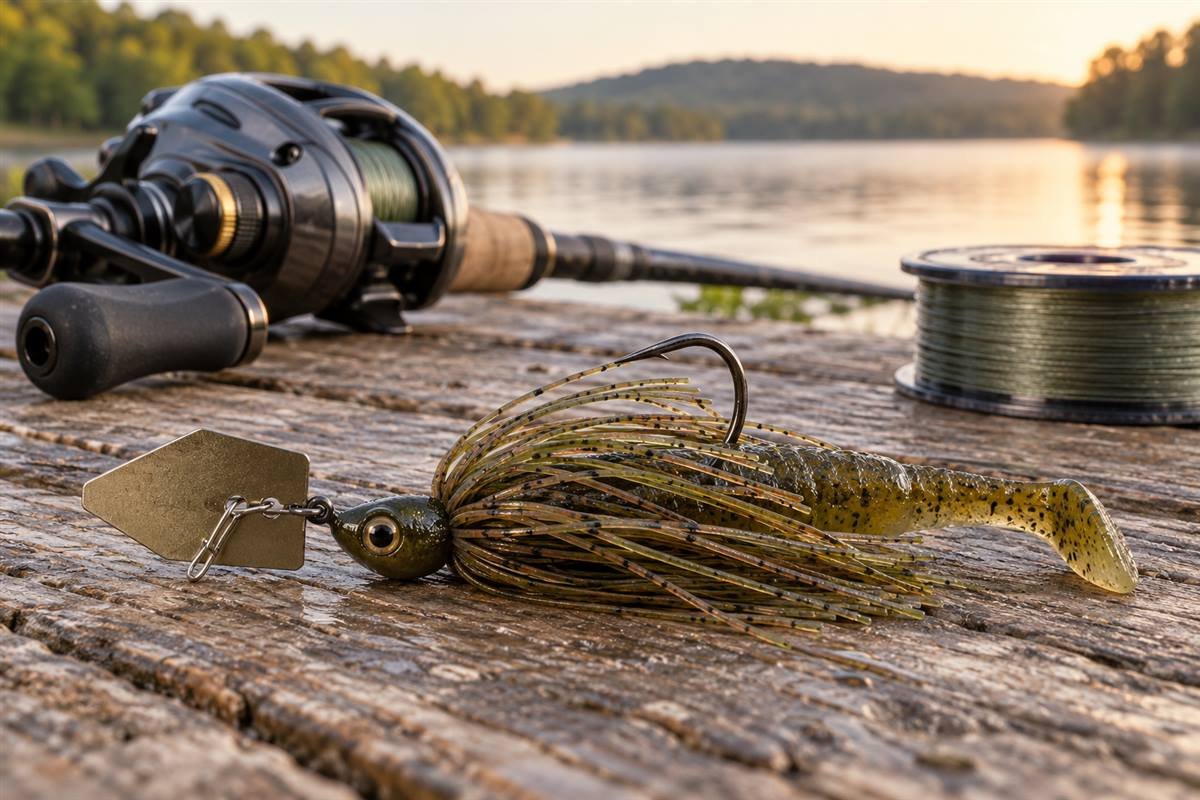


Spinnerbait Anatomy: Understanding Every Important Part
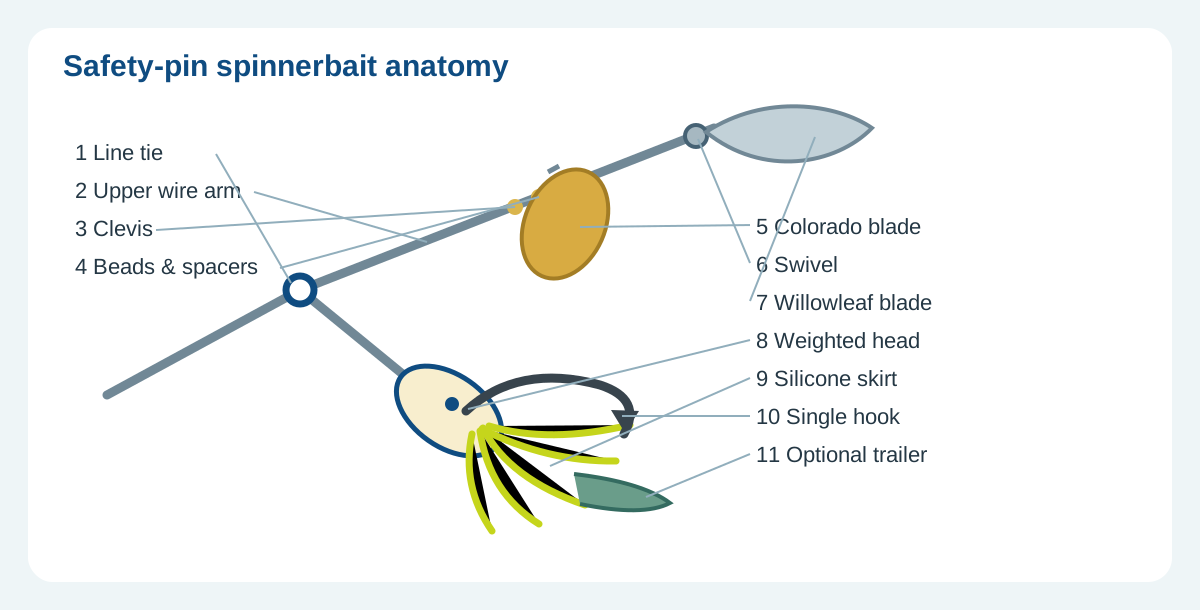
A conventional bass spinnerbait is a system of connected parts. Examine the actual lure in hand because makers vary arm length, head shape, and blade hardware. These parts explain how it casts, tracks, and produces action.
Wire Frame and Line Tie
The bent, safety-pin-style frame places the blades above and ahead of the lower jig. Its spring, stiffness, and shape affect balance, vibration transmission, durability, and how the bait glances past some cover. The fishing line attaches at the bend. An open line tie is an exposed bend; a closed eye is a loop that can better contain a clip. Either must pull the lure straight. A distorted bend can make it track sideways.
Blades, Swivel, Clevis, and Beads
Metal blades rotate as water passes them, creating flashes and displacing water. Shape, size, finish, and number affect their resistance and signal. A trailing blade commonly hangs from a swivel so it can turn freely. On a tandem lure, a front blade may rotate on a clevis around the upper arm. Beads and spacers separate that hardware and reduce interference. Some designs arrange the components differently, so inspect the exact mounting before tuning or replacing parts.
Weighted Head, Skirt, Hook, and Trailer
The jig head adds casting mass and helps pull the bait downward against blade lift. A silicone skirt expands and pulses around it, contributing color and silhouette. The single hook usually points upward and rides below the wire arm; this can reduce certain snags compared with exposed trebles but does not eliminate them. A soft-plastic trailer is optional. Split tails, paddles, and other shapes alter profile, motion, and drag, so one trailer may make the same spinnerbait run higher than another.
| Component | Primary function | Effect on performance |
|---|---|---|
| Wire frame | Connects blade arm and body | Balance and cover deflection |
| Line tie | Connects fishing line | Pull direction and tracking |
| Metal blade | Rotates during retrieval | Flash and vibration |
| Swivel | Supports free rotation | Smooth trailing-blade action |
| Clevis | Mounts another blade | Tandem configurations |
| Beads and spacers | Separate hardware | Reduce blade interference |
| Weighted head | Provides mass and stability | Casting and depth control |
| Silicone skirt | Adds movement and silhouette | Prey-like profile |
| Single hook | Hooks the fish | Hookup performance |
| Soft-plastic trailer | Changes profile and drag | Presentation adjustment |
Spinnerbait Blade Types: Colorado, Willowleaf, and Indiana

Blade shape is one of the strongest controls on action. Wider blades generally push more water and resist forward motion; narrower blades usually cut through it more easily. Size, cup depth, finish, and the complete lure design can change these tendencies.
Colorado Blade
A Colorado blade is rounded and cupped. It often creates a pronounced thump, relatively high drag, and extra lift. That makes it a practical test in stained water or when you need blade rotation at a slower pace. If the bait rises too high, pair it with more head weight or slow the retrieve while preserving rotation.
Willowleaf Blade
A willowleaf is long and narrow. Its spinning reflective surface can give a distinct baitfish-like flash with comparatively less drag and lift. It can suit a faster retrieve or a lower running lane when paired with suitable weight. In clear water, anglers often start with a natural skirt and willowleaf flash, then adjust to fish response.
Indiana Blade
The Indiana shape falls between the two: an elongated oval with a broader body than a willowleaf. It offers a middle ground between flash, pulse, and resistance. It is useful when a rounded blade lifts too much but a slender blade feels too subtle. The exact result still depends on size and cup.
| Blade type | Blade shape | Primary characteristic | Common application |
|---|---|---|---|
| Colorado | Rounded and cupped | Strong thump and higher drag | Stain and slower retrieves |
| Willowleaf | Long and narrow | Flash with less drag | Clear water and faster retrieves |
| Indiana | Intermediate oval | Balanced flash and vibration | Versatile presentations |
Single and Tandem Blades
Single Colorado or single willowleaf designs give one dominant signal. Double willowleaf, double Colorado, and Colorado/willowleaf tandems combine two blades, usually adding drag and lift as well as visual movement. A Colorado front blade with a willowleaf trailing blade is a sensible general-purpose starting point, but not a universal best. Other specialty combinations exist. Keep the front blade and trailing blade free to spin independently rather than assuming more metal always means more bites.
How Does a Spinnerbait Work Underwater?
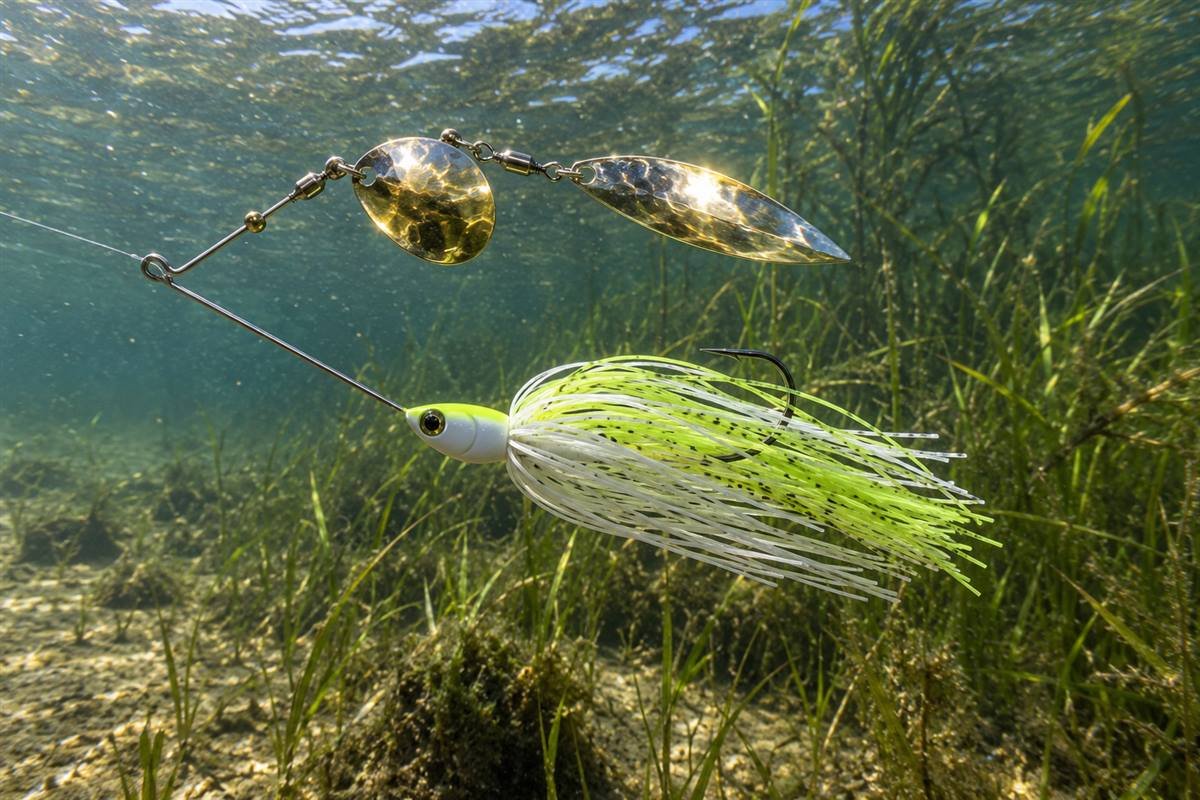
- Forward movement creates flow. As line tension pulls the lure, water moves relative to its frame, blades, head, and skirt. A lure resting motionless on the bottom will not provide the same blade action.
- Blades begin rotating. Water presses against each cupped blade and its off-center mounting, producing torque. A free-moving clevis or swivel lets it spin. If weed strands foul that hardware, rotation may stop.
- Changing surfaces create flash. Reflective faces repeatedly change angle toward fish as they turn. Finish, sunlight, water clarity, blade size, and viewing angle determine how visible that flash becomes. In muddy water, it may travel only a short distance.
- Rotation displaces water. Each turn creates pressure changes. Bass can detect nearby water movement with their lateral line as well as see the lure. The blade is therefore a tactile and visual cue, not a guarantee of a strike.
- The weighted body controls the lane. The head pulls down while blade resistance and retrieve speed add lift. Rod angle and line also affect where the lure swims.
- Skirt and trailer complete the profile. Flexible strands flare and collapse in flow. A trailer can add tail movement or drag, changing how the whole bait tracks.
Anglers describe the combined result as flash, thump, and swimming motion. A buzzbait propeller churns the surface, while a bladed jig's front blade oscillates; neither produces precisely the same action as these rotating spinnerbait blades.
| Element | What happens underwater | Why it matters |
|---|---|---|
| Rotating blades | Reflect changing light | Visual attraction |
| Blade resistance | Displaces water | Pressure changes and pulse |
| Weighted head | Pulls lure downward | Depth control |
| Wire frame | Holds blades above hook | Balance and deflection |
| Silicone skirt | Moves with flow | Animated profile |
| Trailer | Adds movement or drag | Changes presentation |
Different Types of Spinnerbaits and Blade Configurations

Most bass spinnerbaits share the same basic frame, yet their profiles and running depths vary. Use the configuration as a starting description, then evaluate the actual blade size and head weight.
Single-Blade Spinnerbait
One blade gives a focused pulse or flash. A single Colorado can stay active at a slow pace; a single willowleaf can reduce drag for a deeper or quicker pass, depending on weight.
Tandem-Blade Spinnerbait
Two blades commonly use a front clevis and a trailing swivel. Their combined movement makes this a versatile, familiar design. More blades also mean more resistance, so a tandem lure may ride higher than an otherwise similar single-blade lure.
Compact and Heavy Designs
A compact bait uses a shorter frame, smaller head and skirt, or smaller blades for a subtler profile. It can match small forage or pressured fish. A heavy model adds head mass to reach lower water while still keeping its blades turning. These categories overlap: a compact lure can be heavy for its size, and specialized shapes may not fit neatly in any one group.
| Configuration | Defining characteristic | Typical purpose |
|---|---|---|
| Single-blade | One rotating blade | Focused signal |
| Tandem-blade | Two rotating blades | Combined blade effects |
| Compact | Smaller overall profile | Subtle presentation |
| Heavy / deep-water | Increased head weight | Lower running lane |
How Weight, Blade Size, and Retrieve Speed Affect Spinnerbait Action
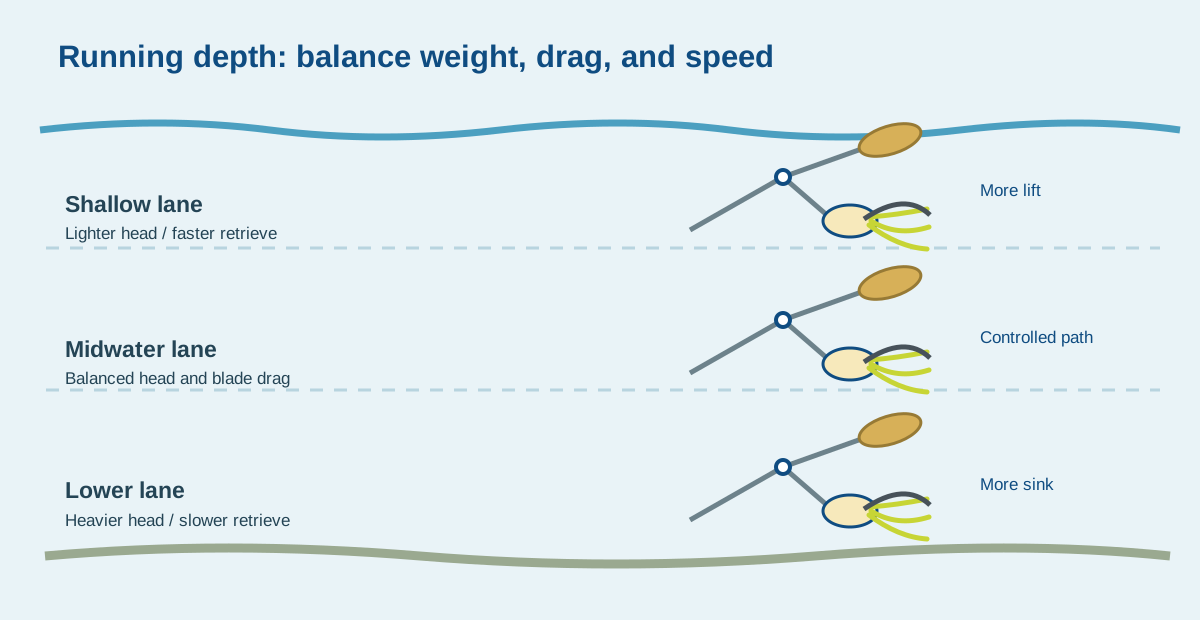
A spinnerbait's depth reflects a balance between downward weight and upward or backward resistance. A heavier head can maintain a lower lane, but a large, high-drag blade may lift it. A fast retrieve often makes the lure climb; slowing it down can let it run lower, provided the blades still turn. The relationship is not fixed because blade cup, frame shape, trailer, line diameter, and current all matter.
Blade size and shape are especially important. A broad Colorado blade usually resists water more than a slim willowleaf of comparable size. That resistance creates pulse and lift; it can also reduce the speed at which a particular lure can stay deep. A large paddle-tail trailer may add its own drag or lift. A higher rod tip tends to pull the lure toward a higher path, while a lower rod angle can help hold it down. These adjustments should be tested together rather than in isolation.
Start by deciding where the fish are. If the bait grazes vegetation, lift the path slightly. If it runs above fish, allow more sink time, lower the rod, or try more head weight. When the blade pulse disappears, first check whether the bait is fouled or moving too slowly; a dead blade is different from a deliberate low retrieve.
| Adjustment | General effect | Practical consideration |
|---|---|---|
| Heavier jig head | Helps lure run deeper | Balance against blade drag |
| Larger high-drag blade | Can increase lift | May need added weight |
| Faster retrieve | Often increases lift | Depends on the configuration |
| Slower retrieve | Can hold a lower lane | Keep blades turning |
| Higher rod angle | Encourages a higher path | Does not replace correct weight |
| Larger trailer | Can increase drag or profile | Test tracking after rigging |
Tracking checklist: Confirm blade rotation, inspect wire alignment, observe running depth, and make sure the hook points up and the lure swims straight.
When and Where Do Spinnerbaits Work Best?
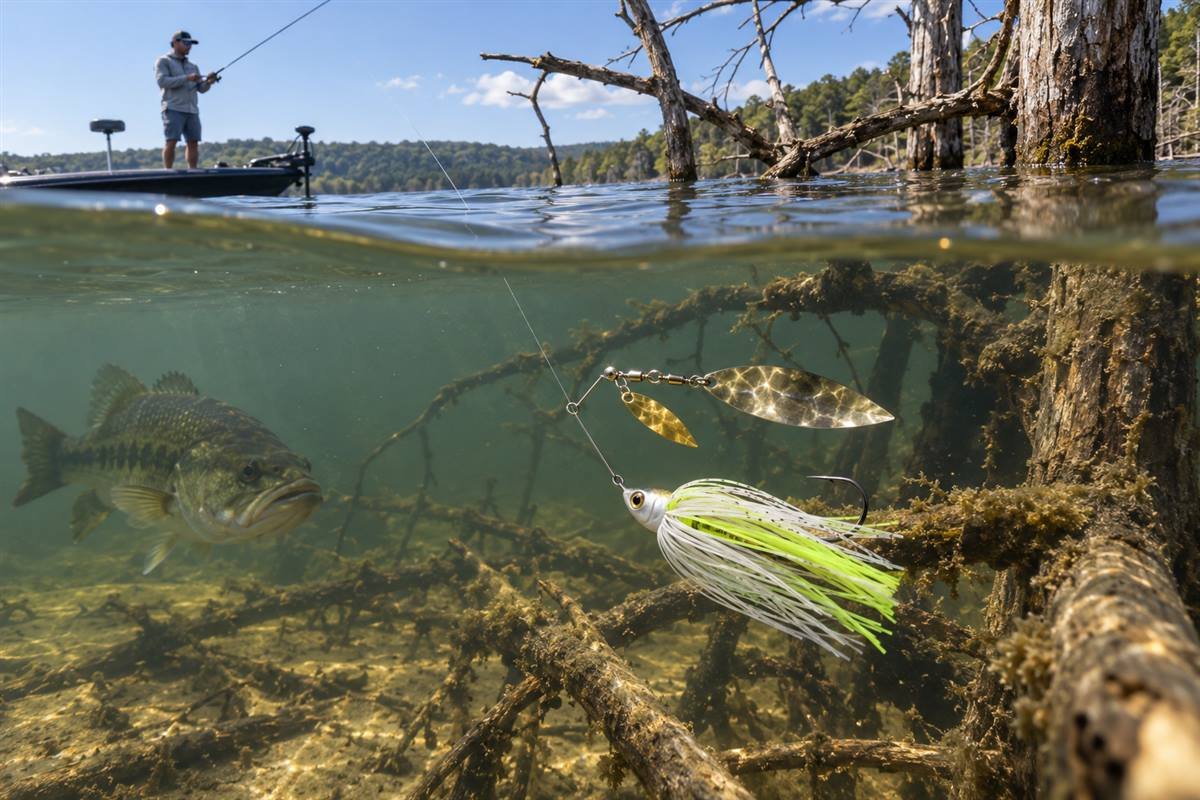
Spinnerbaits can be useful wherever bass have a lane for chasing moving prey. In stained or moderately muddy water, a broad blade's pulse may help fish locate it nearby. In clear water, a more natural skirt and controlled flash can be a better first experiment. Neither choice is guaranteed: match the lure's running depth to the fish and their likely cover.
Wind-blown shorelines and points can hold baitfish. Cast beyond the target and bring the lure along the grass edge or beside wood, dock posts, isolated cover, and shallow flats. A spinnerbait can also trace a creek-channel transition or deeper structure when its weight and blade drag allow a low retrieve. Its wire arm may help it glance off some wood or vegetation, but the exposed hook, skirt, and blade hardware can still snag. Choose a clean route and check for fouling after contact.
These opportunities shift with season, water level, sunlight, local forage, and fishing pressure. Spinnerbaits can catch fish year-round, yet a shallow fast pass and a winter slow roll are very different presentations. Use visible baitfish, strikes, follows, and cover depth as evidence. If no fish show, change one variable at a time so you can learn whether depth, speed, or profile mattered.
| Condition | Why it can work | Starting approach |
|---|---|---|
| Stained water | Pulse helps fish detect movement | Colorado or tandem blade |
| Clear water | Flash adds a visual cue | Natural profile and controlled retrieve |
| Windy shoreline | Baitfish may collect near cover | Search steadily |
| Shallow grass | Lure can travel above vegetation | Match weight to grass height |
| Submerged timber | Wire may deflect some obstacles | Retrieve carefully beside wood |
| Deeper structure | Weight and speed set depth | Slow roll |
How to Fish a Spinnerbait: Five Basic Retrieve Techniques

Every retrieve starts with a target lane. Cast beyond the cover, let the bait reach its chosen depth, and reel just enough to turn the blades. If you cannot feel their pulse, check the lure rather than assuming the fish are inactive.
1. Steady Retrieve
Maintain a consistent blade rhythm through likely water. It is the easiest technique for learning how a bait runs. Use the rod angle and reel speed to keep it beside grass, a bank, or a dock instead of accidentally lifting it above the fish. Note when its pulse changes; that can signal a strike or fouled hardware.
2. Slow Rolling
Allow the lure to fall near deeper cover or a lower water column, then reel slowly enough to keep it there. Choose enough head weight to counter the blades and a configuration that still starts reliably at that speed. Keep the hook out of dense branches; trace an edge rather than plowing through it.
3. Burning a Spinnerbait
Retrieve relatively fast just beneath the surface for fish chasing high. Lower-drag blades can help the lure hold a predictable path. If it rolls sideways or breaks the surface when that is not intended, slow slightly, lower the rod, or change weight and blade size. Speed is useful only when the lure remains controlled.
4. Stop-and-Go Retrieve
Brief speed changes or a short pause alter the skirt and blade rhythm. A pause lets the weighted head fall, then the blades restart as you reel. Try this beside a stump or along a grass opening, but avoid a long drop into snag-heavy cover. Keep the change repeatable so you can compare fish response.
5. Controlled Deflection Around Cover
Guide the bait close to a rock, branch, or weed edge so a light touch shifts its path. Do not force it into hard cover. The wire helps in some situations, but the lure is not weedless. If the blades stop after contact, pause, check for a fish, and inspect the lure when it returns.
| Retrieve | Typical situation | Primary cue |
|---|---|---|
| Steady | General searching | Maintain blade rotation |
| Slow rolling | Lower water column | Move slowly but continuously |
| Burning | Active fish high in water | Increase speed with control |
| Stop-and-go | Following or hesitant fish | Vary speed and movement |
| Cover deflection | Structure or vegetation | Controlled direction change |
Beginner Step-by-Step Checklist
- Choose a bait for the target depth and cover.
- Inspect blades, swivel, frame, and hook.
- Tie securely at the line tie.
- Cast beyond the target.
- Let the lure reach the chosen lane.
- Reel and confirm blade rotation.
- Adjust speed to maintain depth.
- Watch the line and feel for pulse changes.
- Set the hook when a strike is detected.
- Inspect the lure after heavy cover or a landed fish.
How to Choose the Right Spinnerbait
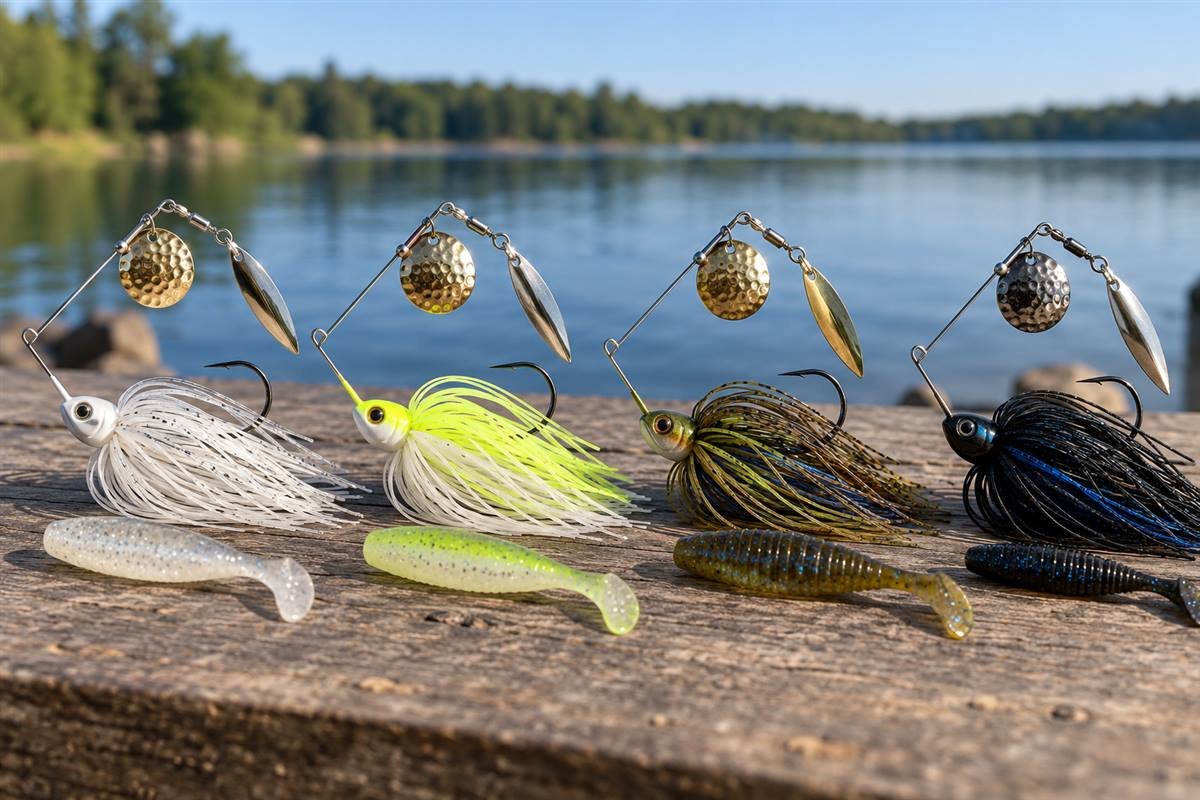
Begin with the fish's likely depth and the water's visibility. A 1/4-ounce bait can suit a small or shallow presentation. A 3/8-ounce is a versatile starting weight; 1/2-ounce broadens casting and depth options. A 3/4-ounce or heavier head may suit select deep targets. These are head-weight labels, not exact running depths: blade drag and retrieve speed can reverse a simple weight-based prediction.
Choose Blades and Color
For clear water and baitfish, consider a willowleaf and a white or shad-pattern skirt. In stained shallows, a Colorado/willow tandem with white and chartreuse is worth testing. A Colorado-oriented bait can add thump in low visibility. Green pumpkin or bluegill-like colors may fit local forage; darker skirts can create a silhouette. Adjust to what fish follow and strike rather than treating any color chart as a rule.
Choose a Trailer
A split-tail adds length with little extra action. Paddle-tail swimbaits and grubs add movement; creature or craw profiles create a bulkier outline. A skirt-only bait is also valid. Rig an optional trailer straight so it does not pull the lure sideways, and keep the hook point clear. Observe whether extra plastic changes lift before changing blades or weight.
| Fishing situation | Practical starting spinnerbait |
|---|---|
| Clear water with baitfish | Willowleaf and natural skirt |
| Stained shallow water | Colorado/willow tandem |
| Low visibility | Colorado-oriented configuration |
| General shallow cover | 3/8 or 1/2 oz |
| Deeper targets | Heavier head and suitable blade drag |
Spinnerbait Rod, Reel, Line, and Basic Rigging

A roughly 7-foot to 7-foot-3-inch medium-heavy casting rod is a useful starting range for many bass spinnerbaits. Some anglers prefer a moderate-fast action that loads through a moving-bait strike; others favor a faster action near heavier cover. A baitcasting reel around 6:1 to 7:1 offers retrieve control without prescribing one hand speed.
Fluorocarbon around 12–20 lb is common in selected bass situations. Braid can help around dense vegetation; monofilament may appeal when stretch and buoyancy suit the presentation. Line choice changes with abrasion, cover, lure weight, casting distance, and target depth. Match the setup to the actual lure rather than copying a single equipment list.
| Equipment | Starting choice | Main consideration |
|---|---|---|
| Spinnerbait | 3/8 or 1/2 oz | Target depth and cover |
| Rod | Medium-heavy casting rod | Casting and hook control |
| Reel | Approximately 6:1–7:1 | Retrieve-speed control |
| Line | Fluorocarbon or suitable alternative | Cover, abrasion, depth |
| Trailer | Optional soft plastic | Profile and action |
- Attach line securely at the open bend or closed eye, according to the lure design.
- If using a trailer, thread it straight onto the hook shank and confirm the hook point remains usable.
- Spin the blades by hand, inspect the frame, and test the bait's track in open water.
Common Spinnerbait Problems and How to Fix Them
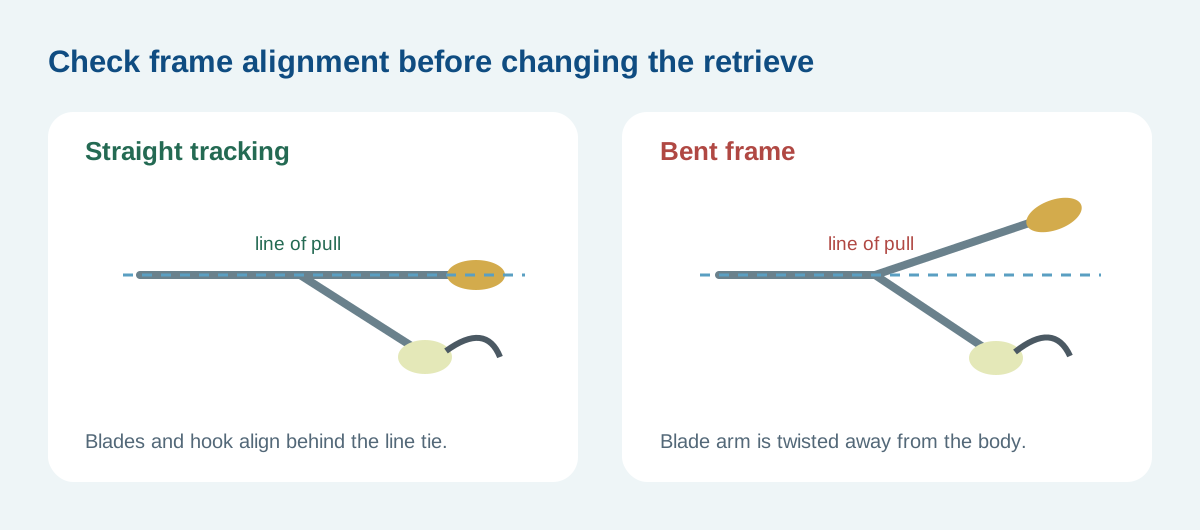
A missing blade pulse often means a fouled swivel, weed strand, or retrieve that is too slow for that hardware. A bait that runs sideways may have a bent frame, off-center trailer, or damaged skirt. Inspect it out of the water before changing several variables at once.
If the lure climbs above the target, reduce speed or blade drag, lower the rod, or use more weight. If it sinks too far, do the opposite while preserving blade rotation. Frequent snags call for a different casting angle or route; the frame is only partially protective. Short strikes may respond to speed or profile changes, and a trailer hook can be considered where cover and local rules allow. Replace damaged skirts or worn swivels instead of forcing them to work. Tune the wire gently: repeated bending can weaken it.
| Problem | Possible cause | What to try |
|---|---|---|
| Blade not spinning | Fouled swivel or insufficient movement | Inspect hardware and adjust retrieve |
| Lure runs sideways | Bent wire or crooked trailer | Check alignment carefully |
| Lure rises too high | Excess drag or speed | Adjust speed, blade, or weight |
| Lure runs too deep | Low lift or excess weight | Adjust speed or weight |
| Frequent snags | Poor path through cover | Change casting angle or lure |
| Short strikes | Fish do not fully take bait | Adjust speed or profile |