
Buzzbait vs Spinnerbait Anatomy: How Their Designs Differ

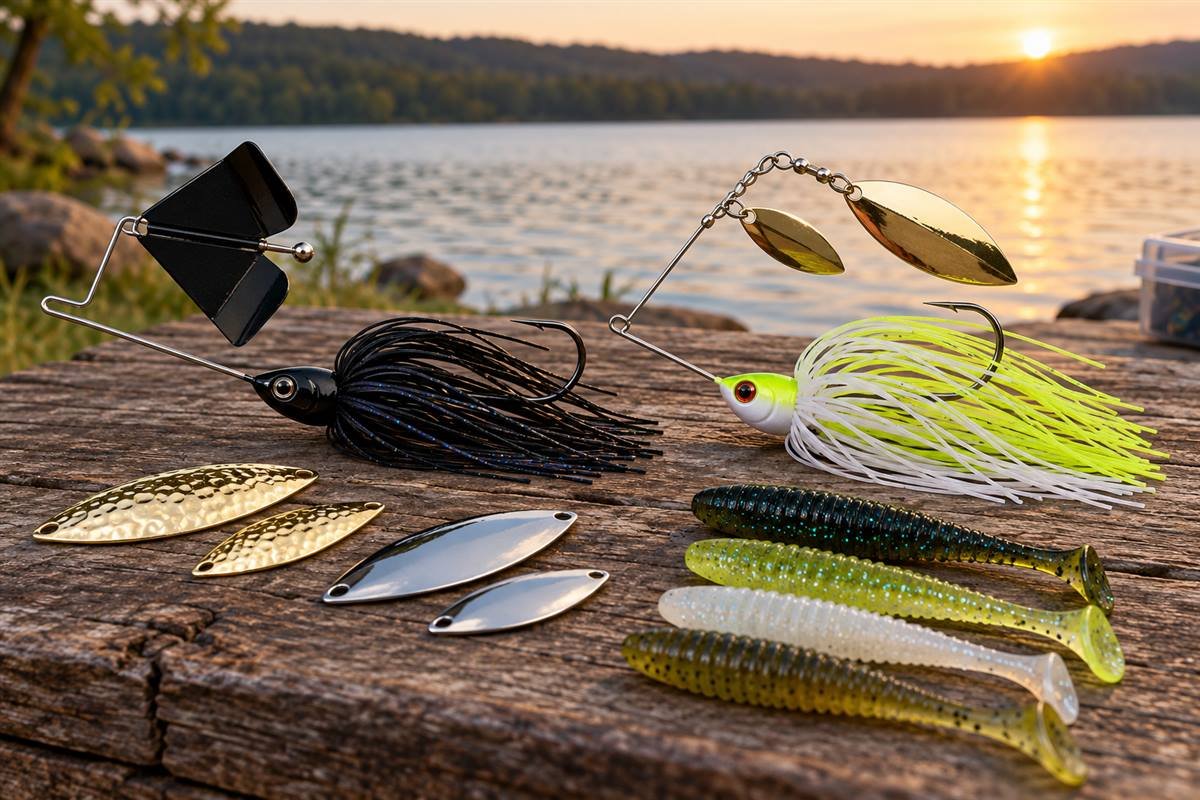
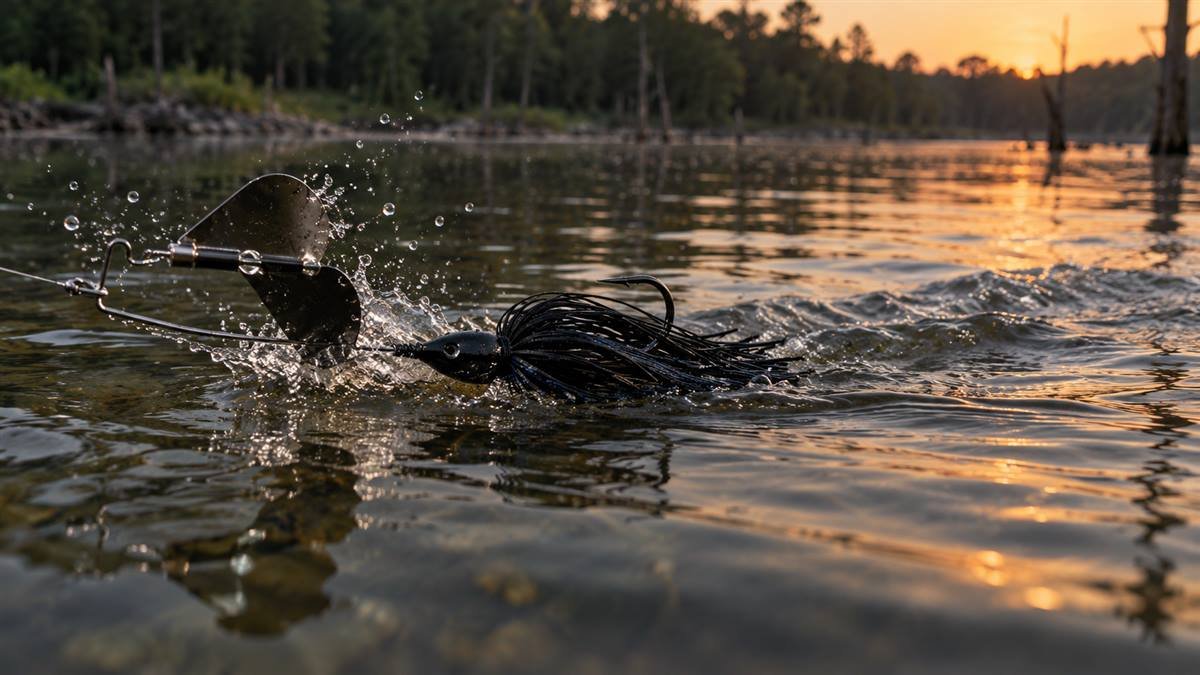
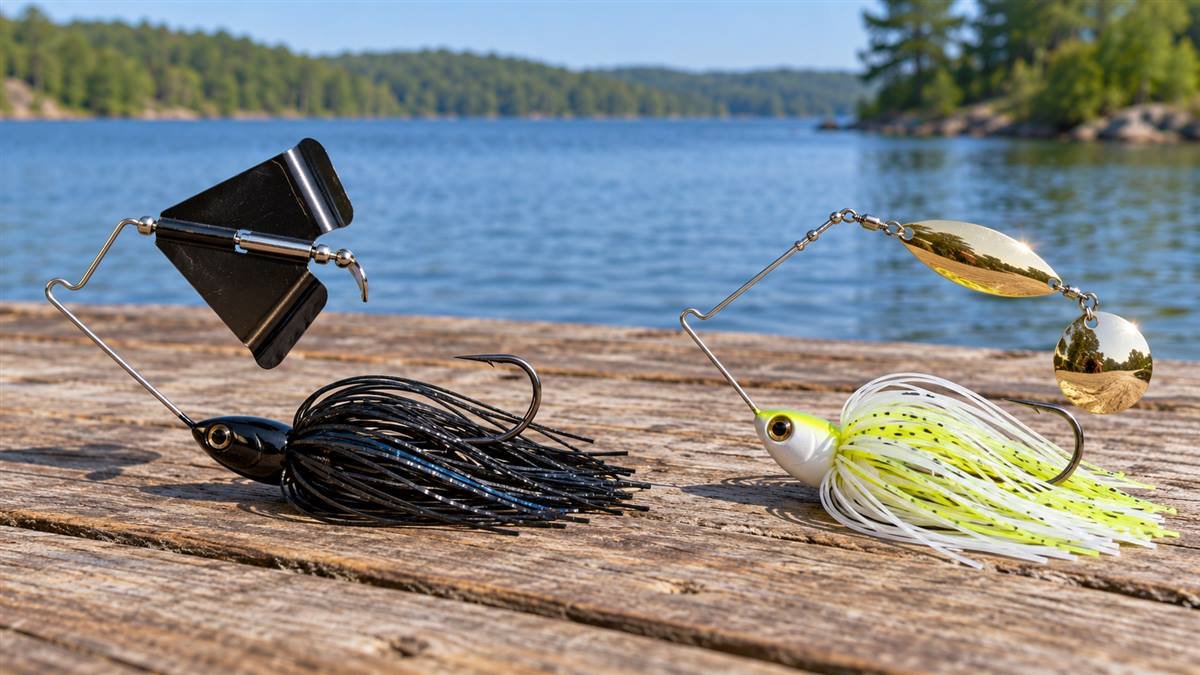
Look first at the blade arm. On a buzzbait, a propeller-style blade is mounted so forward movement spins it through the surface film. The water it pushes can lift and stabilize the lure as well as create sound and a visible trail. A spinnerbait carries one or more spoon-shaped blades that spin on the upper arm while the weighted head and skirt travel below them. Those blades reflect light and send a different pulse through the water.
Both lures commonly use a wire frame to separate blade hardware from the single hook. A weighted head helps them cast and track; a silicone skirt adds a moving outline. Some models use soft-plastic bodies or trailers, and single- or multi-blade versions alter resistance. Construction varies, so inspect the exact lure in hand instead of assuming every buzzbait or spinnerbait has identical parts.
| Component | Buzzbait | Spinnerbait |
|---|---|---|
| Blade | Propeller-style | Rotating spoon-shaped |
| Blade action | Churns the surface | Rotates underwater |
| Wire frame | Supports propeller and hook | Separates blade arm and hook |
| Weighted head | Balances and tracks | Helps set running depth |
| Skirt or body | Adds profile and movement | Suggests prey and adds movement |
| Main hook | Usually one exposed hook | Usually one exposed hook |
How Do Buzzbaits and Spinnerbaits Work in the Water?

How a Buzzbait Creates Surface Action
Water presses against the propeller as the lure moves forward, turning the blade. When the lure reaches the top, that rotation breaks the surface and produces a trail of bubbles, splashes, and sound. Metal contact in some designs can add a squeak or click. The weighted body would usually sink if left motionless; retrieve speed and blade lift keep it skimming.
How a Spinnerbait Creates Flash and Vibration
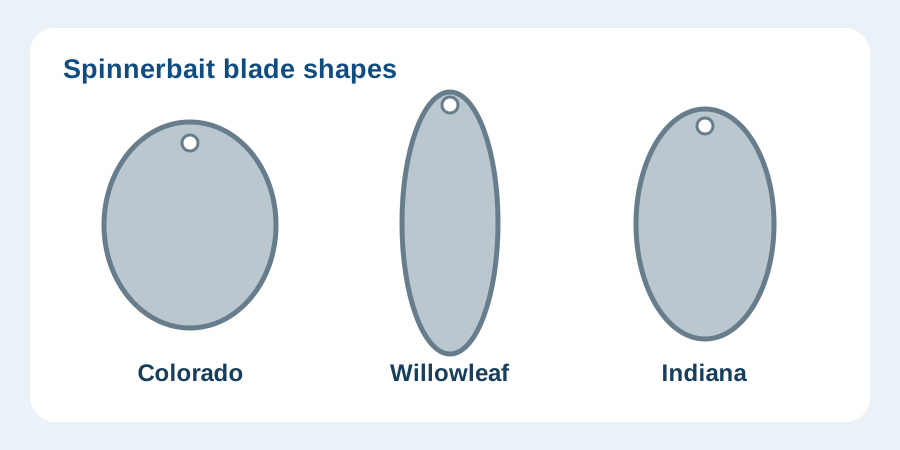
Water flowing over the spoon-shaped blades rotates them around their hardware. Their reflective faces flash as they turn, while blade resistance adds pulse and may lift the lure. A broad Colorado blade generally pushes more water than a narrow willowleaf; weight, line angle, and speed also set the running depth. A spinnerbait can be retrieved high enough to bulge the surface, but it does not create the same propeller churn as a buzzbait.
| Step | Buzzbait | Spinnerbait |
|---|---|---|
| 1 | Cast beyond shallow cover | Cast to chosen cover or depth |
| 2 | Begin reeling promptly | Let it sink if a lower lane is needed |
| 3 | Bring blade to the surface | Reel to activate the blades |
| 4 | Maintain a steady wake | Adjust speed to hold depth |
| 5 | Change speed without losing the surface lane | Feel for strikes or blade interruptions |
Buzzbait vs Spinnerbait: Key Differences Compared

The clearest difference is where each lure spends most of the cast. A buzzbait's conventional presentation is visible on top. You can see a fish boil or strike, though a dramatic splash does not always mean the hook is in its mouth. A spinnerbait normally tracks below the surface; a hit may feel like sudden weight or the blades may stop pulsing. It covers a broader range of depths and retrieve speeds.
Blade shape creates another difference. The propeller throws water and makes surface noise. Spinnerbait blades reflect light and pulse underwater. Both can be useful in clear or stained water. In low light, surface disturbance may help a buzzbait; in wind or stained water, a spinnerbait's flash and vibration may be a strong test. Yet fish position, cover, and control of the lure matter more than any single weather label.
Buzzbaits suit open lanes over shallow grass and around cover where the blade can clear the surface. Spinnerbaits can work beside vegetation, wood, or rock at a chosen depth, but their blades and hooks can still snag. A spinnerbait can also wake just under the surface when fish are high but will not commit to a propeller bait.
| Factor | Buzzbait | Spinnerbait |
|---|---|---|
| Primary presentation | Surface | Subsurface |
| Main visual signal | Splash and wake | Blade flash and skirt |
| Vibration | Propeller and turbulence | Rotating spoon blades |
| Depth versatility | Limited in conventional designs | Broad |
| Retrieve | Usually continuous | Multiple speeds and depths |
| Low light | Often worth trying | Can also work |
| Wind | Works if wake stays controlled | Often a useful option |
| Cold water | Selective opportunities | Usually more flexible |
| Strike visibility | Often visible | Usually felt below surface |
| Cover | Shallow open lanes | Can deflect some cover |
| Main limit | Mostly a surface bait | Less direct surface disturbance |
When Should You Use a Buzzbait?

Try a buzzbait when bass are likely to rise toward prey on or near the surface and you have a lane to retrieve it through. Early morning, late evening, overcast skies, and other low-light periods are useful starting times. Warm water and visible surface feeding can strengthen the case, but buzzbaits can also draw strikes in daylight or cooler conditions when bass are positioned shallow and willing to chase.
Shallow grass edges, lily-pad lanes, open pockets, shoreline shade, and the sides of laydowns provide practical casting targets. Run the lure parallel to cover so it stays near fish for more of the retrieve. Around a dock or isolated wood, choose an open route rather than driving the propeller into branches. In stained shallow water, the sound and displaced water can help fish locate the bait. A dark silhouette and consistent action may also be worth testing at night where fishing is safe and permitted.
The lure's main limitation is depth. It cannot search a submerged ledge like a slow-rolled spinnerbait while still behaving as a conventional buzzbait. If bass are holding lower and show no interest in rising, begin with a subsurface presentation. If a fish swirls and misses, keep retrieving briefly when appropriate; a second attack or a follow-up cast to the same lane may be useful.
| Situation | Why it may work | Approach |
|---|---|---|
| Low light | Surface disturbance is noticeable | Slow, controlled retrieve |
| Shallow grass | Bait travels above vegetation | Follow open lanes |
| Lily-pad edges | Bass may hold beneath cover | Run beside edges |
| Surface feeding | Fish are looking high | Cover active water |
| Stained shallows | Sound and wake add cues | Keep a clear trail |
| Night | Sound may help fish find it | Maintain consistent action |
When Should You Use a Spinnerbait?
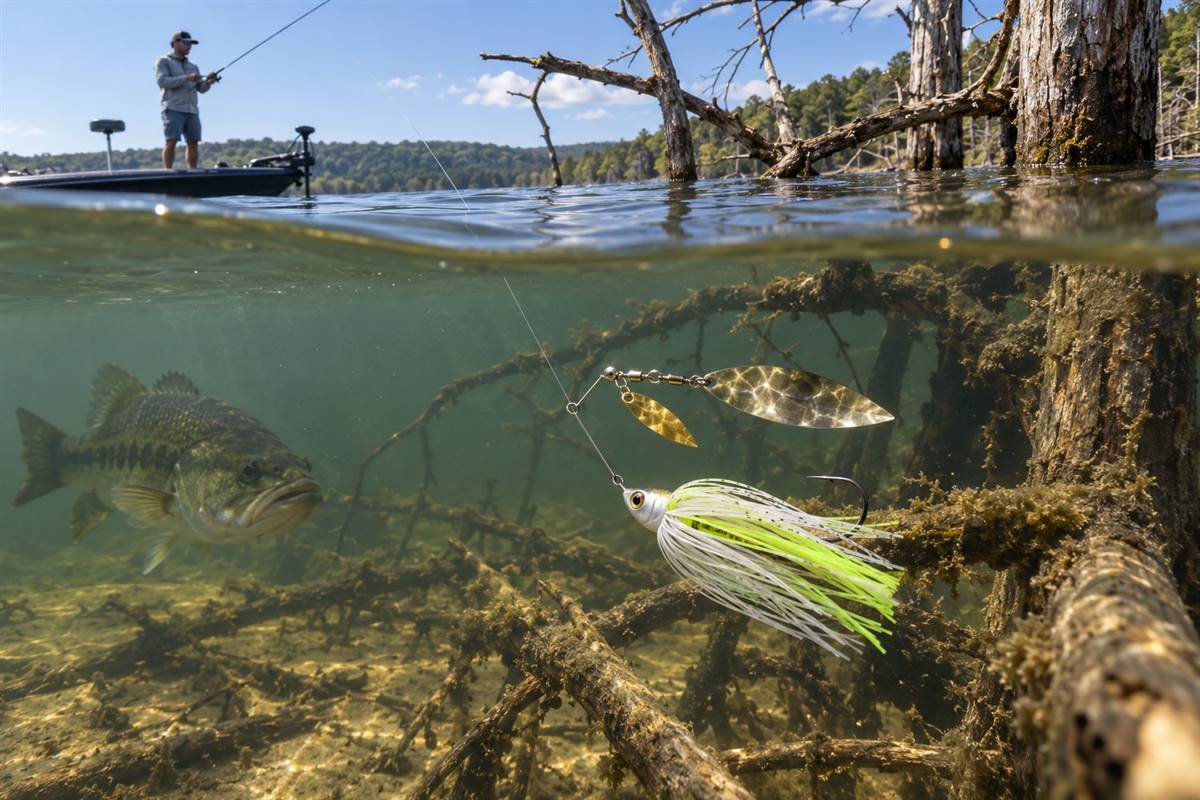
Choose a spinnerbait when bass are using a submerged lane or when you need to change depth during the day. Wind-blown banks, creek-channel edges, points, grass lines, shallow timber, and laydowns can all offer productive paths. In stained water, spinning blades provide vibration as well as flash. A wider Colorado blade often gives stronger thump; a narrow willowleaf generally favors flash and less drag. Blade combination still needs to match speed, water, and fish response.
Cast past a target and retrieve alongside it rather than into the thickest cover. Over submerged grass, hold the bait just above the plants, then adjust speed or rod angle when it begins to catch. Beside wood, keep the lure upright and moving so the wire arm can help it glance off light contact. It is not snag-proof: a blade, hook, or trailer can still wrap on branches. Check the lure after any suspicious stop in blade vibration.
A heavier head and slower retrieve can reach lower fish, including in cooler water, as long as the blades keep turning. If bass are visibly feeding at the surface, you can retrieve high enough to create a slight bulge or wake. If that does not draw a bite, let the lure drop into the next lane. This depth flexibility is a key reason to keep a spinnerbait ready beside a buzzbait.
| Situation | Why it may work | Technique |
|---|---|---|
| Wind-blown banks | Flash and pulse stand out | Steady retrieve |
| Stained water | Vibration adds a cue | Try Colorado or mixed blades |
| Submerged grass | Can track above plants | Control running depth |
| Shallow wood | Wire arm may deflect light contact | Run alongside obstacles |
| Deeper targets | Weight and speed set depth | Slow roll |
| Cooler water | Stays below the surface | Slow down but keep blades turning |
Seasonal and Weather Conditions: Which Lure Works Better?

Season is a clue. Fish depth, forage, weather, and activity decide whether to search the surface or a lower lane. Test the likely water column, then adjust to fish response.
Spring
Spinnerbaits search prespawn cover while bass remain submerged. On warming days with shallow feeding near new grass, test a buzzbait. Work depth transitions rather than assuming the whole bank holds fish.
Summer
Low light around pads and grass offers buzzbait lanes. Later, follow shade or deeper vegetation edges with a spinnerbait. Surface action remains possible in bright light when bass keep feeding high.
Fall
Follow baitfish. Use a buzzbait if bass push them high; swim a spinnerbait below the school when fish stay deeper. Wind and light can move feeding fish quickly.
Winter
Slow subsurface spinnerbait retrieves are usually more flexible for deeper winter fish. Cold-water buzzbait tactics can work in select shallow fisheries, but fish location should determine the first cast.
| Season | Buzzbait opportunity | Spinnerbait opportunity |
|---|---|---|
| Spring | Warming shallows and high fish | Prespawn cover and submerged lanes |
| Summer | Low-light shallow cover | Grass edges and varied depths |
| Fall | Surface baitfish feeding | Fish holding under baitfish |
| Winter | Selective shallow activity | Slow retrieves near deeper cover |
- Calm: A subtle wake or accurately placed spinnerbait may be easier to control.
- Windy: Check where baitfish and bass move; a spinnerbait is often practical, but a buzzbait can still work.
- Sunny: Follow shade and cover rather than ruling out either lure.
- Overcast: Surface activity may spread, so test a buzzbait while keeping a subsurface option ready.
How to Fish a Buzzbait for Bass

1. Start the Retrieve Immediately
Cast beyond cover and reel promptly: a conventional buzzbait sinks when stopped. Lift the rod or speed up briefly to bring its propeller to the surface, then control the lane without pulling it clear of the water.
2. Maintain the Slowest Effective Surface Speed
Reel just fast enough to keep the blade turning and making a consistent wake. Too slow and the bait slips under; too fast and it may skip past a fish. Watch the trail and listen for the blade. That combination tells you more than reel-handle speed alone because different buzzbait sizes and propellers need different pace.
3. Cast Parallel to Cover
A cast along a weed edge, bank, pad opening, or dock leaves the lure in the likely strike zone longer than a cast that crosses it at a sharp angle. Choose a path with enough open water for the propeller to work. If a lane narrows, lift the rod and guide the hook and blade past the obstruction.
4. Experiment With Sound and Speed
Blades can squeak, churn, or plop. Single- and double-propeller models move water differently; toad-style versions offer a bulkier soft-plastic body. Test one sound and speed for several casts, then change if fish follow without striking.
5. Improve Your Hookset Timing
A splash can happen beside the lure. Avoid striking at the first flash of water with no weight on the rod. Keep the line tight enough to feel the fish, then use a controlled hookset when it loads the rod. If the fish misses and the bait remains clear, continue the retrieve briefly rather than automatically stopping it.
- Cast close to suitable shallow cover, then bring the lure to the surface.
- Keep the propeller turning through the likely strike lane.
- Watch for missed swirls and note the exact location.
- Change speed or profile if fish follow but do not commit.
- After a strike, respond to line tension and the fish's weight.
How to Fish a Spinnerbait for Bass
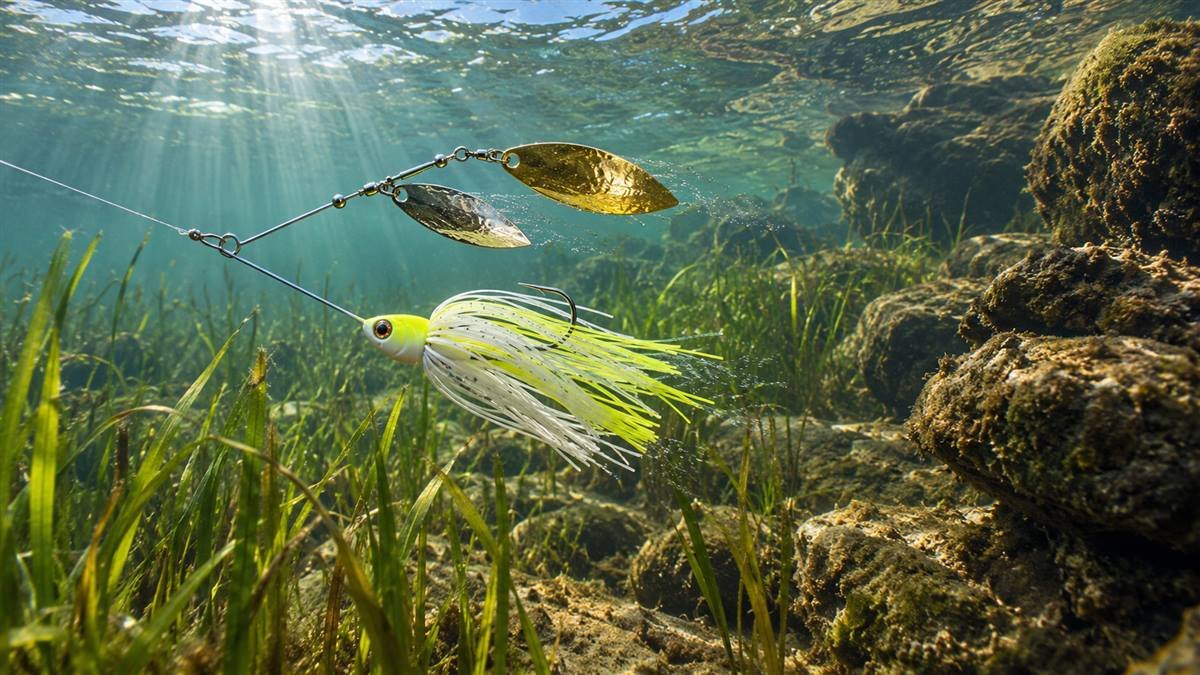
Decide whether bass are high, beside cover, or lower. Cast beyond that lane, let the bait sink if needed, then reel until the blades turn. Feel their pulse and watch for unexpected line movement.
1. Steady Retrieve
Reel at a pace that holds a consistent depth and blade pulse. This is a useful search retrieve beside grass, along a bank, or past a dock. Change only your rod angle or speed if the lure runs too high or low. A repeated thump is a sign the blades are turning.
2. Slow Rolling
Let the spinnerbait sink toward deeper vegetation or bottom structure, then retrieve slowly while keeping the blades working. If the pulse disappears, increase speed slightly or select a blade that starts more readily at a slow pace. Avoid dragging the hook into heavy branches; follow a clear edge.
3. Burning
Retrieve quickly just under the surface for active fish. A suitable head weight and blade combination keep the lure from rolling or breaking the surface when you want it submerged. If it rises too much, lower the rod or reduce speed. The goal is a controlled fast lane, not simply maximum reel speed.
4. Stop-and-Go
Briefly slow or pause beside a target, then resume. The blades may stall and restart while the head dips. That change can make a following bass commit, but a long pause near brush can bury the lure. Use short changes you can repeat and compare.
5. Deflection and Controlled Contact
Guide the spinnerbait beside a stump, rock, or grass edge so light contact changes its path. The wire arm may help it glance away, but the bait can snag. If blade pulse stops, check for a fish or fouling.
| Retrieve | Typical application | Key adjustment |
|---|---|---|
| Steady | General searching | Hold blade action and depth |
| Slow rolling | Deep or cooler targets | Slow down without stopping rotation |
| Burning | Active fish near surface | Increase speed but control depth |
| Stop-and-go | Following fish | Vary speed near targets |
| Cover deflection | Light wood, rock, or vegetation | Keep control and avoid snags |
Choosing Blades, Colors, Trailers, and Fishing Gear

Spinnerbait Blade Types
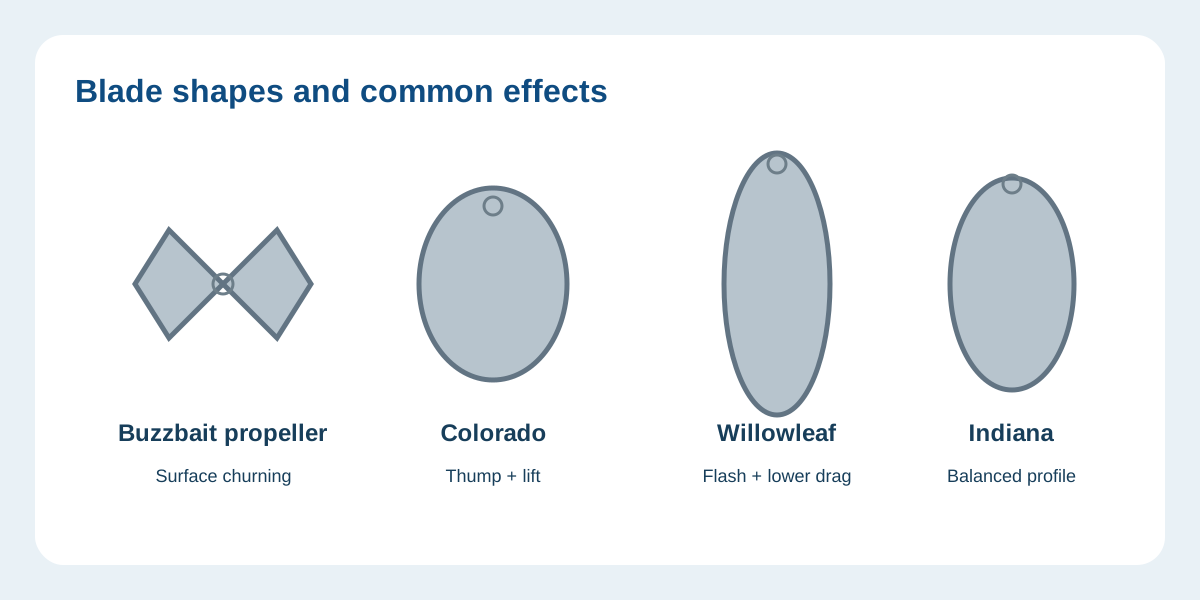
A rounded Colorado blade generally displaces more water, creating stronger thump and lift at a slower retrieve. A long, narrow willowleaf offers prominent flash with comparatively less resistance. The Indiana blade has an intermediate shape and can balance flash and vibration. Actual action also depends on blade size, finish, head weight, and speed, so test the complete lure rather than judging its name alone.
| Blade style | Main characteristic | Common use |
|---|---|---|
| Colorado | Stronger thump and lift | Slower retrieves or stained water |
| Willowleaf | Flash and lower drag | Baitfish look or faster retrieves |
| Indiana | Balanced action | Versatile middle ground |
| Buzzbait propeller | Churns the surface | Topwater fishing |
White and shad-colored skirts suggest baitfish; chartreuse-and-white adds visibility; black can create a strong buzzbait silhouette; natural or bluegill-like patterns suit other forage. A paddle-tail, split-tail, or toad trailer changes profile and lift, so keep the hook point exposed. A 3/8- or 1/2-ounce lure and medium-heavy baitcasting rod are sensible starting points. Choose line for the cover and retrieve, then adjust based on actual lure control rather than treating one setup as mandatory.
Buzzbait or Spinnerbait? How to Make the Right Choice

Look for evidence of fish depth first. Surface boils and open shallow lanes favor a buzzbait test. Fish holding under baitfish, along deeper grass, or beside submerged wood favor a spinnerbait. Weather and season refine the choice but do not replace that observation. If bass follow one lure without taking it, change depth or action before repeatedly casting the same path.
| If you observe… | Try first | Why |
|---|---|---|
| Surface feeding | Buzzbait | Visible surface action |
| Fish below surface | Spinnerbait | Depth control |
| Open shallow grass lanes | Buzzbait | Surface coverage |
| Wind, stain, submerged targets | Spinnerbait | Flash and pulse |
| Calm shallow evening | Buzzbait | Surface disturbance |
| Cold, deeper fish | Spinnerbait | Slow subsurface path |
| Followers without strikes | Adjust or switch | Test another lane or action |
Avoid these mistakes: Treating the two lures as interchangeable; letting a buzzbait sink; running a spinnerbait above or below the fish; refusing to adjust to new conditions; striking before a buzzbait fish loads the rod; or ignoring a fouled blade. Fish response is the final test.