
How the Two Crankbaits Are Built
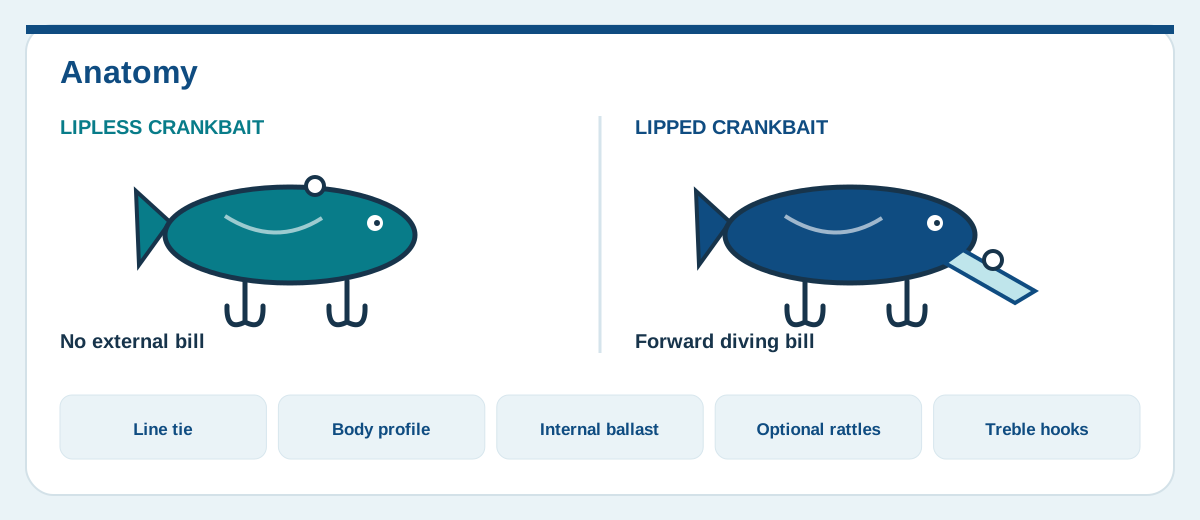
Lipless Anatomy
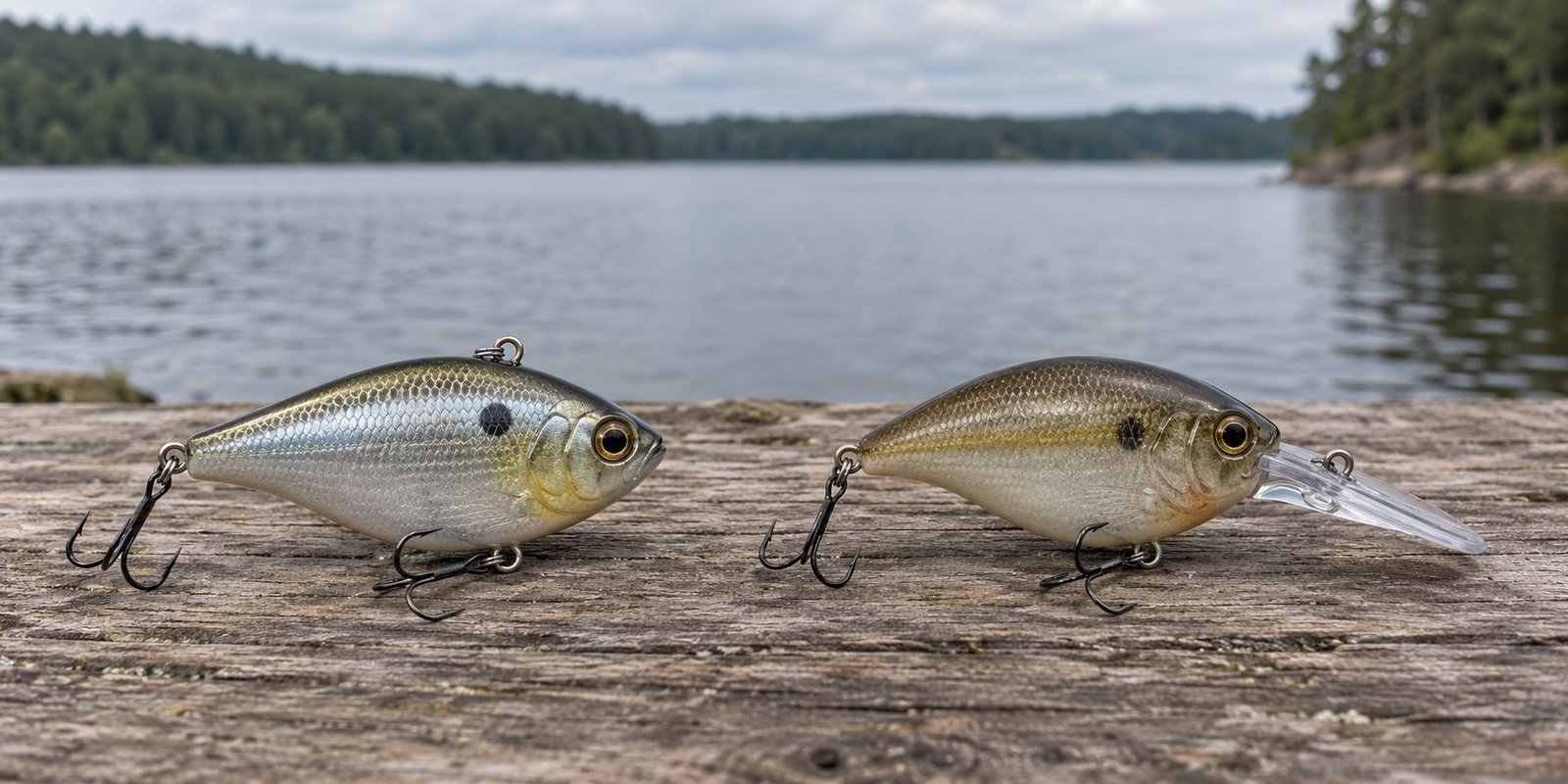
A typical lipless bait has a compressed, flat-sided body and an angled head. Its line tie sits near the upper front, rather than on an extended bill. Internal ballast sets weight and balance; its position can change how quickly the lure falls and how steadily it tracks. Many bodies contain loose rattles, but one-knock and silent designs are also available. Treble hooks commonly hang beneath the belly and tail, although hardware varies by model.
Paint and foil finishes complete a baitfish-like outline. They do not determine action alone: head geometry, weight distribution, line-tie placement, and retrieval speed work together. A lure that vibrates cleanly on one line diameter may run differently on another.
Lipped Anatomy
On a lipped crankbait, the rigid bill projects ahead of the hard body. Short, broad square bills, rounded lips, coffin-shaped bills, and longer diving lips create different water resistance and contact angles. The line tie may be near the nose or mounted on the bill. Fixed or moving internal weights affect casting, balance, sound, and buoyancy. Hook attachment points and body shape vary just as much as bill shape.
Inspect the actual model before assuming it floats, rattles, or carries two hooks. A bill can help a lure glance off an obstacle; it cannot make exposed treble hooks snag-free.
| Component | Lipless | Lipped |
|---|---|---|
| Bill | Absent | Present |
| Line tie | Usually upper front | Nose or bill |
| Body | Often compressed | Rounded to flat-sided |
| Ballast | Fall and balance | Buoyancy and balance |
| Action source | Body and head flow | Bill and body flow |
| Sound | Optional | Optional |
| Hooks | Often trebles | Often trebles |
| Depth | Dynamic control | Bill-influenced range |
How They Work Underwater

Lipless: Body-Driven Vibration
Water flows around the angled head and sides as the lure moves. Body shape, line angle, and ballast encourage a side-to-side oscillation felt as a rapid pulse through the rod. A steady retrieve sustains that vibration. When the angler stops, a conventional sinking model drops; some flutter or shimmy on the way down. This gives the lure useful vertical movement, but its depth is not unlimited. Current, line drag, bottom, and practical casting distance all constrain it.
Lipped: Bill-Driven Diving
Forward movement forces water against the diving bill. The resulting force pitches the lure down until resistance, buoyancy, line angle, and retrieve speed balance out. The bill and body together create a wobble or roll. Each model has a practical running range, not a single guaranteed depth. A long cast may reach the advertised zone more effectively than a short one because the bait has more travel time to dive.
| Step | Lipless | Lipped |
|---|---|---|
| 1 | Cast toward the zone | Cast beyond the target |
| 2 | Count down if needed | Begin the retrieve |
| 3 | Reel until vibration starts | Let the bill drive it down |
| 4 | Vary speed or rod lift | Hold a useful running lane |
| 5 | Pause for a controlled fall | Change pace around cover |
Ten Key Differences
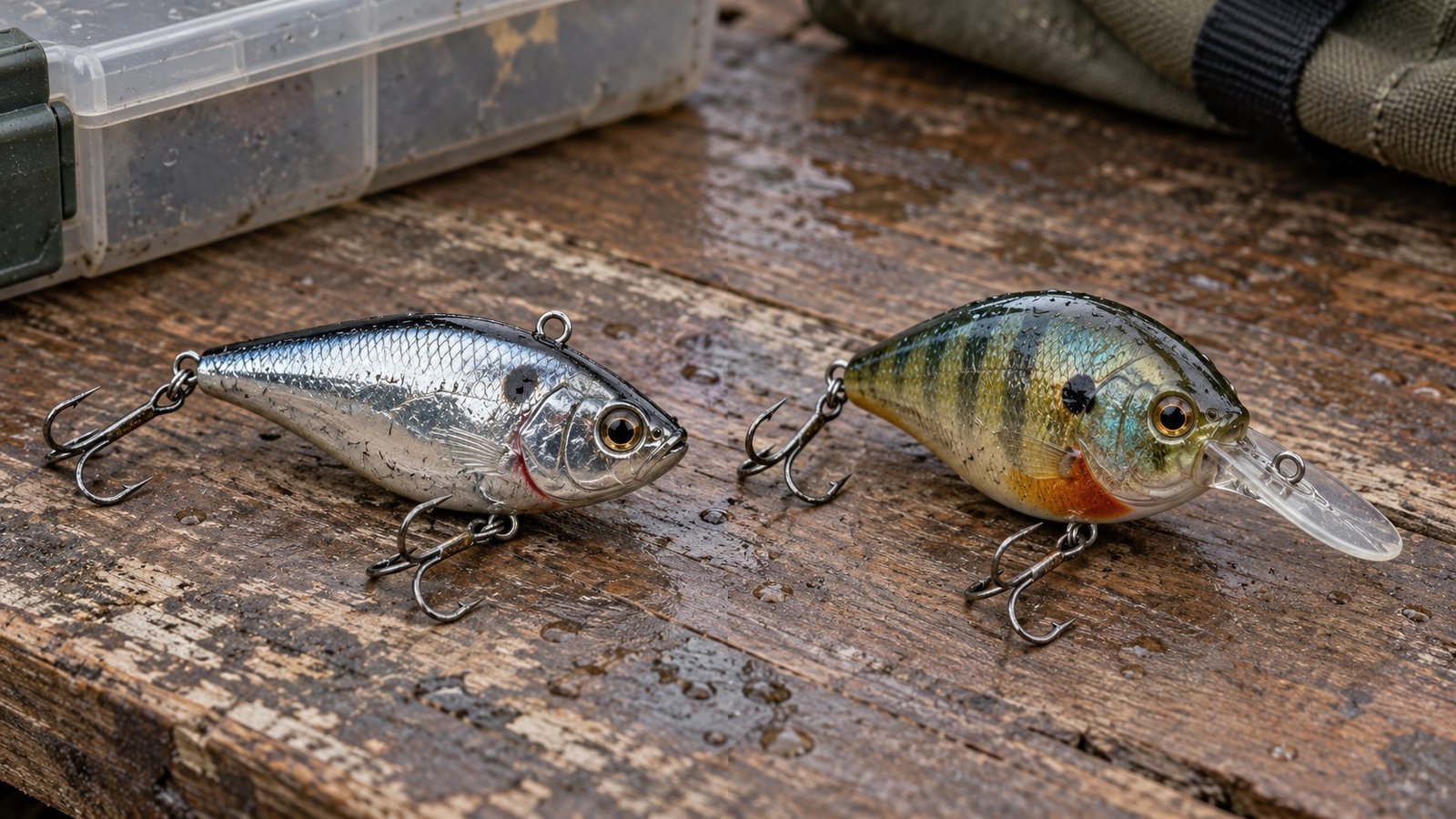
The visible difference is the bill, but that one part changes several decisions on the water. A lipless lure's weight and vibrating body make it practical to search broad flats at different levels. A lipped lure's bill gives it a designed diving range and a useful contact point against appropriate hard cover. Buoyancy matters when the retrieve stops: most conventional lipless models fall, while many conventional lipped models rise. Neither behavior applies to every product.
The two styles also offer different rhythm. A lipless bait can be yo-yoed, burned, or snapped free of grass. A lipped bait can hold a depth lane, bump bottom, deflect from rocks, or pause. Both may have rattles or be silent. Both have exposed-hook snag risk, and both can work outside their stereotypical season or habitat.
| Factor | Lipless | Lipped |
|---|---|---|
| Diving mechanism | Weight and retrieve | External bill |
| Body | Usually flat-sided | Many profiles |
| At rest | Usually sinks | Float, suspend, or sink |
| Action | Often tight vibration | Tight or wide wobble |
| Depth | Count-down and speed | Designed running range |
| Sound | Silent to multi-rattle | Silent or rattling |
| Grass | Often ripped free | Can work with suitable route |
| Hard cover | Hooks more exposed to contact | Bill can deflect |
| Retrieve | Steady, yo-yo, fall | Steady, pause, contact |
| Search role | Broad areas, variable depth | Chosen depth and cover |
- Try lipless first for a vibrating search bait above grass or at an adjustable depth.
- Try lipped first for a repeatable depth lane or deliberate contact with rock and wood.
Shallow, Medium, and Deep Divers
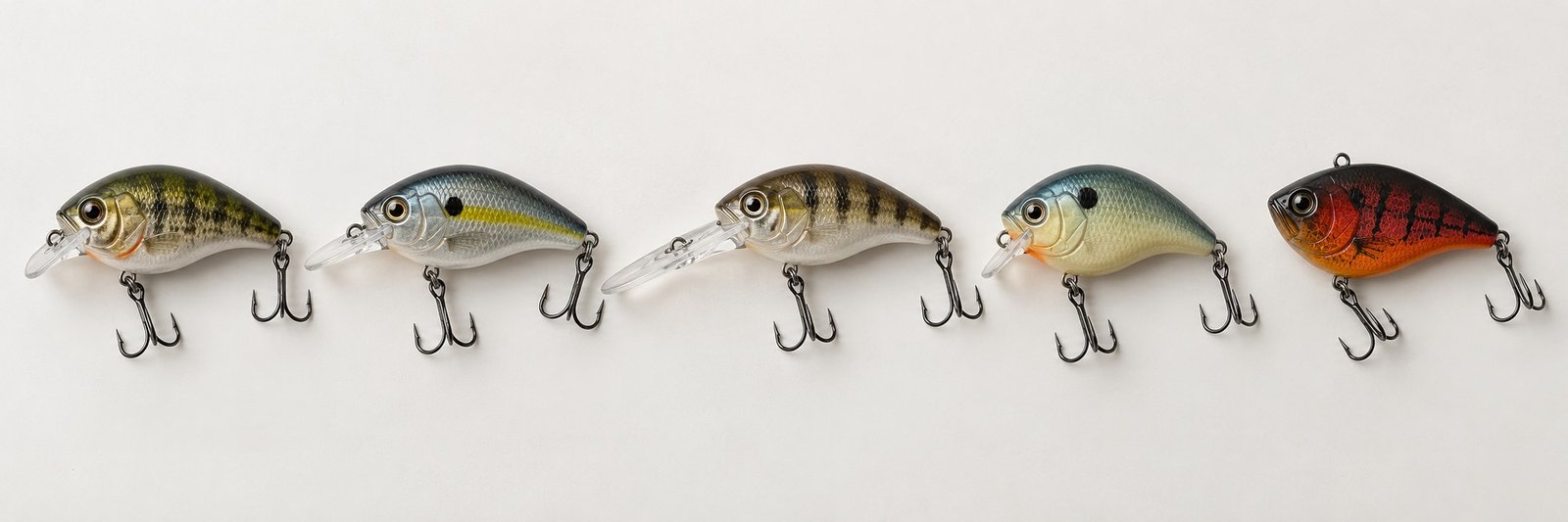
Squarebill Crankbait
A short, wide bill helps a squarebill run relatively shallow and change direction after glancing off rock, a stump, or suitable wood. Cast beyond the cover and let the bill, rather than the hooks, meet it first. The bait can still snag, particularly in branches or heavy vegetation.
Medium and Deep Divers
Medium divers cover transition zones such as points, rock banks, and submerged cover. Deep divers use longer or specially angled bills to reach offshore ledges and deeper structure. Choose the model whose stated range overlaps the fish, then consider cast length, line diameter, and retrieve. A deep diver on a short cast may never reach its intended zone.
Flat-Sided Lipped Crankbait
A narrow body with a bill can produce a tighter, subtler action than a rounder wide-wobbling bait. Anglers often test such profiles in colder water, but temperature alone does not guarantee a result. The comparison also reminds us that “lipped” does not always mean “wide wobble.”
| Type | Feature | Starting application |
|---|---|---|
| Squarebill | Short, broad bill | Shallow hard cover |
| Medium diver | Intermediate bill | Mid-depth structure |
| Deep diver | Longer/deeper-running bill | Offshore ledges |
| Flat-sided lipped | Narrow body, bill | Tight-action passes |
| Lipless | No projecting bill | Grass, open water, varied depth |
These categories are descriptive, not universal depth bands. Check each manufacturer's model specifications.
Action, Vibration, and Sound

Lipless Vibration
Many lipless crankbaits make a tight, rapid body vibration on a straight retrieve. You can feel it through a reasonably taut line. Some models contain several loose rattles; others use a single weight for a distinct knock, and silent versions omit the rattle effect. Sound profile is a design option, not a definition of “lipless.” Check the product description and listen to the lure in hand.
Lipped Wobble
Bill size and angle, body width, buoyancy, and speed influence whether a billed lure rolls widely or tracks with a tighter movement. A flat-sided bait may appear restrained while a rounder model moves more water. Both lipped and lipless designs can be subtle or forceful. In clear water or around pressured fish, a quieter test may be useful; in stained water, a louder test may help fish locate the bait. Neither is automatically superior.
| Characteristic | Lipless | Lipped |
|---|---|---|
| Main motion | Often tight vibration | Design-dependent wobble or roll |
| Sound | Optional internal rattles | Optional internal rattles |
| Visual cue | Vibrating reflective body | Wobbling reflective body |
| On pause | Model-dependent fall | Model-dependent rise, hold, or fall |
| Adjustment | Speed, lift, sink time | Speed, bill contact, depth |
When to Use Each Crankbait

Favor a lipless crankbait when you must search a large shallow flat, work a grass edge, or cover open-water baitfish at changing depths. Wind can break up the surface and position fish along a bank; a long-casting lipless bait can help survey that water. Pre-spawn movement toward shallow flats is another common opportunity. Count the lure down for fish suspended below the surface, or lift and fall beside a grass line. These are starting points, not seasonal rules.
Why Grass Can Favor Lipless
Run the lure just above submerged vegetation. A light tick against the tops can be followed by a controlled snap that frees the bait and changes its speed suddenly. Heavy vegetation can still foul exposed trebles. If the lure stops vibrating, check it rather than pulling it repeatedly through a thick mat.
When a Bill Helps
A squarebill can meet shallow wood or riprap with its bill and glance aside. A medium or deep diver can repeatedly cross a rock shelf at a more defined depth. Floating models may rise after a pause and clear an obstacle. This behavior depends on the exact lure; a bill reduces some contact risk, but does not prevent snagging.
| Situation | Try first | Reason |
|---|---|---|
| Submerged grass | Lipless | Retrieve over and rip free |
| Open-water baitfish | Lipless | Broad coverage and count-down |
| Shallow wood | Squarebill | Bill can deflect |
| Rocky bank | Lipped | Controlled hard contact |
| Pre-spawn search | Either | Match depth and cover |
| Deep rock | Deep diver | Designed range |
| Suspended fish | Suitable lipless | Count-down and lift |
| Narrow depth lane | Lipped | Repeatable running range |
Locate the fish and identify the cover before deciding by season or water color.
Crankbaits Through the Seasons

Spring
As pre-spawn bass move toward shallower areas, a lipless crankbait can search flats and emerging grass. A squarebill can test nearby rock or wood. Watch where baitfish and warmer pockets concentrate instead of assuming every shallow area holds fish.
Summer
Mid- and deep-diving crankbaits can reach suitable offshore points and ledges. Lipless models still have a role at grass edges and over selected open-water fish. Match the lure's working depth to the actual position of bass, not simply the water temperature.
Fall
Baitfish schools may move along banks, points, or open water. A long cast with either lure can search active fish. A lipless bait changes depth quickly; a lipped model tracks a more defined lane. Follow the forage, then adjust speed and sound.
Winter
Slower, controlled presentations and a tighter action may be useful. A lipless lure can be lifted and allowed to fall; a flat-sided lipped bait can be retrieved near structure. Neither season nor lure type guarantees a strike: fish position and response still decide.
| Season | Lipless opportunity | Lipped opportunity |
|---|---|---|
| Spring | Flats and vegetation | Shallow rock and wood |
| Summer | Grass edges and open fish | Mid- or deep structure |
| Fall | Baitfish search | Bank and mid-depth prey |
| Winter | Measured lift-and-fall | Tight-action structure pass |
Five Lipless Retrieve Techniques
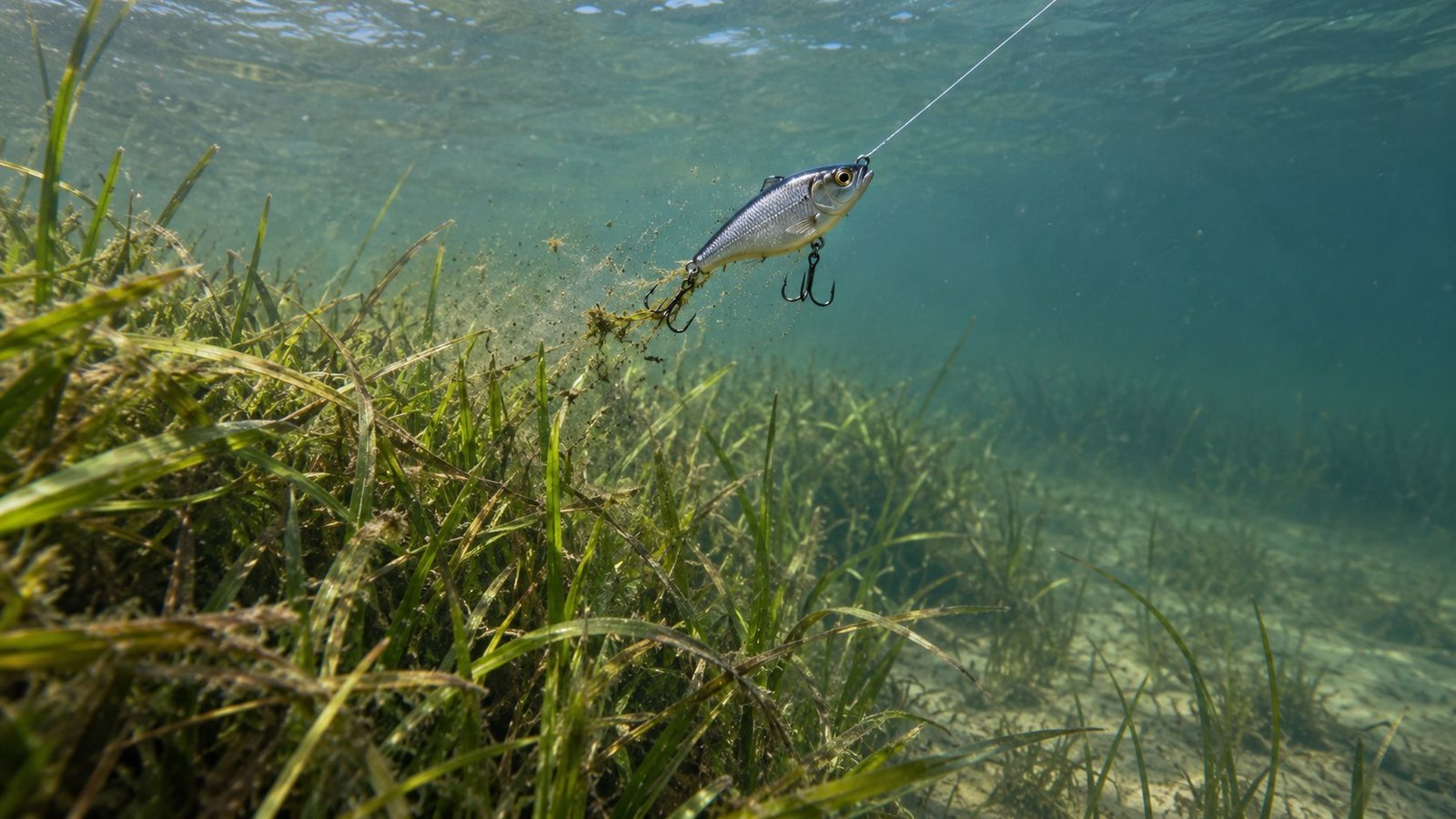
1. Steady Retrieve
Cast beyond a target and reel at a pace that makes the bait vibrate clearly. Change rod height or speed to keep it in the desired lane. This is a useful first pass across a flat or parallel to a vegetation edge.
2. Yo-Yo Retrieve
Lift the rod so the lure climbs, then lower it while recovering slack so it falls under control. Watch the line: a strike may happen on the drop. Start with modest lifts so the bait does not jump out of the zone.
3. Rip Through Grass
Let the lure lightly touch the top of submerged grass, then snap it free with a controlled rod movement. The sudden release changes direction and speed. Do not drag exposed hooks through dense weeds; choose open lanes or a different presentation.
4. Burn and Pause
Reel quickly enough to cover water, then pause briefly where fish may be holding. The lure may flutter or sink on that pause. Keep contact with the line so you can detect a bite without jerking too early.
5. Count Down
After the cast lands, count before reeling to repeat a starting depth. The count is only a relative guide: sink rate changes with lure weight, line, current, and water depth. Confirm the lure's movement and adjust on the next cast.
| Technique | Starting situation | Main action |
|---|---|---|
| Steady | General search | Continuous vibration |
| Yo-yo | Bottom or suspended fish | Lift and fall |
| Grass rip | Submerged vegetation | Sudden release |
| Burn and pause | Active fish | Speed change |
| Count-down | Selected subsurface lane | Controlled sink before retrieve |
Beginner Checklist
- Check hooks and line tie.
- Cast past the intended lane.
- Allow enough sink time.
- Begin reeling and feel for vibration.
- Change speed or rod angle if needed.
- Keep trebles out of dense cover.
- Watch pauses and falling movements.
- Maintain steady pressure after a strike.
Five Lipped Retrieve Methods

1. Steady Cast-and-Retrieve
Cast beyond the target and reel consistently. Water against the bill starts the lure diving and wobbling. Let it settle into its intended range before judging whether it reaches the fish.
2. Bottom Contact
Use a depth-matched model that can occasionally touch suitable bottom. A brief change in rod feel can mean the bill has hit rock or sand; a sudden loss of wobble can also mean weeds or a snag. Check the lure when in doubt.
3. Squarebill Deflection
Guide a squarebill beside shallow wood or rock so the bill makes light contact and changes direction. It can trigger a reaction, but trebles remain exposed. Avoid forcing it through thick branches.
4. Stop-and-Go
Pause after a short run. A buoyant model may back upward; a suspending model may hold near its depth, and a sinking design will fall. Learn the actual lure's behavior in clear water before relying on the pause near cover.
5. Deep Cranking
Make a long cast with a model designed for the target depth. Maintain a retrieve that reaches and then holds the relevant structure. Line diameter and lure resistance affect how deeply and comfortably it fishes.
| Method | Suitable model | Purpose |
|---|---|---|
| Steady | Most lipped types | Consistent action |
| Bottom contact | Depth-matched | Follow structure |
| Deflection | Squarebill | Change direction near cover |
| Stop-and-go | Float or suspend as needed | Alter behavior |
| Deep cranking | Deep diver | Reach offshore zone |
Pauses and speed changes do not produce the same result on every lipped model. Test the chosen bait's buoyancy and track before fishing a tight strike zone.
Rod, Reel, and Line Choices
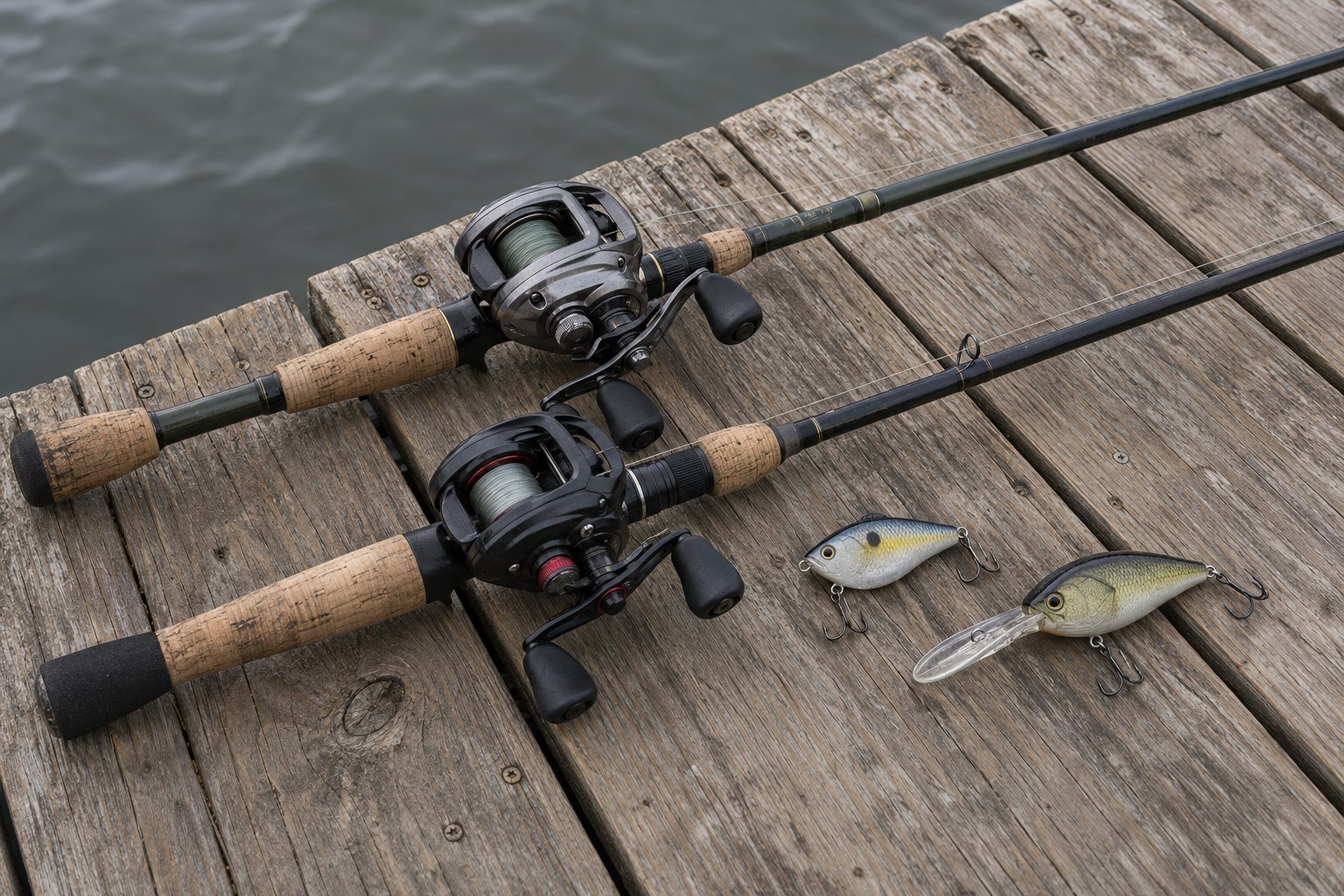
For many bass crankbaits, rods around seven to seven and a half feet support casting distance and line control. Medium or medium-heavy power depends on lure weight, grass density, and the fish you expect. A moderate or moderate-fast action can load more gradually when a fish surges against treble hooks. Stronger grass-ripping setups may call for a different balance; there is no universal rod.
Select a reel whose speed you can control at the chosen depth. A fast reel can pick up slack during a lipless fall, but speed alone does not fix a lure that runs too high. A deeper billed lure may create substantial resistance; a comfortable reel and longer rod can make repeated casts easier.
Fluorocarbon and monofilament are common crankbait lines; braid is used for some grass presentations. Diameter, stretch, and buoyancy affect running depth, lure feel, and hook retention. Thin line may let a billed lure run deeper than thick line. Test changes cautiously and use line strength appropriate to cover and lure weight.
| Equipment | Lipless | Lipped |
|---|---|---|
| Rod | Medium to medium-heavy as needed | Moderate cranking action often useful |
| Reel | Controlled speed changes | Match depth and lure resistance |
| Line | Fluorocarbon or selected braid | Fluorocarbon or mono commonly |
| Hooks | Often trebles | Often trebles |
| Priority | Grass control and retention | Depth and retention |
Size, Color, Sound, and Hooks

Size and Weight
Lipless baits are commonly offered around 1/4, 1/2, and 3/4 ounce. A 1/2-ounce model is a practical starting size for many anglers, but a lighter lure may suit shallow water and a heavier one may help casting or deeper work. With lipped baits, compare body length, profile, bill, weight, and stated diving range together. Weight alone does not tell you where it runs.
Color and Sound
Natural shad, chrome, silver, bluegill, red crawfish, chartreuse, firetiger, and translucent finishes each offer a test. Match local forage and light first; add contrast when visibility is limited. Pressured fish may respond to a quieter or more subtle bait, but there is no guaranteed color. Both lure types include rattling and silent models. A single knock differs from several small rattles, so vary sound only after you have put the lure in the correct lane.
Treble Hooks
Check points, split rings, and hook clearance. A dull hook can lose fish, while an oversized replacement can tangle with another hook or change lure action. Replace damaged hardware with a size that preserves the bait's intended balance.
| Situation | Starting test |
|---|---|
| Clear water, shad | Natural silver or shad |
| Stained water | Brighter or high contrast |
| Spring crawfish | Red or crawfish pattern |
| Pressured fish | Silent or subtle option |
| General lipless work | Consider 1/2 ounce |
| Specific hard-cover depth | Bill matching target range |
Common Mistakes and a Simple Decision Guide

Do not assume every crankbait dives the same way. A lipless bait can sink into an unexpected snag if you stop over shallow wood; a deep diver may dig unnecessarily in a very shallow lane. Conversely, a lipped bait that never reaches the strike zone can pass above fish all day. Monitor lipless sink time, identify whether your lipped lure floats or suspends, and adjust line and retrieve when the lure misses the target depth.
Treble hooks also reward controlled pressure. A violent hookset can tear a small opening and lose the fish. If you make several passes without a response, change one factor—depth, speed, path, or sound—rather than repeating the identical retrieve.
| If you need to... | Try first |
|---|---|
| Search shallow grass | Lipless |
| Deflect off shallow wood | Squarebill |
| Target mid-depth rock | Medium diver |
| Reach deep structure | Deep diver |
| Lift and fall | Sinking lipless |
| Hold a defined running lane | Depth-matched lipped |
| Test a new sound | Either type with suitable option |
Fish location, cover, and the lure's actual response matter more than a rigid rule.