

Spinnerbait Anatomy: Parts That Create Action

Upper arm and line tie
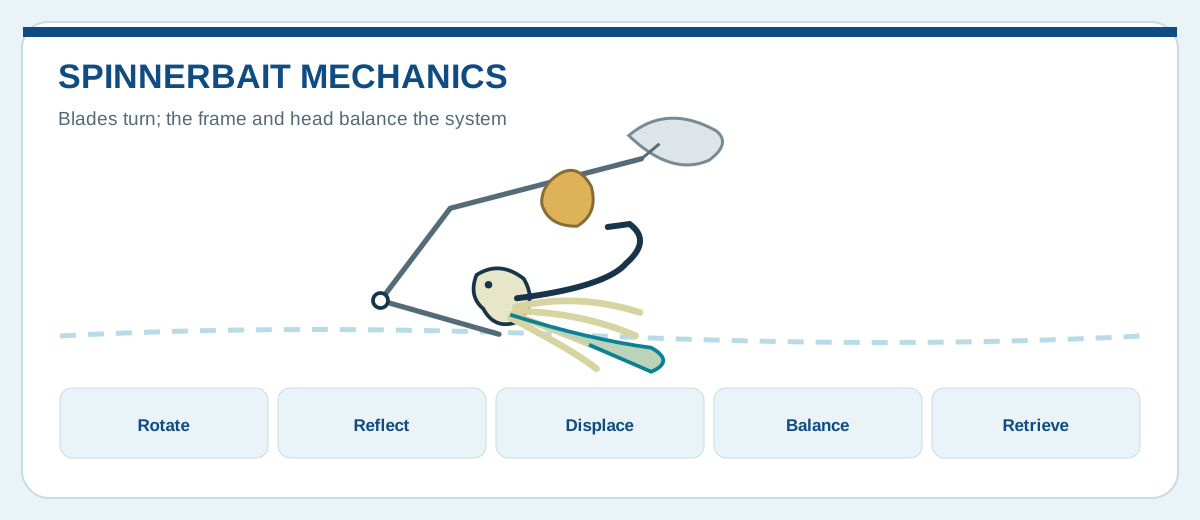
The bent wire is the spinnerbait’s backbone. The fishing line attaches at the bend or eye; from there, the upper arm carries the blades and the lower arm leads to the head. The wire places the spinning hardware above the hook rather than on a straight central shaft. Arm length and angle also determine how far the blades sit from the skirt and hook.
On many tandem models, a small forward blade rides on a clevis around the upper wire and the rear blade spins from a swivel at the end. Beads or spacers can keep the pieces apart. Other models use different mounts. A clevis or swivel must move freely; a seized part can prevent the intended rotation even when the lure is moving.
Head, hook, skirt, and trailer
The weighted jighead sits below the blade arm and carries a single main hook. Its shape and mass influence sinking, balance, and recovery after contact with cover. Silicone or rubber skirt strands stream and pulse behind it. An optional soft-plastic trailer extends the silhouette and can add drag or tail motion. A trailer hook is extra hardware for selected short strikes, but it can also catch vegetation and wood.
| Component | Mechanical job | What to inspect |
|---|---|---|
| Line tie | Receives the pull | Open or bent eye |
| Upper arm | Carries blade mounts | Alignment |
| Swivel or clevis | Lets blades turn | Free rotation |
| Head and hook | Ballast and hook point | Track and sharpness |
| Skirt | Flexible outline | Secure collar |
| Trailer | Added profile and drag | Straight rigging |
How Spinnerbait Blades Rotate

Water flow starts the turn
A blade does not spin because the jighead shakes it. Line tension pulls the lure forward, creating flow relative to its curved blade surface. The water force on that off-center, shaped surface produces a turning tendency around the mounting axis. A free swivel or clevis lets the blade revolve. The exact start-up speed depends on blade cup, size, mount friction, and the lure’s orientation.
With a tandem setup, the small forward blade may turn around the wire on a clevis while the larger rear blade spins on a swivel. They need clearance from each other and the frame. If the lure is too slow for a particular combination, a blade may flutter irregularly or stall. If grass wraps the swivel, increasing retrieve speed may only pull the fouling tighter.
Rotation changes light and force
As a metal blade turns, its reflecting surface repeatedly faces and turns away from available light. That creates moving highlights, not an independent light source. The blade also pushes water and periodically loads the wire. Some of that changing force reaches the line and rod as thump or vibration. How much the angler feels depends on blade shape, wire, tackle, and current.
| Stage | Physical process | Angler observation |
|---|---|---|
| Forward pull | Lure meets water flow | Line stays controlled |
| Blade force | Curved surface is loaded | Rotation begins |
| Mount | Swivel or clevis permits turning | No binding |
| Reflection | Blade angle changes | Flash varies with light |
| Water force | Blade displaces water | Feedback through line |
| Head response | Ballast counters rising and roll | Upright tracking |
Colorado, Willowleaf, and Indiana Blades

Colorado: broad and cupped
A Colorado blade is relatively round and often deeply cupped. Its broad surface commonly produces pronounced resistance and a slower, wider-feeling thump. That can help an angler keep a particular model turning at a deliberate retrieve or maintain a higher path. It does not mean every Colorado spinnerbait runs shallow: head weight, blade size, and speed still decide the final depth.
Willowleaf: long and narrow
A Willowleaf blade is longer and slimmer. It commonly turns nearer its axis with less resistance than a similarly sized broad blade and offers a different pattern of reflections. Anglers often start with willowleaf blades for baitfish-oriented presentations, clearer water, or faster coverage. A larger or more heavily cupped willowleaf may behave differently from a smaller one.
Indiana: between the two
An Indiana blade has an intermediate teardrop profile. It can offer a compromise between resistance and a narrow reflective surface, but its behavior is still model specific. Finish, thickness, cup, blade angle, mount quality, and wire geometry may matter as much as the name stamped on a package. Test the lure in visible water before deciding what a blade will do at your intended speed.
| Blade | Typical profile | Common starting thought |
|---|---|---|
| Colorado | Rounded and cupped | Slower, stronger thump |
| Willowleaf | Long and narrow | Less drag; baitfish flash |
| Indiana | Intermediate | Mixed traits |
| Any profile | Size and cup vary | Test actual tracking |
Single, Double, and Tandem Blade Setups
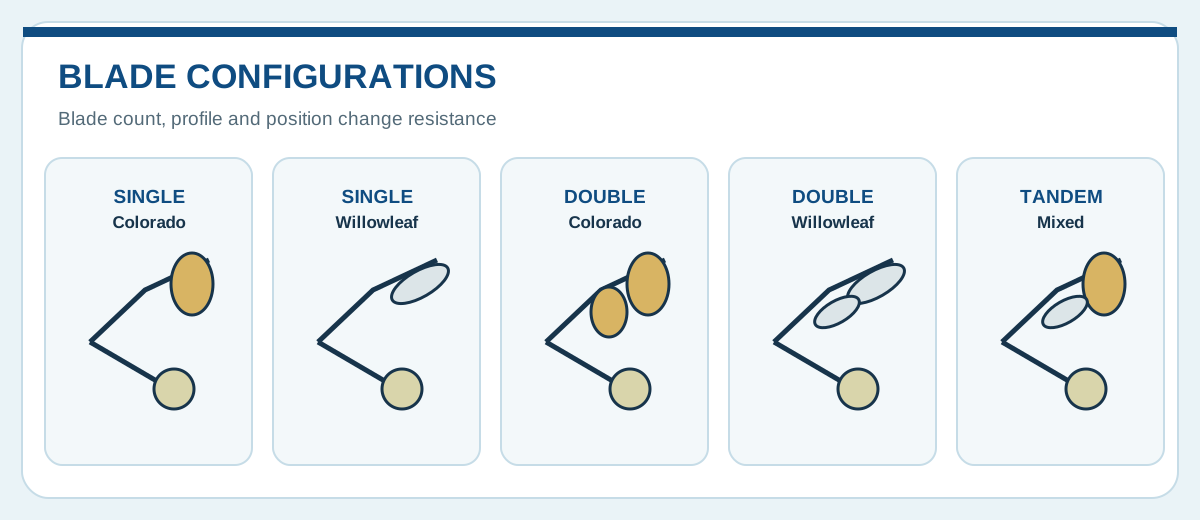
One blade or two
A single-blade spinnerbait gives one main rotating surface and leaves more space around the upper arm. A single Colorado can emphasize broad-blade resistance and a noticeable pulse. A single Willowleaf can suit a narrower, lower-drag path. Neither is inherently better; the head weight, blade size, and target speed determine whether the whole lure works.
Two blades add another rotating surface and may change total drag, lift, flash, and mechanical feedback. A double Colorado combination often favors a deliberately slow, high-resistance presentation. Double Willowleaf combinations are common when anglers want multiple reflective surfaces and a relatively quick horizontal retrieve. Even two blades of the same profile may differ in size and finish.
Mixed tandem blades
A common tandem arrangement places a smaller Colorado forward on a clevis and a larger Willowleaf at the rear swivel. The mix offers two blade profiles without forcing them to turn identically. Some makers reverse sizes or use Indiana blades. Check clearance: touching blades, a damaged clevis, or a bent upper arm can interrupt rotation and distort tracking.
| Configuration | Typical tendency | Useful starting lane |
|---|---|---|
| Single Colorado | One broad thump | Slow, limited visibility |
| Single Willowleaf | One slim rotating blade | Selected faster retrieves |
| Double Colorado | More blade resistance | Shallow or controlled slow roll |
| Double Willowleaf | Multiple reflective surfaces | Baitfish search |
| Colorado + Willow | Mixed profiles | Versatile middle ground |
Flash, Vibration, Water Displacement, and Lift

Separate the effects
Blade rotation is the actual motion of the metal part around its mount. Flash is a visual result: a polished or painted surface changes what it reflects as it turns. Flash requires available light and a useful viewing angle; it can weaken in muddy water or deep shade. A rotating blade still moves water when its reflection is hard to see.
Water displacement describes surrounding water being pushed and redirected. Vibration or thump refers to recurring mechanical forces associated with the blade and transmitted through the wire, line, and rod. These concepts are related but not interchangeable. A lure that flashes brightly need not create the strongest thump, and a noticeable thump does not prove it is visible from far away.
Resistance and running height
The blades resist forward motion. Their size, cup, and mounting angle affect both the pull felt by the angler and how the entire lure rides. More blade resistance can encourage lift in some setups; a heavier head, lower rod angle, or slower speed can counteract it. Actual running depth is the resulting path through the water, not a fixed feature of a blade name.
Do not confuse this motion with a ChatterBait-style bladed jig. Its front metal blade oscillates in relation to the jighead; a conventional spinnerbait blade revolves around its swivel or clevis. The two lures can both be felt in a rod, but the moving hardware and force paths differ.
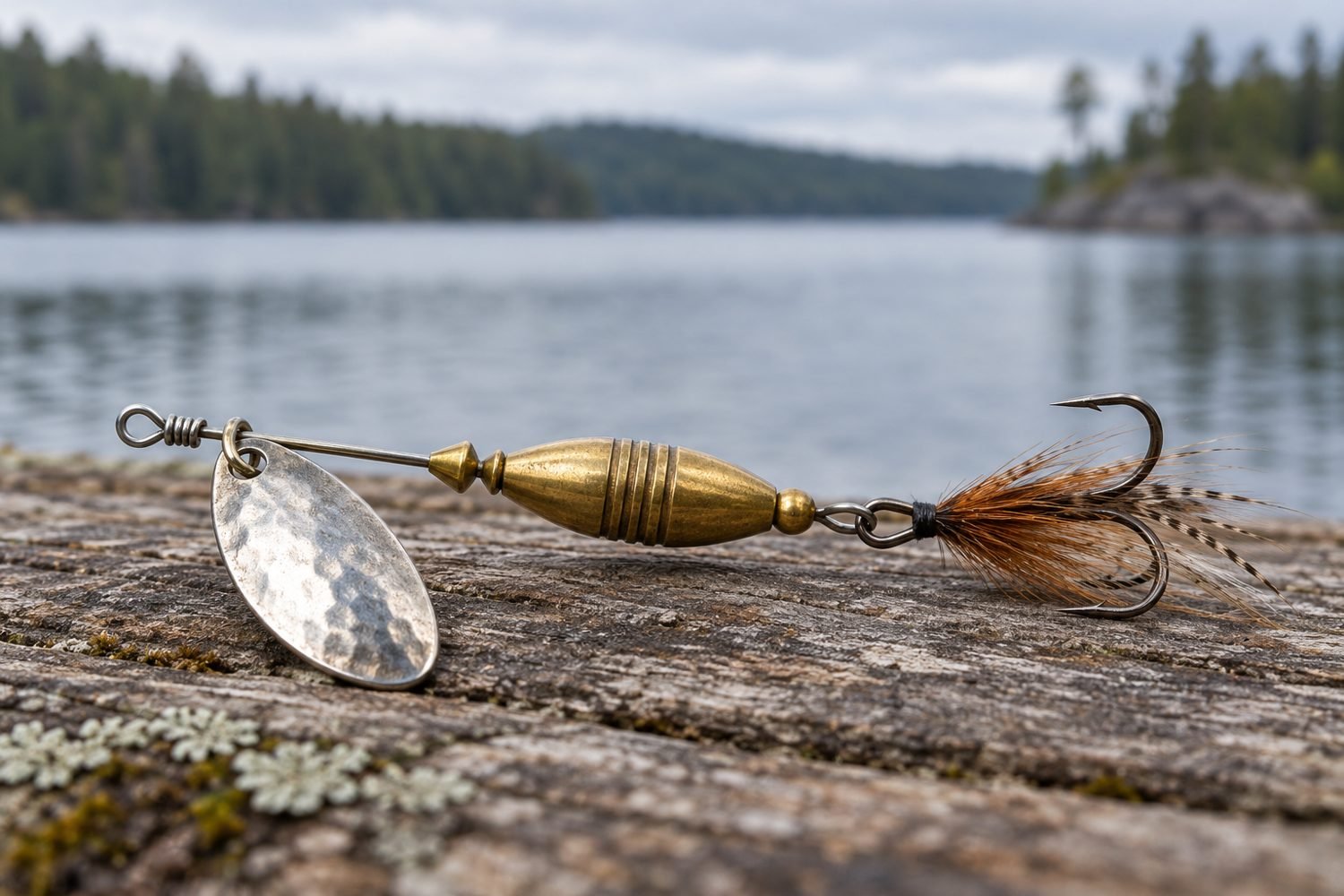
An inline spinner turns a blade around a straight central shaft rather than above an offset jighead. A buzzbait uses a surface-running propeller or blade to disturb the top of the water. A lipless crankbait moves and vibrates as a solid body during retrieval; it has no upper rotating spinnerbait arm. These distinctions help anglers choose a mechanism rather than treating all vibrating lures as interchangeable.
| Effect | Immediate cause | What it means |
|---|---|---|
| Rotation | Hydrodynamic turning force | Blade revolves |
| Flash | Changing reflection angle | Visual cue |
| Displacement | Blade pushes water | Local water motion |
| Thump | Repeated force through frame | Tackle feedback |
| Lift | Drag and lure geometry | Possible higher path |
| Depth | Net force and retrieve | Actual swimming lane |
How the Frame, Head, Skirt, and Trailer Work Together

Frame and head balance
The upper and lower wire arms set the distance between rotating blades and main hook. Arm length, angle, stiffness, and diameter can affect how the lure deflects from cover and how blade-related forces reach the angler. Thin wire may give different feedback from heavy wire, but strength and durability also matter. There is no universally best gauge or arm spread.
The weighted jighead provides ballast beneath the upper assembly. Its mass and shape help determine sinking rate, stability, and recovery after a deflection. A lure that rolls onto its side may have an unbalanced blade/head combination or a bent frame. A well-matched spinnerbait generally tracks upright at its designed operating speed.
Skirt and soft trailer
The skirt does not make the metal blades spin. Its strands stream backward during a retrieve and may spread or pulse as the lure slows. A fuller skirt adds visual bulk and some resistance. A paddle-tail trailer supplies its own tail beat; a split tail adds a slimmer silhouette; a broad trailer may increase drag. None of these effects is identical across every size and material.
| Part | Main influence | Possible tradeoff |
|---|---|---|
| Upper wire | Blade position and feedback | Can bend |
| Head weight | Ballast and depth | Changes retrieve effort |
| Head shape | Tracking and deflection | Cover specific |
| Skirt | Moving silhouette | Adds resistance |
| Soft trailer | Tail action and profile | Can alter balance |
| Trailer hook | Second hook point | More snag exposure |
How Speed, Weight, and Rod Angle Control Depth
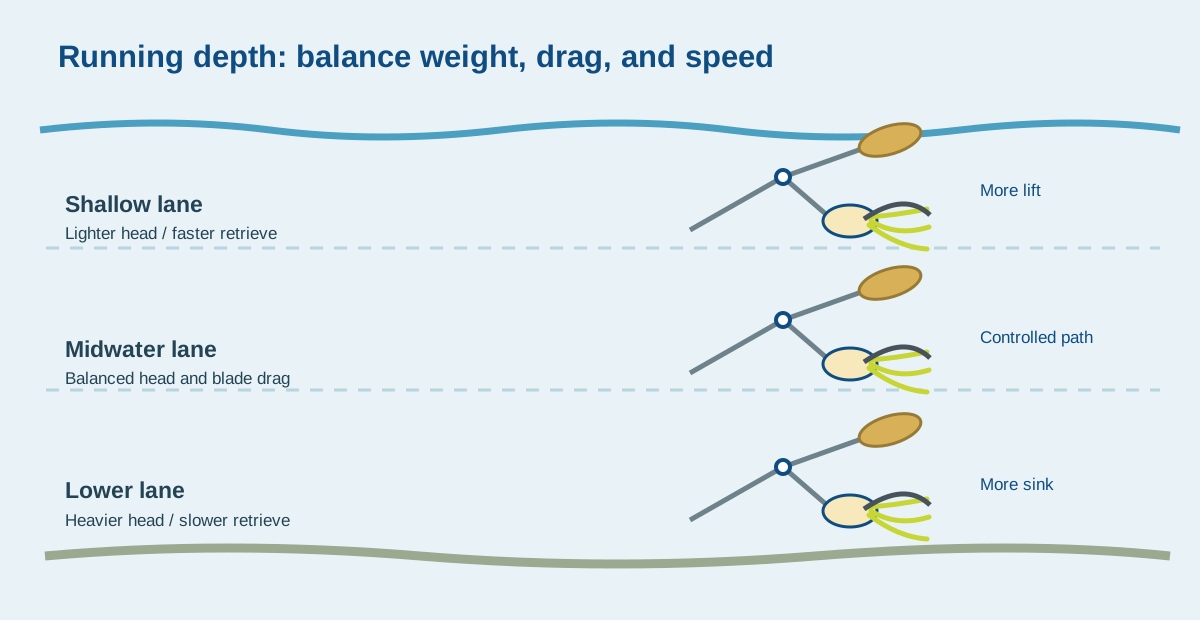
Speed changes the force balance
At a slow retrieve, a spinnerbait usually has more time to sink between forward movements, but the blades still need enough flow to keep turning. A faster retrieve increases flow and often makes the lure rise. How much depends on head mass, blade drag, line angle, current, and trailer. If a blade stops at the intended slow speed, change the setup rather than assuming it is working.
A high rod tip can help run the lure nearer the surface. A lower rod tip can help it hold a deeper lane, especially with a longer cast and controlled speed. Rod position is only one input: shallow water, line buoyancy, wind, and the angle from shore to lure also influence the path.
Match the hardware to the lane
A heavier head may hold depth against lift from broad blades or a bulky trailer. A smaller or narrower blade may reduce resistance. These changes affect casting, fall, flash, and thump, so test one at a time. A large Colorado blade with a light head might wake near the surface at a speed that keeps a heavier setup below it.
| Variable | Possible effect | Practical check |
|---|---|---|
| Slower reel | Often lower path | Blade still turns? |
| Faster reel | Often more lift | Head still upright? |
| Higher rod tip | Encourages high path | Surface wake |
| Lower rod tip | Can help hold depth | Bottom or cover contact |
| Heavier head | More downward mass | Fall speed |
| Larger broad blade | More resistance | Lift and thump |
Six Spinnerbait Retrieves and Blade Behavior

Continuous retrieves
Steady: Cast beyond an edge and reel at a speed that keeps the blades turning while the lure stays at the chosen depth. This is the reference presentation: learn its normal vibration and tracking before changing cadence. If the feedback disappears, the blade may have fouled, the lure may have contacted cover, or a fish may have taken it.
Slow roll: Let the lure sink, then reel just fast enough for the selected blades to turn above bottom or structure. Maintain contact without dragging the hook into every rock. Broad blades can help some models start at a slower pace, but a heavy head or different mount may require its own minimum speed.
Burn: Reel rapidly to cover water or trigger a reaction. Narrower blades and an appropriate head may help a specific lure track during a fast pass. If it tips sideways or rises too high, reduce speed, lower the rod, or change the setup. Speed alone is not a guarantee of a strike.
Surface and interrupted retrieves
Wake: Raise the rod and retrieve so the lure runs just below the surface and makes a visible disturbance. The blades should keep rotating rather than breaking out of the water continuously. This can be useful near shallow grass or cover when fish are positioned high.
Stop-and-go: Reel, briefly pause or kill the lure beside a target, and restart. Blade rotation may slow or stop during the pause, then begin again as flow returns. Watch the line closely on the fall; a bass can take the lure before the next turn of the handle.
Helicopter fall: Drop a suitable model beside vertical cover with enough line control to observe the descent. Some blade combinations rotate or flutter on the fall, while others do little until a retrieve begins. Test the actual lure rather than promising that every spinnerbait helicopters.
| Retrieve | Blade behavior | Starting target |
|---|---|---|
| Steady | Continuous rotation | Grass edge or bank |
| Slow roll | Turns at low speed | Deeper structure |
| Burn | Fast rotation | Shallow active fish |
| Wake | Turns just below surface | Shallow cover |
| Stop-and-go | Slows, stops, restarts | Isolated object |
| Helicopter | Model-specific fall action | Vertical cover |
How Spinnerbaits Move Around Cover
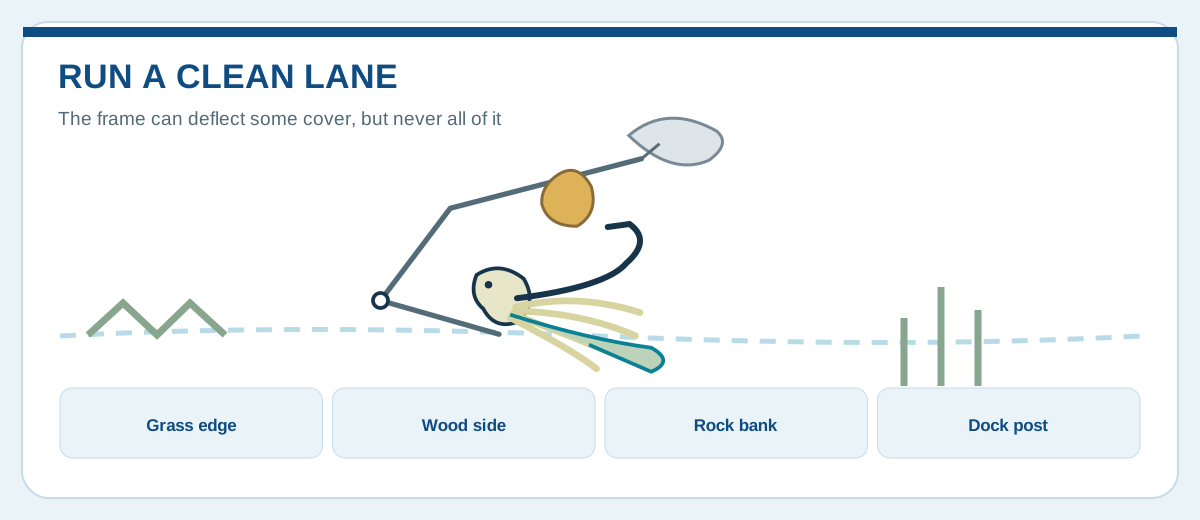
Grass, wood, and docks
Along submerged grass, run the blades over the tops or parallel to a clean edge. If a blade, wire bend, or hook gathers strands, remove them before the next cast. A sudden change in vibration may be vegetation rather than a fish. Dense mats can stop a spinnerbait completely; choose an open lane rather than calling the lure weedless.
For a laydown, cast beyond the visible wood and bring the lure beside or over selected limbs. The wire frame can help deflect some contact, but the exposed hook or trailer hook can still snag. At docks, swim past the outside edge or beside a piling with enough clearance for the blade assembly. Avoid hitting people, boats, and hardware.
Rock, points, and open water
On riprap or a rocky point, use a steady pass or controlled slow roll at the level of the fish. The head may contact rock; repeated hard bottom contact can damage the blade mount, hook point, or knot. In open water near baitfish, choose a depth and speed that keeps the spinnerbait near the fish rather than retrieving automatically at the surface.
| Cover | First path | Limit |
|---|---|---|
| Sparse grass | Above or along edge | Can foul blades |
| Wood | Along outer limb | Hook can snag |
| Dock | Beside post or shade | Avoid collision |
| Riprap | Parallel to bank | Rock contact |
| Open baitfish | At fish level | Depth control |
Why Bass May Strike a Spinnerbait

Several cues can overlap
A bass can see a moving skirt, head, trailer, and intermittent blade reflections when light and visibility allow. Rotating blades also move water, creating mechanical cues that a fish may detect through its sensory systems, including the lateral line at close range. The lateral line is sensitive to local water movement; it should not be described as a precise long-distance detector of every spinnerbait.
A skirt and trailer can suggest a small baitfish, but a spinnerbait is not a realistic replica of one prey item in every condition. It may attract attention through contrast, movement, abrupt speed changes, or simply by entering a fish’s holding area. Anglers cannot infer one exact motivation from a single strike.
Placement and timing still matter
Pass the lure beside grass, a dock post, or a point where a fish can intercept it. A pause or acceleration can change the blade’s rotation and the lure’s path. In stained water, a broad blade and stronger feedback may help the angler maintain contact; in clearer water, a slimmer reflective setup may be worth testing. These are starting choices, not universal rules.
| Possible cue | Lure feature | Angler decision |
|---|---|---|
| Visible movement | Skirt and blades | Choose a clear lane |
| Flash | Rotating finish | Consider light and clarity |
| Water motion | Blade displacement | Keep rotation active |
| Silhouette | Head, skirt, trailer | Adjust profile |
| Speed change | Pause or acceleration | Test cadence |
| Opportunity | Pass near holding fish | Improve placement |
Seasons, Water Clarity, and Weather

Water clarity and light
In clear water with baitfish, a Willowleaf-oriented setup and a natural skirt can be a reasonable first test. A steady or somewhat faster pass may keep the presentation moving before fish inspect it closely. In moderately stained water, a Colorado-Willowleaf tandem offers mixed blade profiles. For muddy water or low light, some anglers begin with a broad Colorado setup and a controlled slower retrieve that creates more noticeable feedback.
These are preferences grounded in lure behavior, not fixed rules. A large reflective surface can still be visible in stained water, while a broad blade can still catch fish in clear water. Blade finish, water color, depth, and available light change what fish can actually see.
Seasonal position
Spring fish may hold around shallow wood or grass edges; a tandem spinnerbait can be worked past those targets. In summer, deeper structure or shade may call for more weight and a slow roll. Fall baitfish movement can make a Willowleaf-oriented search useful. Winter presentations are often deliberate, provided the chosen blades still turn at the required pace.
| Condition | Possible starting blade | Retrieve thought |
|---|---|---|
| Clear with baitfish | Double Willowleaf | Steady or faster |
| Moderately stained | Mixed tandem | Moderate |
| Muddy or low light | Colorado-oriented | Controlled slow |
| Spring shallow cover | Tandem | Near wood or grass |
| Summer deeper lane | Weight matched to blades | Slow roll |
| Winter structure | Reliable slow rotation | Deliberate pass |
Blade, Tracking, and Bite Problems
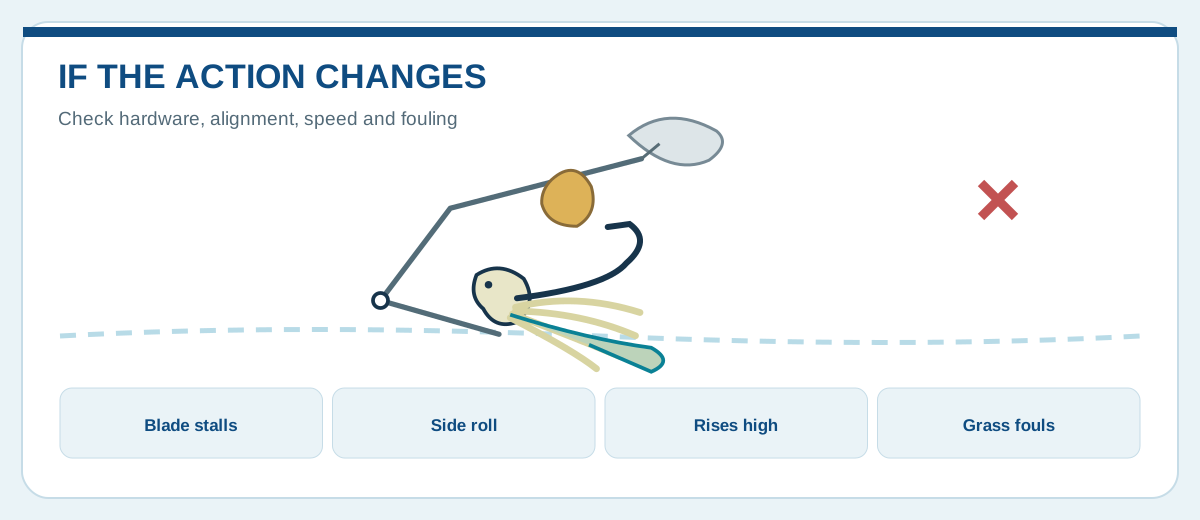
When the blades stop
If a spinnerbait blade is not rotating, inspect the swivel, clevis, beads, and wire for grass, grit, damage, or contact between parts. Rinse or replace faulty hardware and test the lure beside the boat or bank. Also check whether the chosen retrieve is below that blade’s start-up speed. A sudden loss of thump can signal fouling or a bite, so check the line before reeling blindly.
When the lure rolls or rises
Sideways rolling may result from a bent wire, misaligned blade assembly, crooked trailer, imbalanced head-to-blade pairing, or excessive speed. Straighten only within the maker’s guidance and avoid repeated bending that weakens the frame. If the lure climbs above the intended lane, lower the rod or slow down; a heavier head or less resistant blade may be needed for that depth.
Hooks, line, and equipment
A moderate-power to medium-heavy casting rod is a common starting range, but choose power for lure weight, hook, line, and cover. Braid, fluorocarbon, or monofilament can each work in different situations; check abrasion and knot strength. For short strikes, first assess speed and hook sharpness before adding a trailer hook. Extra hooks can increase snagging and should be used only where appropriate.
| Problem | Possible cause | First check |
|---|---|---|
| Blade stalls | Fouled or damaged mount | Swivel and clevis |
| Weak thump | Blade or slow rotation | Speed and blade profile |
| Sideways roll | Frame or trailer imbalance | Alignment |
| Rises too high | Speed or excess lift | Rod and weight |
| Vibration stops | Grass, cover, or bite | Line and lure |
| Missed fish | Hook or cadence | Point and presentation |
Further reading and sources: Wired2Fish on spinnerbait selection and rigging, Wired2Fish on blade choice, Bassmaster on blade hardware and tuning, Major League Fishing on working different depths, Outdoor Life on spinnerbait retrieves, and Z-Man's Willow-Colorado product specification. Manufacturer descriptions identify design choices; they are not independent performance tests.