
Buzzbait Anatomy: Understanding the Main Parts
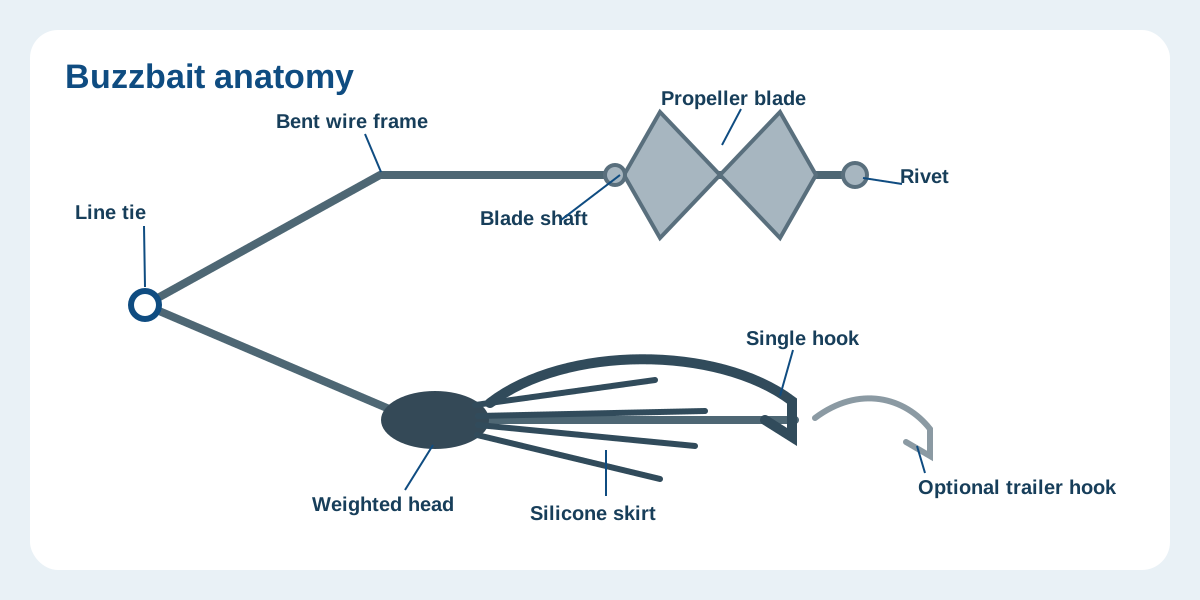
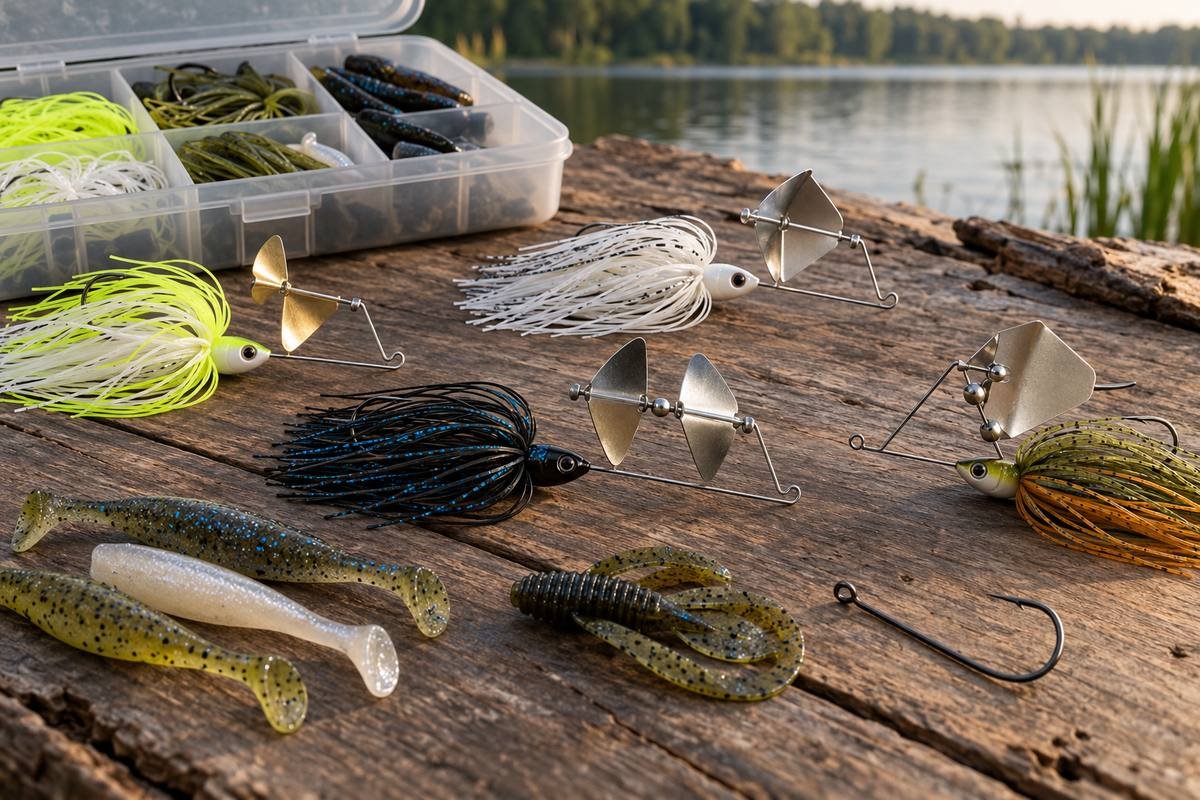
Look at the lure as a connected system, not a propeller with a hook attached. Each part affects whether it casts cleanly, tracks straight, rises quickly, and presents a usable hook. Makers vary frame geometry and hardware, so inspect the actual model before changing components.
Frame, Blade, and Line Tie
The bent wire separates the upper blade arm from the lower head-and-hook arm. Its bend provides the line tie, where the line pulls the lure forward. A badly distorted frame or knot placed outside the intended tie can make the bait lean or track sideways. On the upper arm, the propeller's angled surfaces meet water as the lure moves. Blade size, pitch, and material influence resistance, lift, splash, and sound. The blade rotates around a shaft and often runs against a rivet or spacer; friction can make a characteristic squeak.
Head, Skirt, Hook, and Optional Additions
The weighted jig head makes casting possible and pulls downward at rest. The silicone skirt adds color and a moving silhouette below the blade. A single main hook points back through that profile. A soft-plastic trailer may add bulk, tail action, or resistance, but it is distinct from a trailer hook, which adds a separate hook point. A trailer hook can help with some short strikes, although it also increases snag exposure. Any addition can change balance; check the bait beside the boat or bank before fishing it past cover.
| Component | Main function | Effect on performance |
|---|---|---|
| Wire frame | Connects lure parts | Balance and alignment |
| Propeller blade | Rotates through water | Splash, lift, vibration |
| Shaft and rivet | Support blade rotation | Movement and possible squeak |
| Line tie | Connects fishing line | Tracking and control |
| Weighted head | Adds mass | Casting and sinking |
| Silicone skirt | Adds motion and silhouette | Visible profile |
| Main hook | Hooks fish | Hookup performance |
| Soft-plastic trailer | Changes body profile | Action and resistance |
| Trailer hook | Adds hook point | May help short strikes; may snag |
How Does a Buzzbait Work on the Surface?
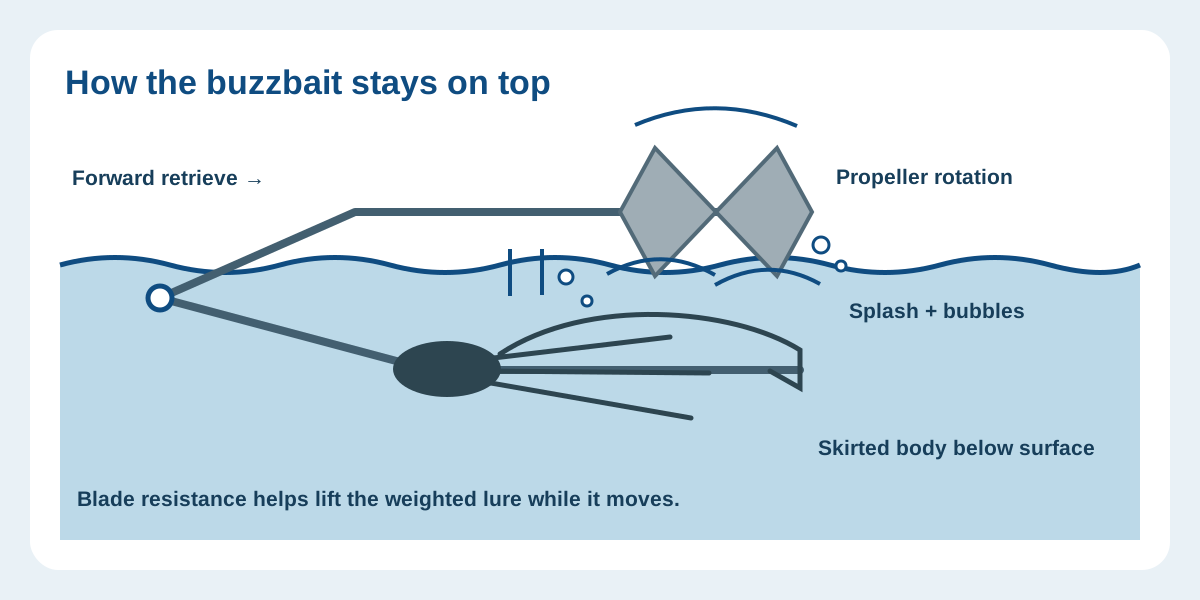
Its action follows a short mechanical chain. First, the retrieve moves the lure forward. Water pushes against the angled propeller faces, causing the blade to rotate around its shaft. Rotating metal resists the flow and helps lift the upper arm toward the waterline. The weighted head pulls downward, so blade drag, weight, line angle, and reel speed together determine where the bait runs.
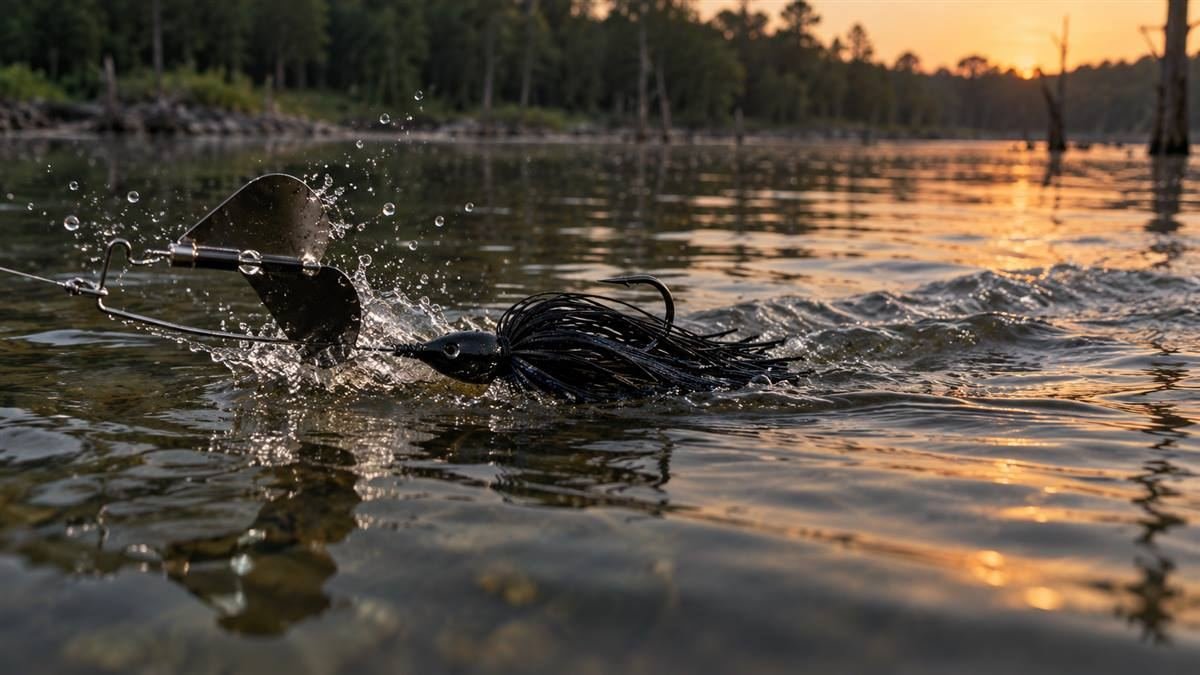
At the surface, the rotating propeller slices and displaces water. The result can be a wake, bubbles, splashes, turbulence, and a repeating pulse. The exact appearance changes with blade pitch, surface chop, and retrieve speed. Friction near the rivet can add a squeak; a purpose-built clacker contacts the blade and adds a metallic beat. Neither sound is required for a buzzbait to work.
Below that activity, the jig head, skirt, soft trailer if fitted, and hook travel in the blade's path. An angler can see the wake but should also feel or hear whether the blade is turning regularly. If the reel stops, water no longer spins the propeller, lift falls away, and a conventional weighted bait sinks. A very slow retrieve may have the same effect if that blade cannot remain active at the chosen pace.
| Mechanical element | What happens | Fishing effect |
|---|---|---|
| Propeller rotation | Blade turns during retrieve | Surface movement |
| Blade resistance | Water pushes against metal | Helps generate lift |
| Surface contact | Blade chops water | Splash and bubbles |
| Rivet friction | Metal parts rub | Possible squeak |
| Clacker attachment | Components touch | Additional sound |
| Weighted head | Mass pulls downward | Balance and running position |
| Skirt and trailer | Body follows beneath | Visible motion and profile |
- Cast beyond the target and reel immediately.
- Raise the lure to the waterline until the blade runs consistently.
- Adjust speed or rod angle if the body sinks or the bait rolls.
Why Do Bass Strike Buzzbaits?
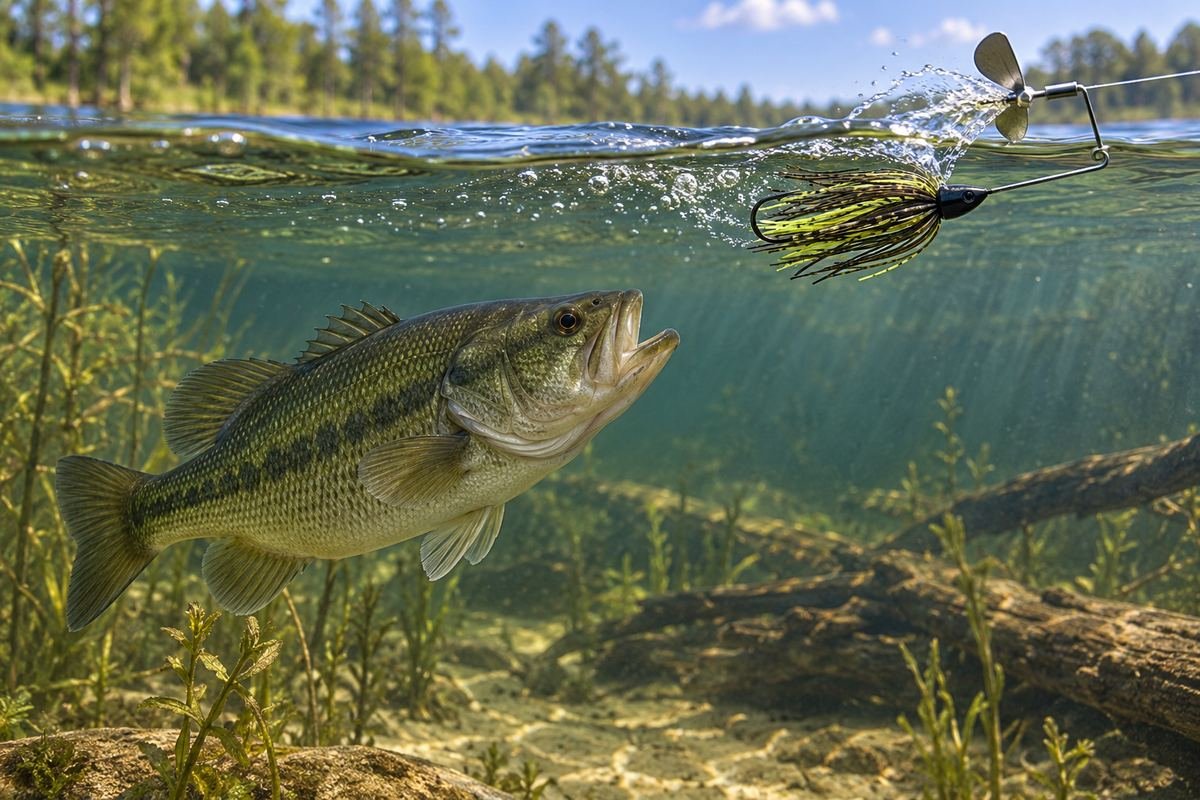
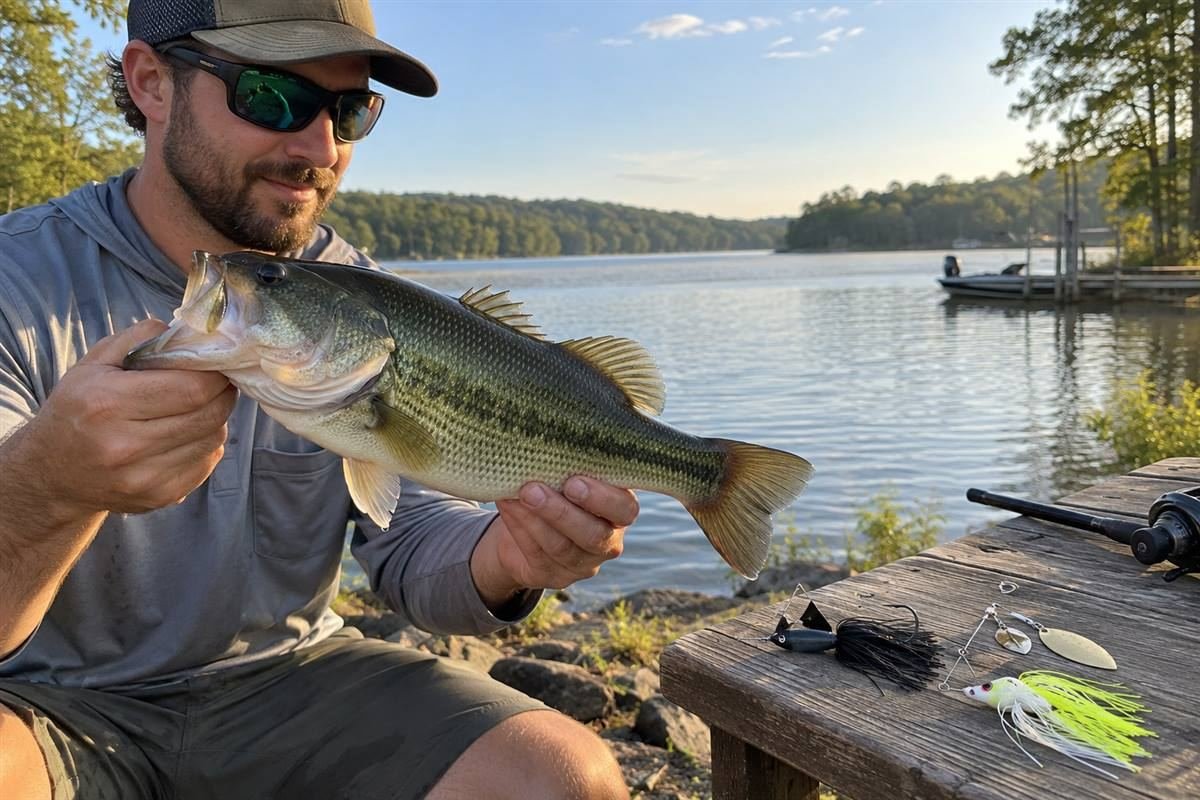
A bass can detect more than the visible lure. Fish possess a lateral-line system that senses nearby water motion and pressure changes; that sensory channel is different from hearing and vision. A buzzbait blade disturbs water at the surface, creating moving cues a nearby fish may detect. Water carries sound too, while the skirt and wake present a shifting visual target. These channels may operate together, especially when clarity, cover, or light limits one of them.
Possible Feeding and Reaction Responses
A feeding bass may investigate commotion near a baitfish school or another surface prey opportunity. The buzzbait need not imitate a single animal perfectly. Its body can resemble a moving target below a surface disturbance, while the blade suggests struggling activity. Another fish may strike because the bait quickly crosses a short window near its holding position. Anglers call that a reaction strike, but it describes the timing and presentation rather than proving the fish's internal motive.
Position matters more than simply making maximum noise. A bass holding at a grass edge, dock post, or piece of wood has a limited chance to encounter the lure. Cast past that place and bring the blade along the edge, allowing the head and hook to pass close to the likely strike lane. A bait that passes ten feet away may be detected but never worth chasing. Speed changes can alter that opportunity: a brief acceleration may change the silhouette and pulse, while slowing can hold the bait near cover, provided the propeller remains on top.
What We Can and Cannot Conclude
Sound can attract attention, water motion can be sensed, and prey-like movement may create a feeding opportunity. We cannot usually tell which cue caused one bass to attack. The common claim that every strike comes from anger or territorial irritation is an interpretation, not a measured fact. Although anglers often describe buzzbait strikes as aggressive or reactionary, the exact motivation behind an individual strike cannot usually be determined with certainty. Feeding behavior, sensory detection, lure movement, and local fishing conditions may all contribute.
| Potential factor | Buzzbait feature | Practical implication |
|---|---|---|
| Feeding response | Moving prey-like silhouette | Target active feeding areas |
| Water-motion detection | Propeller turbulence | Keep the blade active |
| Sound attraction | Buzzing or clacking | Test sound profiles |
| Reaction opportunity | Bait crossing a strike lane | Control speed |
| Ambush position | Wake passing near cover | Cast parallel to edges |
| Visual attention | Wake and body profile | Consider light and clarity |
Types of Buzzbaits and Their Action
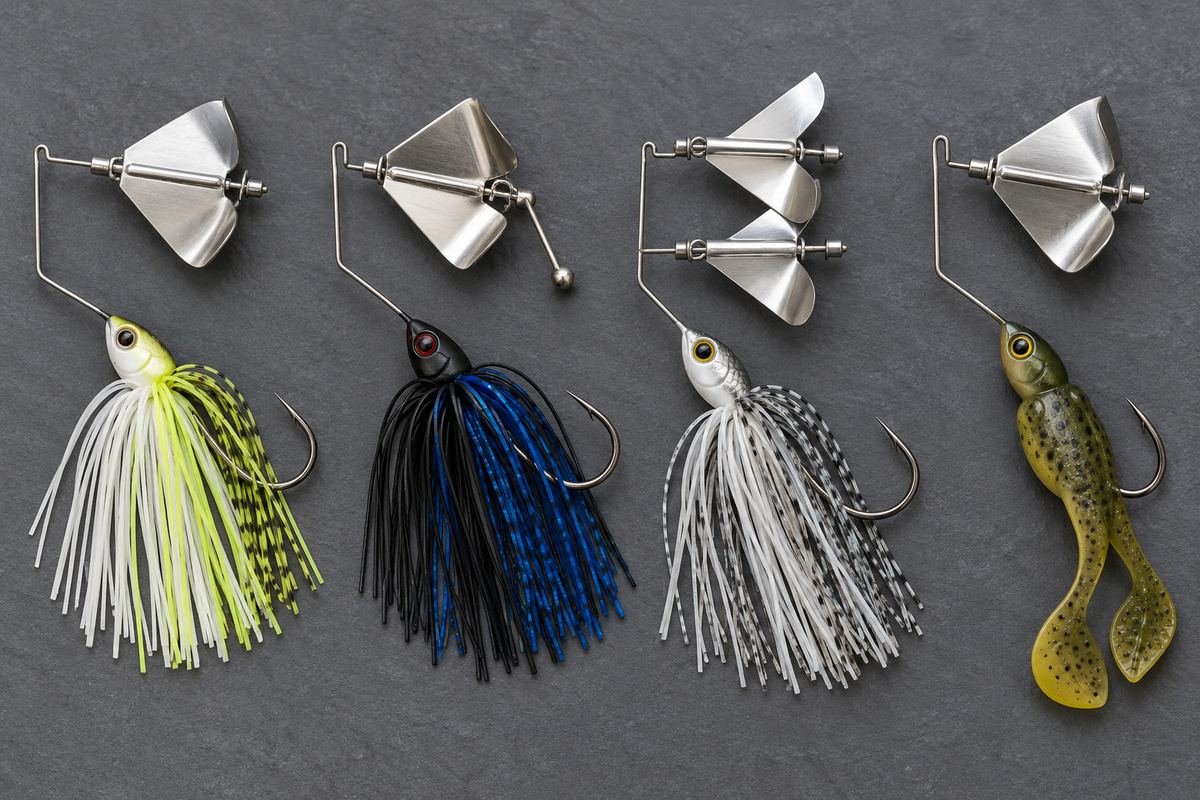
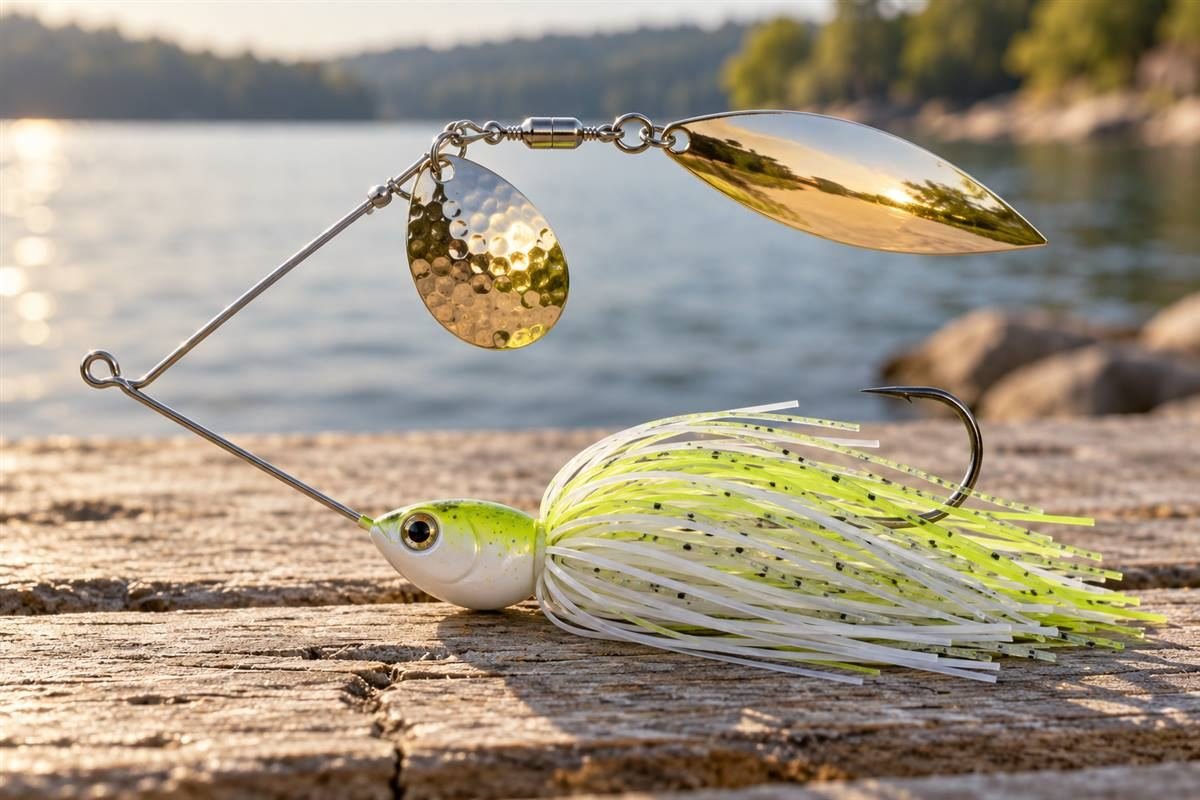
The traditional model has one propeller, a weighted head, skirt, and single hook. It gives a clear baseline for learning the surface retrieve. Clacker models place a small metal part where it strikes the rotating blade, adding a sharper mechanical sound. A double-propeller model uses two blades; depending on size and pitch, that configuration can change lift, splash, and the speed at which it tracks on top. Two blades do not automatically mean a louder or slower lure.
A toad-style buzzbait pairs the wire-and-blade system with a soft-plastic frog-shaped body, sometimes replacing the skirt. Its legs or tail add movement, and its profile may be useful around selected shallow cover. Some toad designs are rigged differently from a conventional exposed-hook buzzbait; check hook exposure before casting through vegetation. Choose a style by the action you can control in your water, then change one variable at a time.
| Buzzbait type | Main feature | Common application |
|---|---|---|
| Traditional | One rotating propeller | General topwater search |
| Clacker | Added metal contact | More pronounced mechanical sound |
| Double-propeller | Two rotating blades | Different lift and wake |
| Soft-plastic toad style | Toad body on compatible rig | Selected shallow-cover lanes |
Buzzbait Noise, Vibration, and Splash
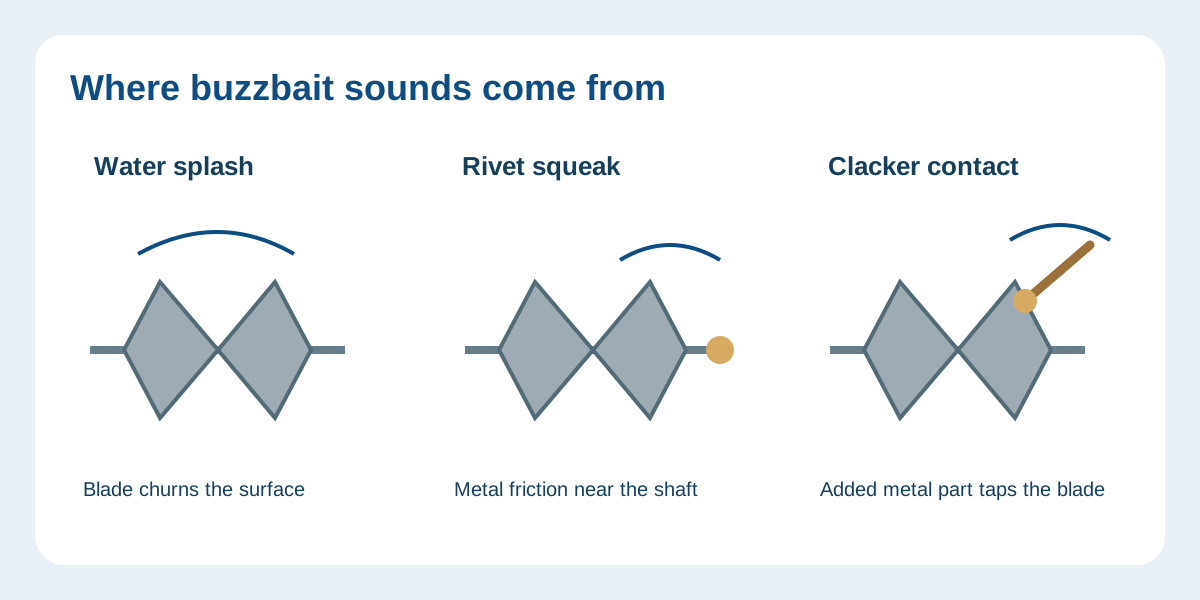
Not every sound comes from the same place. The propeller breaks the waterline, creating a gurgle, spray, and repeating water-motion pulse. A dry-sounding squeak may arise where the metal blade rubs against a rivet or shaft. A clacker intentionally lets a separate part strike the blade. Large or aggressive propellers may splash more, but the final sound also depends on speed, wear, and how the lure rides.
Anglers sometimes test a quieter, steady buzz on calm water and a stronger signal when wind or stain masks a subtle presentation. Those are experiments, not universal rules: loud is not automatically better. Listen for a consistent blade rhythm, inspect loose or damaged hardware, and switch to a design built for a different sound rather than bending components recklessly.
| Sound or action | Main source | Possible use |
|---|---|---|
| Soft gurgle | Blade at surface | Subtle presentation |
| Continuous buzz | Rapid rotation | General searching |
| Metallic squeak | Rivet friction | Distinct tone |
| Clacking | Added metal contact | Sharper sound |
| Heavy splash | Larger surface disturbance | Noticeable presentation |
When and Where to Use a Buzzbait

Start with shallow lanes a lure can travel through cleanly. Grass edges, gaps between lily pads, sparse emergent stems, dock posts, laydowns, and shallow flats offer useful routes. A creek mouth or a bank affected by wind may concentrate forage and bass; visible baitfish breaking the surface is another reason to test a topwater presentation. Shallow cover adjacent to deeper water can also give fish access to a quick escape lane.
A long cast parallel to a grass line keeps the bait beside likely holding cover much longer than a perpendicular cast that crosses it once. Run beside wood and docks rather than forcing the exposed hook directly into obstacles. Buzzbaits pass through some scattered cover, but they are not snag-proof and are a poor first choice over an unbroken mat of thick floating vegetation. If fish hold well below the top, a subsurface lure may reach them more reliably. Likewise, repeated follows without commitment can justify changing depth or presentation instead of only changing buzzbait color.
Low light is a useful starting condition, but daylight can work when shade, wind, stain, or feeding activity puts bass near the surface. Observe fish position before treating the weather forecast as a rule.
| Condition | Why it may work | Starting approach |
|---|---|---|
| Shallow grass edge | Bass may hold near vegetation | Retrieve parallel |
| Lily pad opening | Clear surface lane | Cast through gaps |
| Dock line | Ambush cover and shade | Pass beside posts |
| Low-light shallows | Possible surface feeding | Controlled buzz |
| Stained water | Water movement adds cues | Test noticeable action |
| Surface baitfish | Predators may feed high | Match size and speed |
| Scattered wood | Accessible pockets | Avoid direct snag contact |
- Try a different lure when fish are consistently deep.
- Use a suitable frog or other approach over solid floating vegetation.
- Change presentation if repeated passes produce no surface interest.
Buzzbait Seasons and Weather

Season affects fish position and cover, but it does not impose a strict buzzbait calendar. In spring, warming shallows, emerging plants, and pre- or post-spawn movements can put bass near accessible edges. In summer, shade, grass, and early or late surface feeding often provide practical starting points. During fall, baitfish movement near banks and flats can make a moving topwater lure useful for covering water.
Winter opportunities tend to be less consistent where bass stay deeper or become less surface-oriented. They do occur when fish move shallow and remain willing to chase, so observe the water rather than ruling the bait out by month. Cloud cover can extend comfortable low-light conditions. Bright sun may concentrate fish in shade. Wind can break up the surface, but too much chop may hide the bait's wake or make a delicate retrieve harder to control. Dawn and dusk are useful windows, not the only times a buzzbait can work.
| Season | Potential opportunity | Adjustment |
|---|---|---|
| Spring | Warming shallows and cover | Match speed to activity |
| Summer | Shade and shallow feeding | Hold to productive lanes |
| Fall | Baitfish near banks | Cover water; vary speed |
| Winter | Selected shallow active fish | Verify position first |
How to Fish a Buzzbait: Five Retrieves

Begin by casting beyond the target. Engage the reel quickly so the bait does not drop far below the intended surface lane. Lift it until the propeller turns at the waterline, then watch the wake and listen to the blade. The fastest effective speed is not always the best; the key is a controllable presentation that passes close to fish.
1. Standard Steady Retrieve
Hold a consistent pace that keeps the blade breaking the surface. This is a useful baseline for searching banks and learning how the bait tracks.
2. Slow Surface Retrieve
Reduce speed only as far as the lure still maintains continuous topwater action. A blade with more resistance may allow a slower pace; test the actual design beside the boat.
3. Fast Retrieve
Speeding up can make the surface signal more urgent and cover water rapidly when fish are active. Keep control of the lure and line so the bait does not roll or skip unpredictably.
4. Speed Changes
Accelerate briefly near a target or slow after a follow. Avoid a complete stop with a conventional weighted buzzbait unless you deliberately want it to sink and reset.
5. Parallel to Cover
Trace grass, dock lines, or wood from a safe angle. Passing along the edge increases the length of time the bait stays near fish-holding structure.
| Retrieve | Use | Main cue |
|---|---|---|
| Steady | General searching | Continuous blade rotation |
| Slow surface | Targeted cover | Just enough speed to stay up |
| Fast | Active fish | Control at higher speed |
| Speed variation | Following fish | Change pace without sinking |
| Parallel to cover | Grass, docks, wood | Keep lure near edge |
- Choose a lure suited to the lane and check that its propeller spins freely.
- Inspect wire alignment, hook point, knot, and optional trailer.
- Cast beyond the strike zone; begin retrieving as soon as it lands.
- Bring the blade to the surface and maintain a visible wake.
- Adjust rod angle and speed to keep the bait tracking straight.
- Watch for a strike, then wait until the fish loads the rod before setting the hook.
- After contact with cover or a fish, clear weeds and inspect the lure again.
Choosing Buzzbait Size, Blade, Color, and Trailer

A 3/8-ounce traditional buzzbait is a practical general starting point. A 1/4-ounce model may fit smaller forage or a lighter presentation; a 1/2-ounce model can help with selected larger profiles or longer casts. Package weight alone does not tell you how slowly it will stay on top. Blade pitch and size, head shape, trailer drag, line, and retrieve speed all influence the running position.
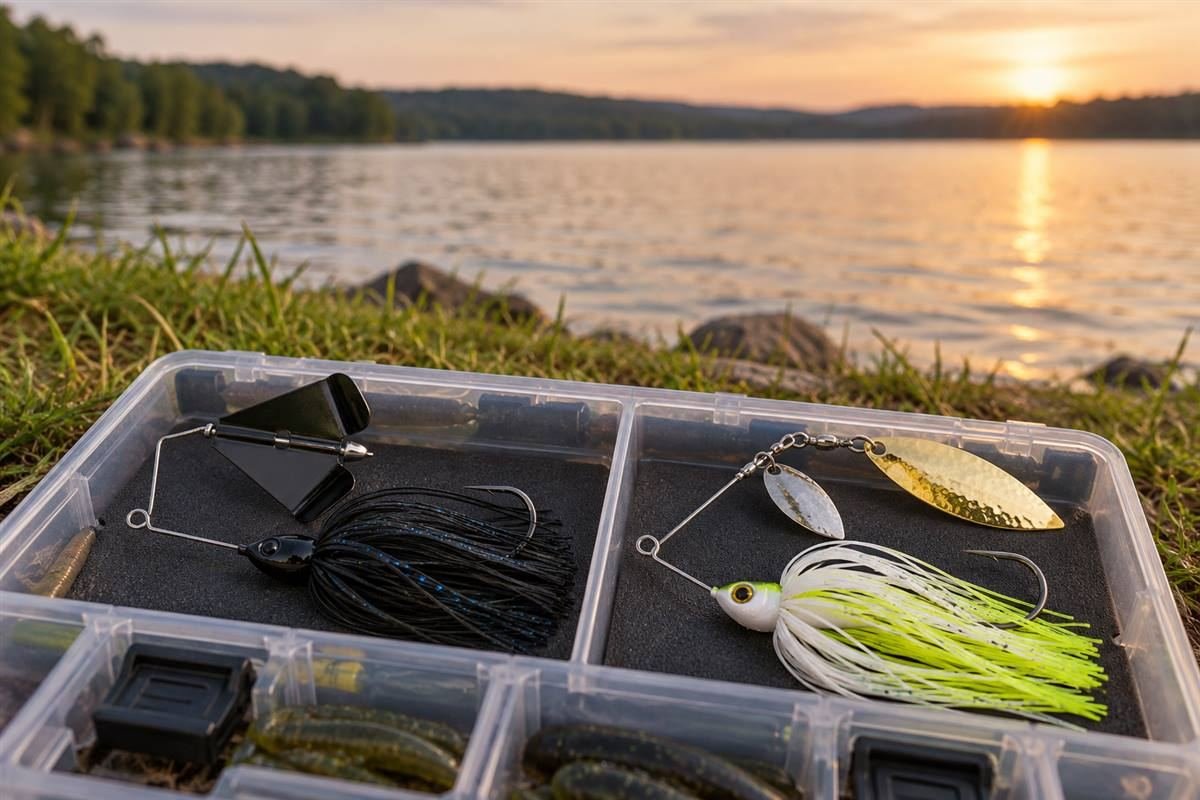
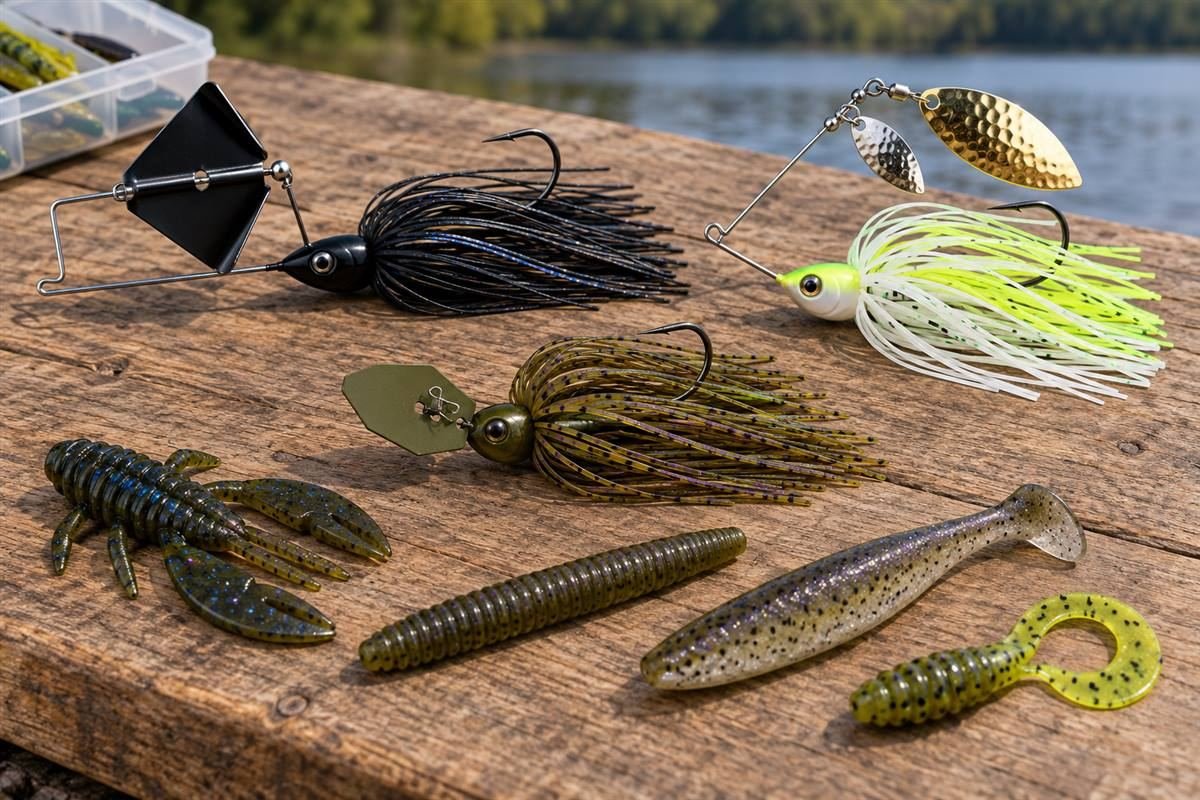
Black creates a strong dark silhouette in certain light. White or shad tones can match baitfish-oriented feeding; chartreuse-white adds visibility, while natural bluegill colors are another local option. These are trial choices rather than rules. A soft toad makes a bulky profile, a paddle-tail adds tail movement, and a craw-style trailer changes shape and drag. A skirt-only bait may track more simply. Rig trailers straight and confirm the blade still turns without fouling.
| Situation | Starting choice |
|---|---|
| General shallow bass | 3/8-ounce traditional model |
| Smaller forage | Compact buzzbait |
| Low light | Dark silhouette |
| Baitfish feeding | White or shad-inspired color |
| Need stronger mechanical sound | Suitable clacker design |
| Selected skipping presentation | Compatible soft-plastic toad |
Buzzbait Rod, Reel, Line, and Hook Setup
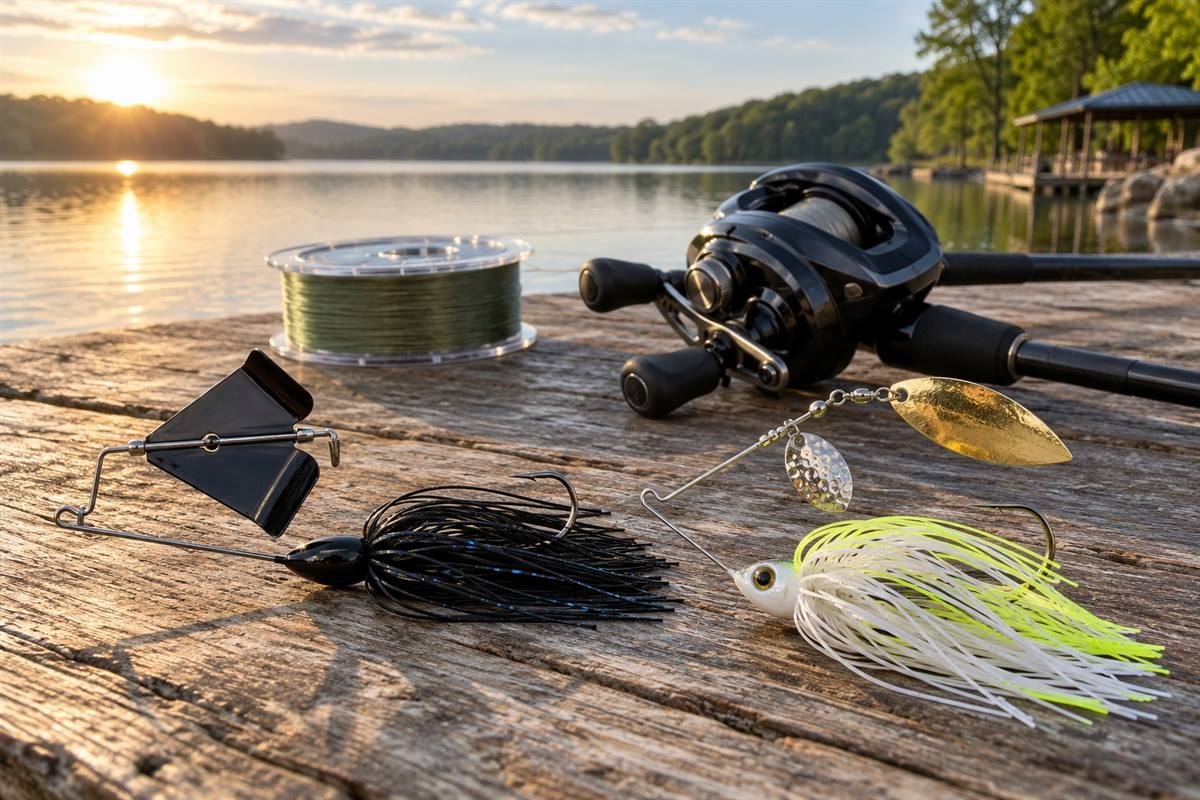
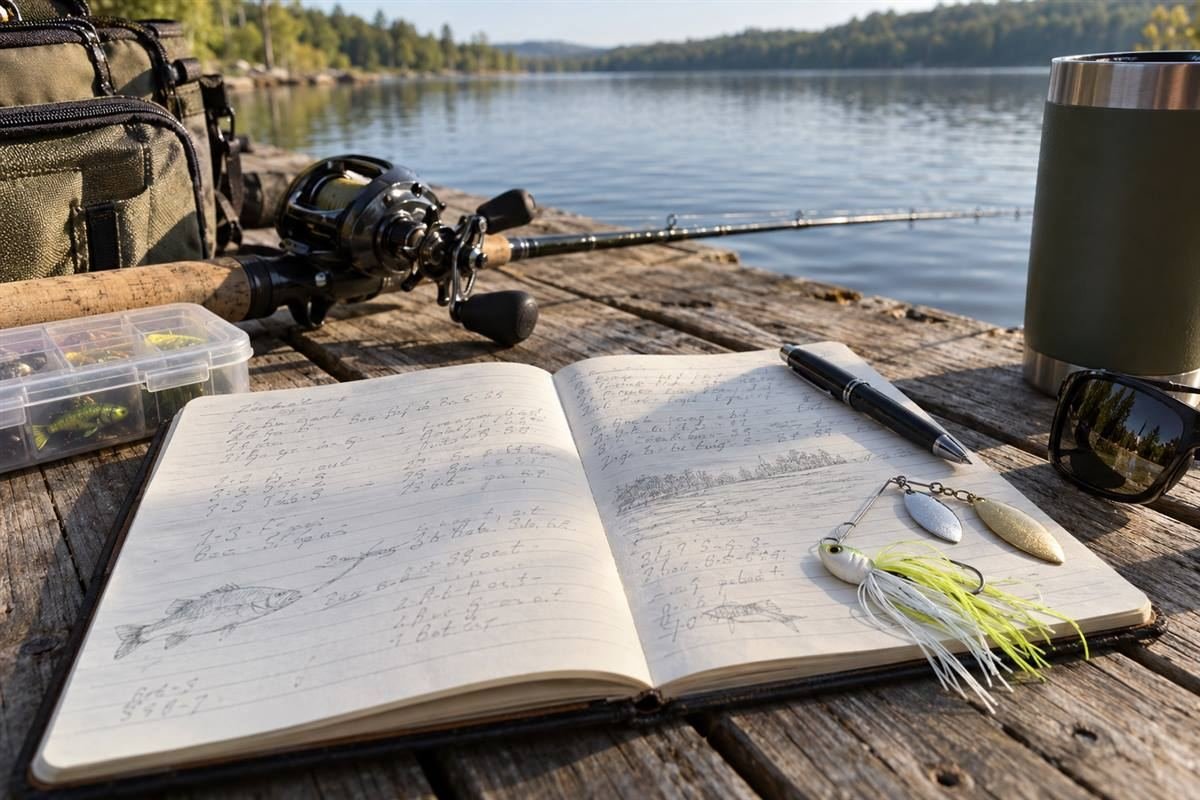
For many bass buzzbaits, a medium-heavy casting rod around seven feet to seven feet three inches is a workable starting range. Some anglers prefer a fast action for control near cover; others prefer a moderate-fast bend that gives a fish a moment to load the rod. Match the rod rating to the actual bait and the cover rather than copying a number without context.
A reel around 7:1 or faster helps pick up line immediately after splashdown and maintain blade rotation. Braid can offer strength and direct contact around vegetation; monofilament gives stretch and buoyancy that some anglers prefer for topwater. The best choice depends on abrasion, cover, casting distance, and hook-setting style. Use a sharp main hook. A soft-plastic trailer changes profile; a trailer hook may help when bass nip behind the skirt, but that exposed point also catches vegetation and wood. Remove it where snag risk outweighs its benefit.
| Equipment | Starting choice | Reason |
|---|---|---|
| Buzzbait | 3/8 oz | General versatility |
| Rod | Medium-heavy casting rod | Control and hook power |
| Reel | About 7:1 or faster | Prompt blade activation |
| Line | Suitable braid or mono | Match cover and stretch |
| Soft-plastic trailer | Optional | Changes profile |
| Trailer hook | Optional | Short strikes versus snag risk |
Why Bass Miss Buzzbaits
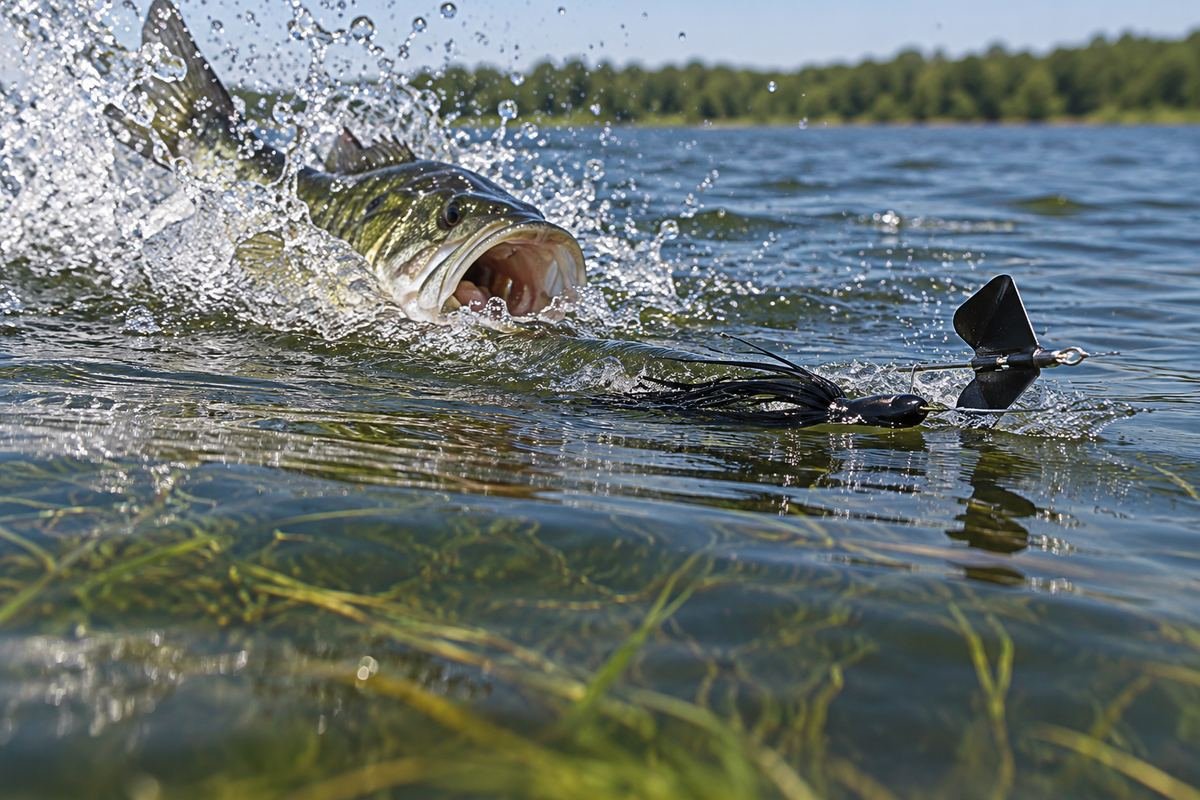
A splash behind the bait does not prove the fish took the hook. It may have struck the wake, followed the skirt without committing, or met the lure at a difficult angle. Likewise, an immediate upward hookset at the sight of spray can pull the bait away before the fish closes its mouth. Keep reeling until you feel weight, then set the hook firmly.
If misses repeat, alter speed, profile, or path one at a time. A trailer hook can help on open lanes, but it is a poor default in snag-prone grass or wood. Check that the main hook is sharp and that the trailer is rigged straight.
| Problem | Possible reason | Try |
|---|---|---|
| Splash behind lure | Fish misses hook | Adjust speed or profile |
| Follow without strike | No commitment | Change cadence |
| Lure sinks | Insufficient lift | Increase speed or change blade |
| Empty hookset | Set too early | Feel rod load |
| Trailer hook snags | Extra exposed point | Remove near cover |
Buzzbait vs Spinnerbait, ChatterBait, and Frog

These lures can all target bass but create different signals at different depths. The buzzbait's propeller churns the surface. A spinnerbait's spoon-shaped blades rotate below it. A bladed jig, often called a ChatterBait, uses a front blade that oscillates rather than spins like a propeller. A hollow-body frog floats over thick cover and usually relies on the angler to work it. Choose by the fish's depth, the cover's density, and the response you observe.
| Lure | Main action | Primary use |
|---|---|---|
| Buzzbait | Surface propeller | Moving topwater |
| Spinnerbait | Rotating subsurface blades | Several depths |
| ChatterBait / bladed jig | Oscillating front blade | Subsurface reaction |
| Hollow-body frog | Angler-controlled surface movement | Dense shallow cover |