
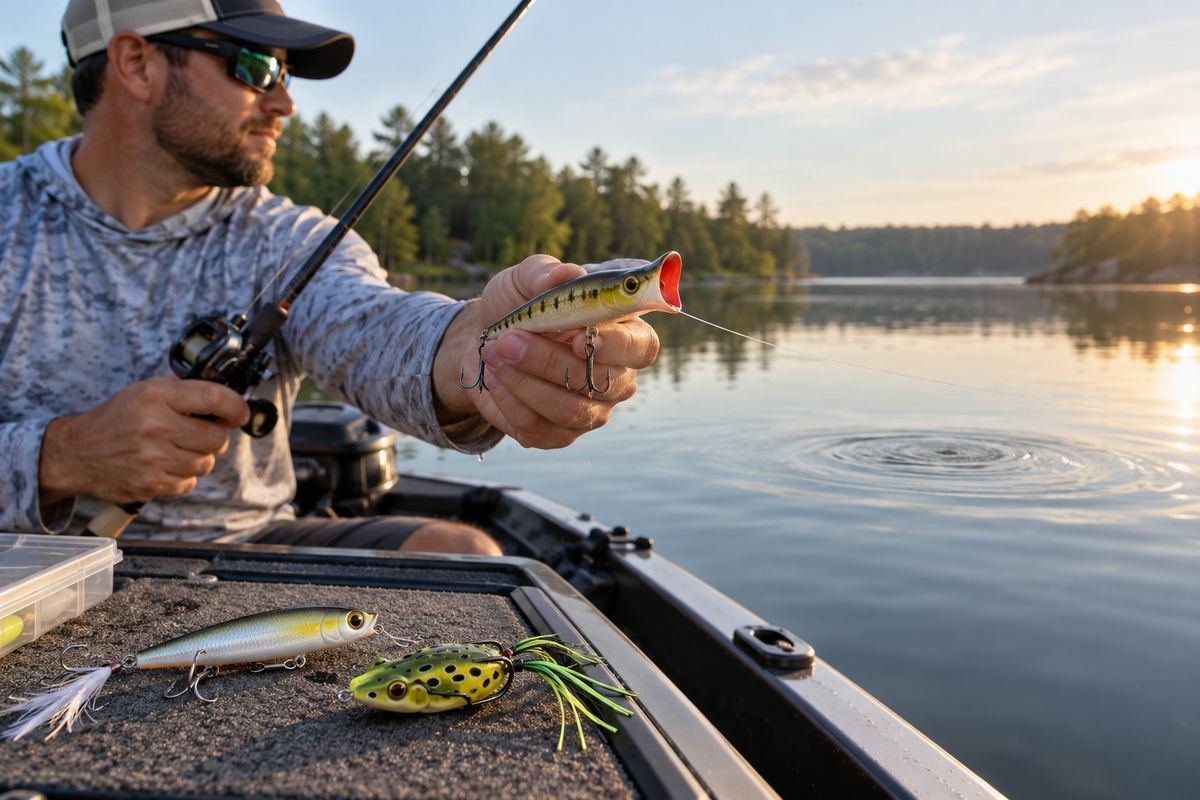
Popper Lure Anatomy

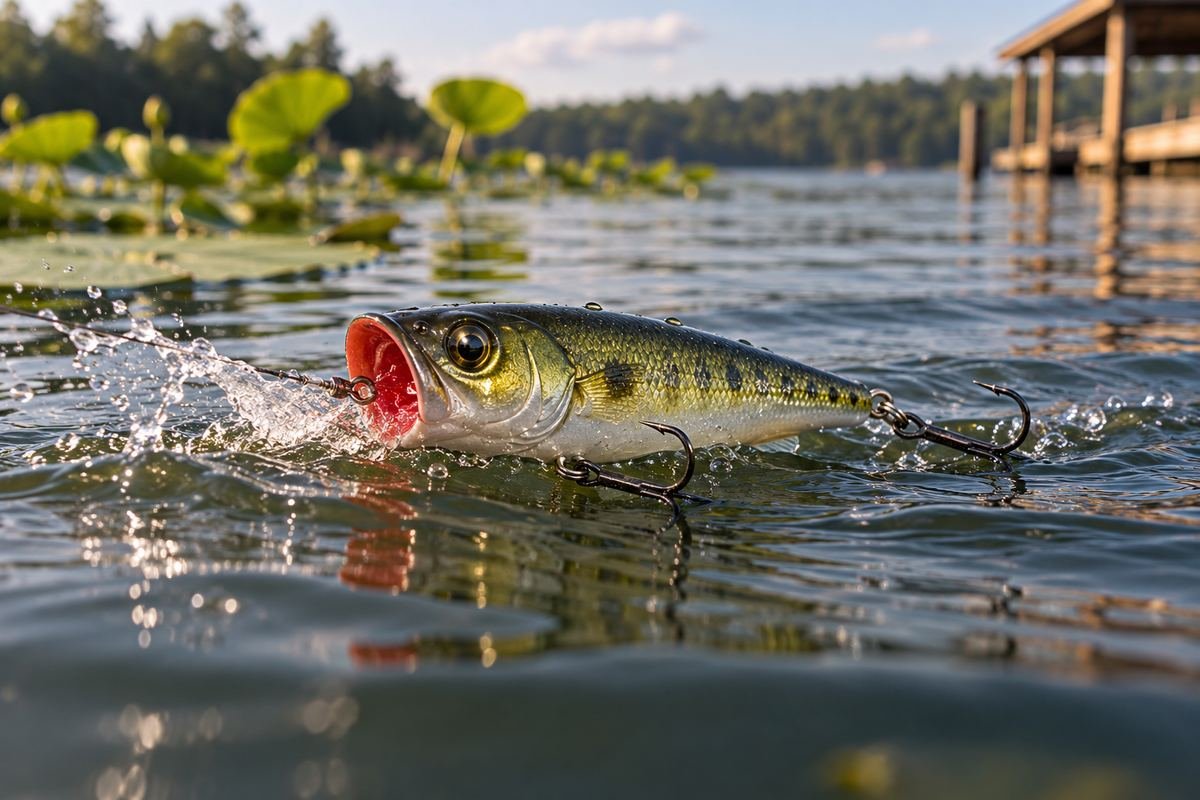
Cup and body. The recessed face catches water during a pull. Its width, depth, angle, and rim shape help determine whether the lure makes a fine spray or a fuller chug. The body behind it provides flotation and a visible profile. Hard plastic and wood, including balsa, are common; construction differs by model.
Connection and balance. The line tie sits at or near the front. Its position, body weight, and internal ballast affect casting, nose angle, and how much of the cup touches the water. A tail-down popper may sit differently from a nearly level one. Check the lure in the water instead of assuming its package description predicts every movement.
Hooks and details. Many hard poppers use belly and rear trebles, but hook number and style vary. Some carry a feather or synthetic dressing on the rear hook, which can move while the body rests. Reflective finishes and optional rattles add other cues; neither defines a popper. Hardware should be sized for the lure and the intended fish.
A useful anatomy check is practical: confirm the cup is unobstructed, the line tie is sound, and the hooks swing freely without tangling. Product designs differ, so treat the diagram as a guide to common parts, not a drawing of every model.
| Part | Function | Fishing effect |
|---|---|---|
| Concave mouth | Redirects water | Pop, spray, or chug |
| Floating body | Supplies buoyancy | Pauses on the surface |
| Line tie | Connects line | Changes pull angle |
| Internal ballast | Balances mass | Changes cast and resting posture |
| Hooks | Hold a fish | Changes hookup and snag risk |
| Dressed rear hook | Adds subtle movement | Remains active at rest |
| Finish | Provides pattern and reflection | Changes visual profile |
| Optional rattles | Add internal sound | Model-specific acoustic cue |
How a Popper Works

The sequence begins with a floating lure at the surface. A short rod-tip twitch or measured pull moves it forward. The front cup meets water resistance, catching and redirecting some water outward and upward. That rapid meeting of lure, water, and air may create a sharp pop, lower bloop, or spray. Once the pull ends, the lure settles while the disturbance spreads.
Shape and setup change the result. A deeper or wider cup often moves more water, but the body angle and stroke are just as important. A high nose may skim; a low nose can dig. Too much slack may absorb the twitch; no slack may drag the lure farther than intended. The right amount lets the rod move the bait and then stop it.
Anglers call a fine forward spray spitting, a compact audible burst popping, and a heavier, lower disturbance chugging. These are useful descriptions, not strict scientific classes. One popper may shift among them as the angler changes force. Another may favor one action because of its cup and balance.
Test the lure at your feet before casting to distant cover. Give it a light twitch, then a firmer one. Notice whether it sprays, dives, tumbles, or simply slides. That quick test reveals what your rod, line, knot, and lure actually do together.
| Factor | What changes | Result |
|---|---|---|
| Buoyancy | Keeps body at surface | Allows a pause |
| Cupped face | Catches water | Creates splash and sound |
| Cup shape | Changes water captured | Alters spray and chug |
| Body posture | Changes nose depth | Alters cup engagement |
| Rod stroke | Changes forward force | Controls intensity |
| Line slack | Changes force transfer | Controls twitch response |
| Pause length | Keeps lure near target | Lets ripples fade |
Why Fish May Strike Poppers
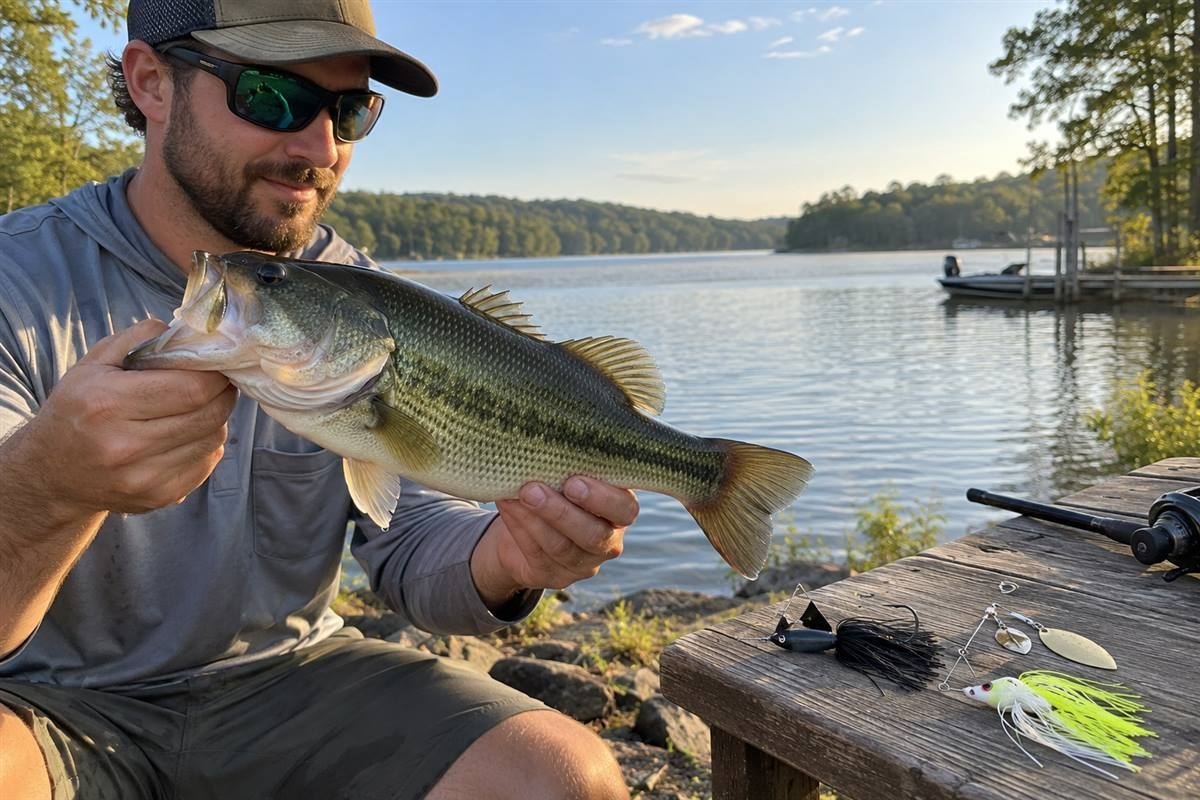
Surface movement can suggest a vulnerable baitfish, frog, insect, or other prey, but a popper does not have to match one species exactly. Its visible silhouette and splash can draw attention in shallow water. Nearby fish can also detect water motion through mechanosensory systems, including the lateral line. That is different from seeing a lure or hearing a sound.
A popper can slow down within a strike zone. Beside a dock post or laydown, a predator may have time to inspect the disturbance as the lure rests. A fresh twitch after stillness can change both the visual scene and water movement. Anglers sometimes describe a sudden bite as a reaction, but a single strike cannot reveal the fish's exact motivation.
Many surface attacks are also misses. A fish may surge beneath the bait, hit the tail, or turn away. Watch where the fish appears, whether it actually takes the lure, and whether the next cast should be quieter or louder. The presence of bass alone does not prove they will rise; water temperature, depth, forage, and cover all influence opportunity.
Practical placement matters more than guessing what a fish is thinking. Cast beyond the target, bring the lure into the fish's reachable lane, and adjust the cadence from observed follows, boils, or strikes. Avoid claiming that louder always works better.
| Potential cue | Popper feature | Practical test |
|---|---|---|
| Prey-like activity | Short surface movement | Match local forage size |
| Visual signal | Silhouette and splash | Adjust color and light |
| Water-motion cue | Cup displacement | Change stroke strength |
| Ambush chance | Slow action near cover | Cast accurately |
| Pause opportunity | Floating body at rest | Vary rest length |
| Sudden change | Twitch after stillness | Try a new cadence |
Types of Popper Lures

Spitting poppers usually favor a relatively sharp, forward spray. A quick twitch can imitate small prey breaking the surface. Chugging poppers push a fuller volume of water and may produce a deeper bloop, useful when an angler wants a stronger signal. The names overlap; look at the actual face and water action rather than the label alone.
Finesse poppers are smaller, often suited to subtle conditions or small forage. A walking popper combines a cup with a body that can move side to side under rhythmic twitches; not every popper balances well enough to walk. Larger poppers may serve open water or saltwater fish, provided hooks and hardware are appropriate. Popping frogs are another category: their soft or hollow bodies and protected hooks suit heavy cover better than exposed-treble hard poppers.
Wood, balsa, and hard plastic versions may have different buoyancy and sound. A feathered rear treble can add movement after the main body stops, while rattles change a model's acoustic profile. Those features are optional and should be tested, not treated as guarantees.
| Style | Typical emphasis | Starting use |
|---|---|---|
| Spitting | Fine spray and travel | Active baitfish |
| Chugging | Fuller cup disturbance | Targeted cover |
| Finesse | Smaller profile | Clear or pressured water |
| Walking-capable | Side-to-side movement | Open surface lanes |
| Large / saltwater | Bigger profile and stronger hardware | Larger surface predators |
| Popping frog | Protected hooks and splash | Dense vegetation |
How to Fish a Popper: Six Retrieves

Start with a cast beyond the target so the lure reaches the important water without landing directly on a fish. Let the landing rings fade if fish appear cautious. Keep the rod tip low enough for repeatable twitches, then recover loose line between strokes without pulling the bait out of place. Learn a clean pop-and-pause before trying speed.
1. Pop and Pause
Give one or two short twitches, then stop. Watch the lure and its rings before repeating. This simple retrieve teaches how much movement your tackle delivers and gives a fish time to close on an isolated target.
2. Spit and Skitter
Sharper, shorter strokes may make a compatible cup throw a fine spray and travel across the surface. Try it around visibly active baitfish. If the lure dives or rolls, reduce force or change models.
3. Slow Chug
Use deliberate pulls to push more water while advancing only a short distance. This can keep a pronounced disturbance beside a dock post, wood end, or grass point. Allow enough slack after each stroke for the lure to settle.
4. Walk With a Popper
Some bodies can glide side to side when the rod tip pulses against controlled slack. Keep the rhythm even and let the body turn before the next twitch. If it only drags straight, treat it as a popper rather than forcing a walking action.
5. Fast Surface Retrieve
A compatible lure can be worked briskly with repeated disturbances when fish are chasing prey. Watch that it remains upright and on the surface. Speed is a test for active fish, not a default for all situations.
6. Deadstick and Gentle Twitch
Near insects or cautious fish, leave the popper nearly still. A tiny twitch can move a dressed rear hook while producing little noise. Extend or shorten the rest based on visible follows and boils; there is no universal pause count.
| Retrieve | Main action | Starting situation |
|---|---|---|
| Pop and pause | Pop, then rest | General bass fishing |
| Spit and skitter | Quick spray | Active baitfish |
| Slow chug | Pronounced, localized pop | Isolated cover |
| Walking | Side-to-side path | Open lanes |
| Fast surface | Continuous commotion | Chasing predators |
| Deadstick | Almost stationary | Insects or cautious fish |
Beginner sequence: Choose a lure for the fish, check hooks and line, cast past cover, let it settle, make two small twitches, pause, recover slack, and change the cadence if fish follow without taking. After a fish actually has the bait, maintain tension and make a controlled sweep rather than reacting only to the splash.
When and Where to Use Poppers

Popper fishing is especially useful where fish can reach open surface water close to cover. Dock shadows and posts offer obvious targets. A cast parallel to a dock keeps the lure in that lane longer than one thrown straight at it. Beside a laydown, work the exposed outer branch or open pocket rather than dragging trebles through wood. Along submerged grass, run the bait beside the edge and pause over gaps.
Lily-pad lanes, shoreline bushes, shallow points, protected coves, and flats can all provide accessible surface paths. Activity matters: shad dimpling the top, bluegill near spawning areas, an insect hatch, or open-water feeding schools are reasons to test a popper. They are clues, not proof that a particular retrieve will work.
The lure's floating pause can hold attention near a single post or overhang longer than a constantly moving prop or buzzbait. Accurate casts matter because an exposed treble can hang on vegetation, branches, or dock hardware. Place the lure beside cover, not directly into it, and leave space for a fish to take it.
Switch presentations if fish are clearly deeper than they can reasonably rise, if dense floating vegetation repeatedly catches the hooks, or if waves make a small popper difficult to track. A popping frog may cross mats; a subsurface lure may reach fish that ignore the top.
| Location | Why it may work | Starting retrieve |
|---|---|---|
| Dock shadow | Shade and structure | Short pops and pauses |
| Laydown edge | Possible ambush lane | Controlled chug beside wood |
| Submerged grass edge | Accessible water beside cover | Parallel retrieve |
| Lily-pad opening | Clear surface path | Pop through the lane |
| Shad activity | Surface forage cue | Spit or walk |
| Bluegill area | Fish may feed nearby | Compact profile |
| Insect hatch | Subtle surface activity | Small lure and tiny twitch |
| Shallow point | Interception route | Search with changing cadence |
Seasons, Weather, and Light

Topwater opportunity depends more on accessible fish and surface activity than a calendar date. In spring, warming shallows and fish near cover can make short, quiet presentations useful. Local water temperature and spawning rules differ, so avoid treating a month as a universal signal. In summer, low light and shade often create comfortable starting places, but a bass may also feed at the surface during bright daylight around docks, clouds, or schooling bait.
Fall can bring moving baitfish and feeding predators; a faster spitting or walking presentation may help cover an active school. In cold water, surface fish are less predictable in many fisheries. A slower popper might still be worth a test where fish rise, but a subsurface lure often reaches fish more directly. Observe the actual water before choosing.
Calm water makes subtle pops visible and audible to the angler. Light chop may call for a larger cup or firmer stroke so the lure remains distinct. Strong waves can hide a small bait or upset its action. Clear water may favor a natural profile and accurate casting; stained water may justify a stronger disturbance. These are starting hypotheses, not catch-rate rules.
| Condition | Useful starting adjustment |
|---|---|
| Calm and clear | Small pop, longer observation |
| Light surface chop | Firm cup engagement |
| Strong waves | Larger visible lure or switch method |
| Warm shallow cover | Precise short casts |
| Schooling bait | Faster spitting or walking |
| Cautious followers | Lower splash and varied pause |
| Deep inactive fish | Try a subsurface presentation |
Fish That May Take a Popper

Largemouth bass are a familiar target because they use docks, wood, grass edges, and shallow feeding areas. A popper can pause over an opening beside those features. Smallmouth bass may pursue smaller poppers around rock, points, or baitfish schools; their location and willingness to rise vary by water. Neither species is limited to sunrise or still weather.
Other freshwater predators can take surface lures when conditions fit. Striped bass and other schooling fish sometimes feed at the top, where a popper can be cast ahead of moving activity. Panfish may investigate small poppers or popper-style flies, although tackle must be scaled down. Larger saltwater poppers can target surface-feeding predators, but the saltwater model needs strong, corrosion-resistant hardware appropriate for the fish and local rules.
Use a species list as a planning prompt, not a guarantee. Check forage size, the fish's depth, available surface room, and likely cover. A heavy saltwater popper is not a sensible first choice for small panfish, and delicate hooks are unsuitable for powerful fish. Match gear and handling to the target.
| Fish | Typical opportunity | Main adjustment |
|---|---|---|
| Largemouth bass | Shallow cover and forage | Target openings precisely |
| Smallmouth bass | Rock, points, schooling bait | Test compact size and pace |
| Striped bass | Surface-feeding schools | Cast ahead of moving fish |
| Panfish | Small insects or fry | Use tiny poppers or flies |
| Saltwater predators | Surface bait activity | Use suitable corrosion-resistant hardware |
Choosing Size, Cup, Color, and Sound

Begin with fish size and available forage. A small cup and compact body can be useful for tiny baitfish or insects; a larger body is easier to see and may move more water. The cup's depth and angle influence how readily it spits or chugs, but ballast and line tie also matter. Put any candidate in the water to see its real action.
Color is most useful when considered as silhouette and visibility. A natural baitfish pattern can be a reasonable start in clear water; a darker underside can make a distinct shape against a bright sky. In stained water, contrast may help you and perhaps a fish track the bait, but no color guarantees a response. Test a change only after checking that the cast and cadence are appropriate.
Some poppers contain rattles, while others rely on cup noise. A loud model is not inherently better. Choose a softer presentation if fish follow but turn away, or a more pronounced one when wind and surface activity mask a subtle lure. Hook type, sharpness, flotation, and casting weight should be part of selection, especially near cover.
| Need | What to inspect |
|---|---|
| Small forage | Compact body and modest cup |
| More disturbance | Deeper cup and firm action |
| Longer cast | Body weight and balance |
| Subtle water | Quieter cup or gentler twitch |
| Open surface | Exposed hooks are workable |
| Heavy vegetation | Protected-hook alternative |
| Saltwater use | Hardware and corrosion resistance |
Rod, Reel, Line, and Hooks

Choose a rod that casts the popper's weight comfortably and lets you make controlled, short strokes. Many bass anglers favor a medium or medium-heavy rod with some forgiveness, especially with trebles, but length and power depend on lure size and cover. A very stiff rod can make it harder to keep small treble hooks pinned; a rod too soft for a large popper may struggle to move the cup.
A reel should retrieve slack promptly without forcing the lure to move. Its exact ratio is less important than maintaining control and a smooth drag. Monofilament naturally floats and offers stretch; braid floats and gives direct contact but has little stretch. A suitable leader can add abrasion resistance or reduce braid tangling around front hooks. Fluorocarbon sinks, so a long or heavy fluorocarbon section may pull down the nose of a small popper. Test the actual setup.
Inspect hook points and split rings before fishing. Replace damaged hardware with an appropriate strength and weight so flotation and balance remain reasonable. Dressed rear hooks can add motion during pauses but may tangle if oversized. Around saltwater or strong fish, use hardware designed for that environment.
When a fish erupts on the surface, avoid jerking at the splash alone. Watch or feel the fish take the lure, take up slack, and sweep to maintain steady pressure. Keep the rod loaded during the fight; abrupt slack can let treble hooks lose purchase.
| Component | Starting consideration |
|---|---|
| Rod | Cast weight and forgiving treble-hook action |
| Reel | Reliable slack recovery and drag |
| Monofilament | Floating with some stretch |
| Braid | Floating with direct contact; manage slack |
| Leader | Balance abrasion and nose position |
| Hooks | Sharp, correctly sized and secure |
| Split rings | Closed and strong enough for target |
Popper vs Other Topwater Lures

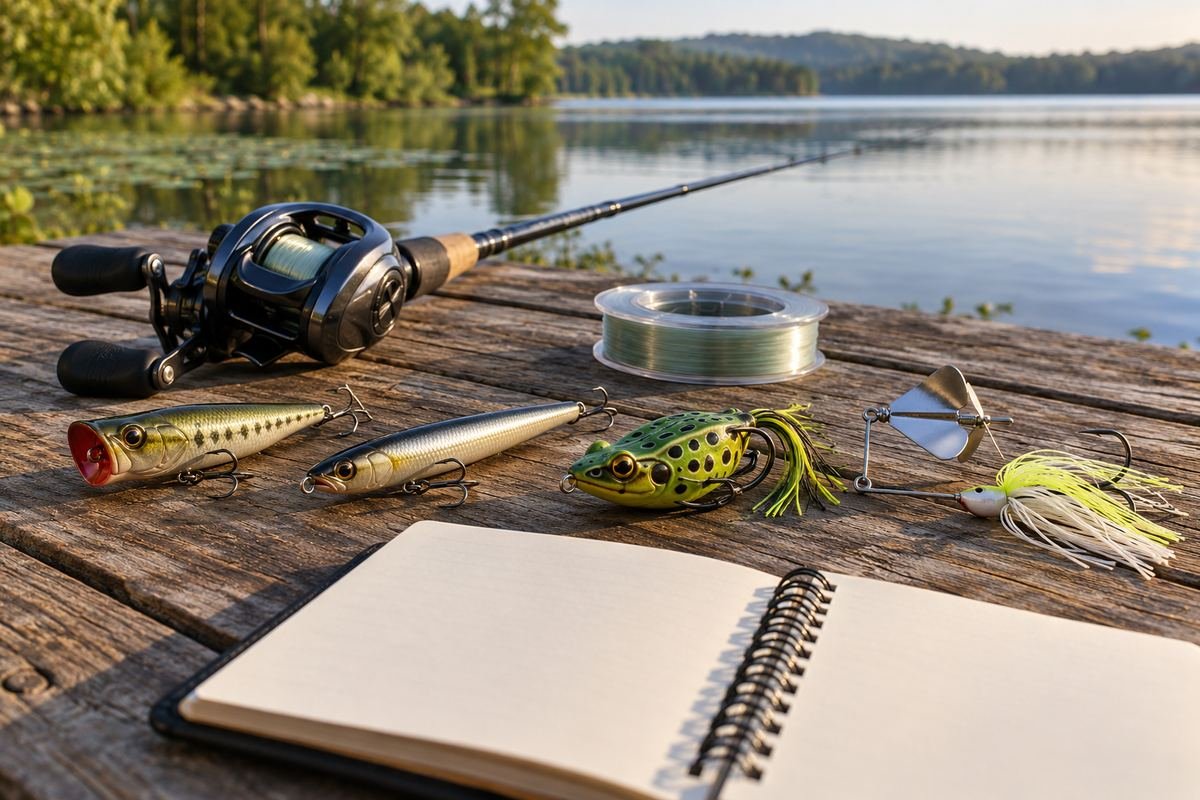
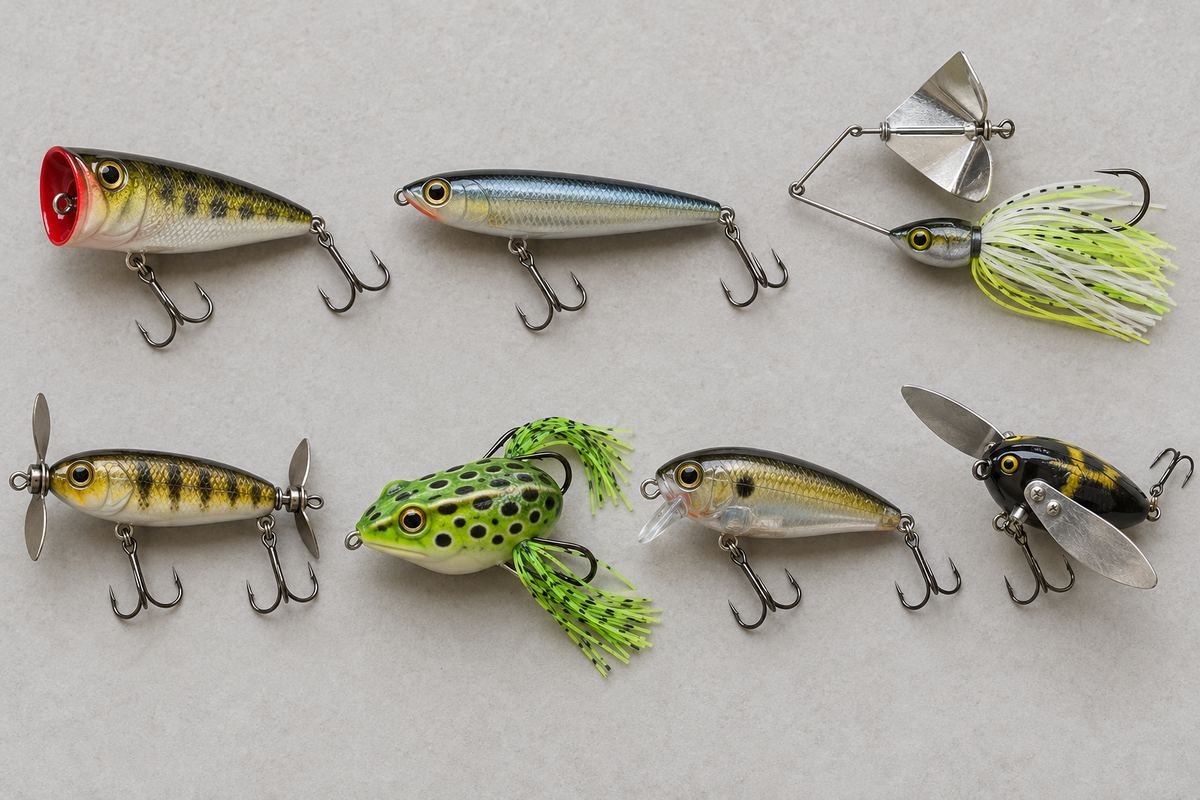
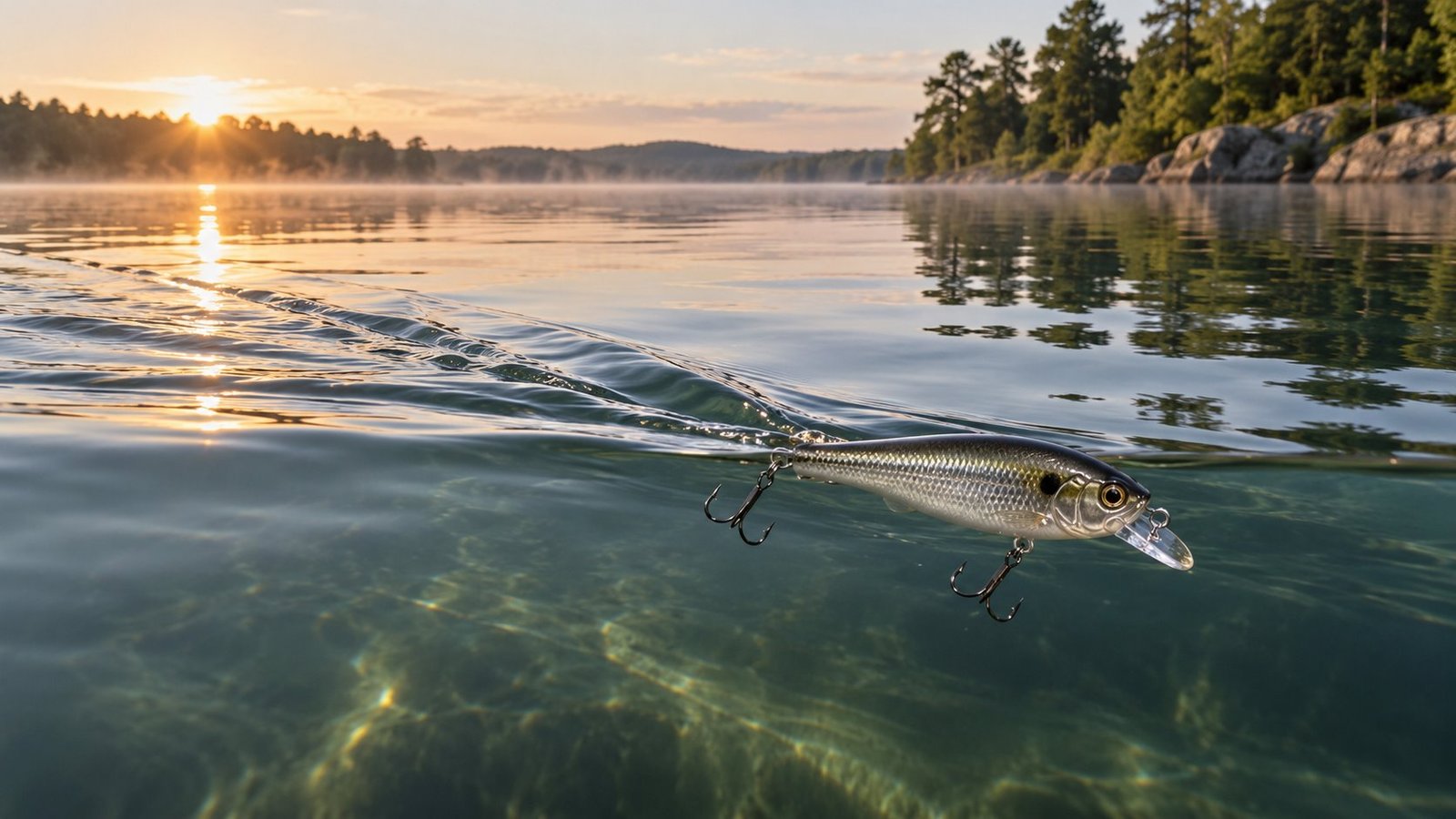
A walking bait relies mainly on its shape and a rhythmic twitch to glide left and right. A popper is defined by a water-catching cup, although some poppers can also walk. A buzzbait uses a rotating blade on a wire frame, usually requiring forward movement to churn the top. A wakebait swims near the surface to leave a steady V-shaped wake rather than isolated pops.
A popping frog may make a similar splash, yet its hollow or soft body usually carries hooks that lie close to the body for passage over vegetation. A conventional hard popper often has exposed trebles and suits open lanes better. Prop baits spin one or more propellers during movement; those blades, not a cup, create their signature disturbance. Hybrid models can blend actions, so classify a lure by its working mechanism rather than a marketing label.
Use a popper when you want to stop beside a specific opening and control the amount of splash. Use a frog when dense mats block exposed hooks, a walking bait when a wide side-to-side path is useful, or a buzzbait when continuous coverage is the priority. These are starting choices; fish response decides the next cast.
| Lure | Primary action | Where it differs |
|---|---|---|
| Popper | Cupped mouth pushes water | Can pause and pop near a target |
| Walking bait | Body glides side to side | Less cup-driven splash |
| Buzzbait | Blade churns during retrieve | Usually moving continuously |
| Wakebait | Swimming body makes a wake | Steady near-surface path |
| Popping frog | Cup plus protected-hook body | Better over thick vegetation |
| Prop bait | Rotating propeller displaces water | Blade-driven commotion |
Common Mistakes and Missed Strikes

Too much force. A violent pull can make a small popper dive, spin, or travel past the fish. Start gently and add power only when the bait stays upright. Too little line control. Excess slack swallows rod movement, while tight line drags the lure out of the strike zone. Recover slack between twitches without reeling constantly.
One cadence everywhere. A fast spit may draw interest from schooling fish but look wrong beside a quiet dock. Change one variable at a time: stroke strength, pause, or path. Wrong cover. Exposed trebles snag lily pads and floating mats; cast through open lanes or choose a protected-hook alternative.
Reacting to the splash. A bass may miss, slap, or turn beside a popper. If you set the hook before it has the bait, you may pull the lure away. Wait for weight or clear line movement, then sweep and keep pressure. Also inspect dull hooks and fouled rear dressings after misses. Not every miss is an angler error; fish and water conditions are variable.
| Problem | Likely cause | Try |
|---|---|---|
| Lure dives | Stroke too strong or nose low | Use a shorter pull |
| No cup action | Slack absorbs movement | Recover a little line |
| Lure travels too far | Line kept too tight | Pause and leave controlled slack |
| Repeated grass snags | Exposed trebles | Use an open lane or frog |
| Fish follow and leave | Action may not fit | Change force or pause |
| Missed strike | Fish did not take lure or hooks dull | Wait for weight; inspect points |